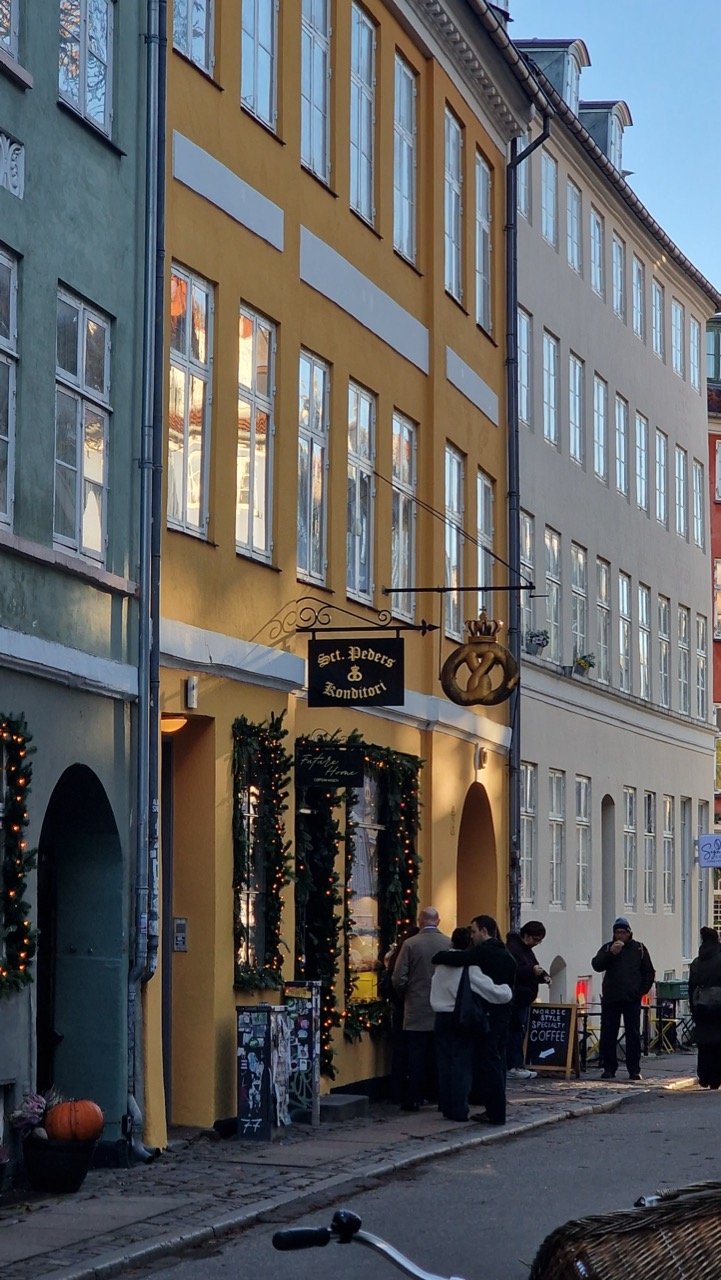
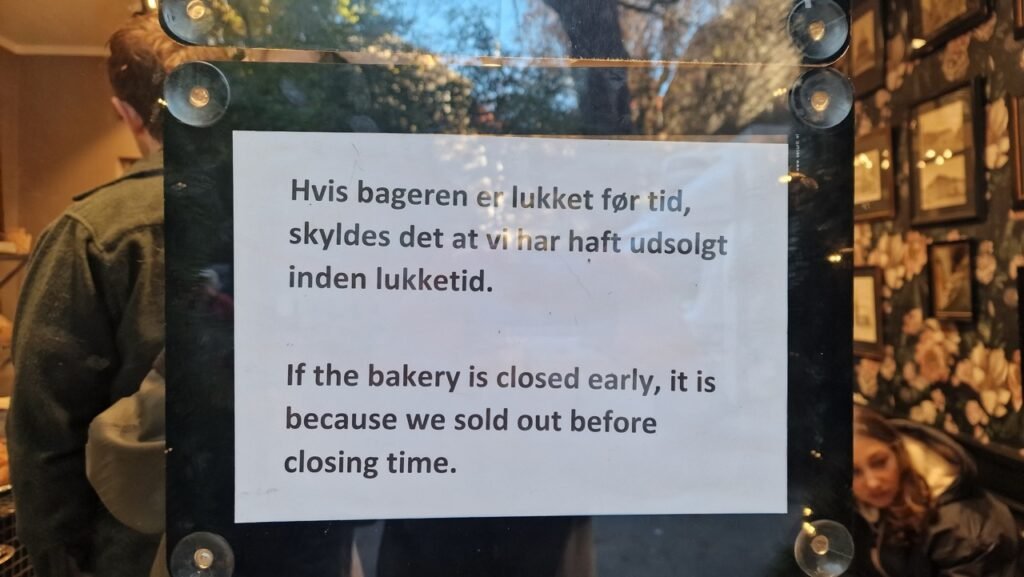
Of the ten places on my tour to find the best bakeries in Copenhagen, Sankt Peders Bageri is the one you’ve recommended to me most often. For a long time, the only part I got to know was the front door. I’d stop by in the afternoon, sometimes not even particularly late, and that was it. The sign in the front door explained why. When they sell out, they close.
This time I got there around 9:30 in the morning. There was already a line outside, but at least I could see pastries in the window. And having finally made it to the counter, I can tell you there are two things I’d happily get back in that line for. One is the cardamom bun. The other is an enormous bread roll filled with nothing more than butter and cheese.
Where to Find Sankt Peders Bageri in Copenhagen
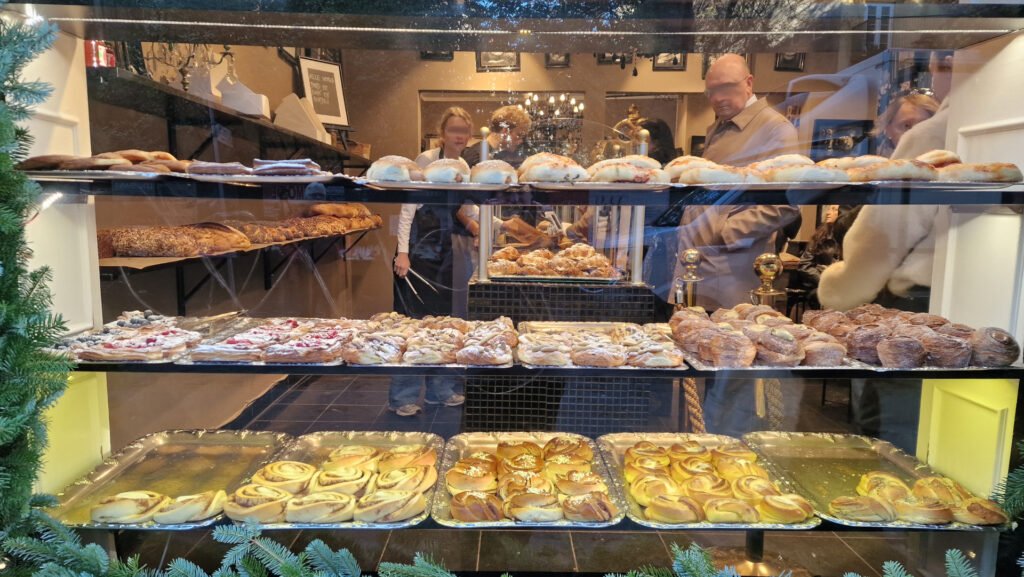
One reason I was so keen to try this place is that it’s one of the few bakeries on my list right in the part of Copenhagen where most visitors already spend their time. You’ll find it at Sankt Peders Stræde 29, in the Latin Quarter of the old city center (see the interactive map below). Look for the yellow building with trays of pastries in the window and a gold pretzel hanging over the sidewalk. The pretzel even has a little crown.
Sankt Peders Bageri dates back to 1652 and is known as Copenhagen’s oldest bakery. Its most famous pastry is a much more recent part of the story. By the early 1990s, people were coming here for the onsdagssnegle, the big cinnamon rolls the bakery sells on Wednesdays. I haven’t tried one yet. If you’re wondering what else is worth ordering here, though, I have a few ideas.
A Little Jewel Box With a Line Out the Door
From outside, you can see past the rows of pastries to the big black chandelier hanging over the customers. Inside, there are little framed pictures on the walls, handwritten signs, and a handful of places to sit. Between the old street, the building, and the smell of fresh pastries, it really does feel like stepping into a little jewel box.
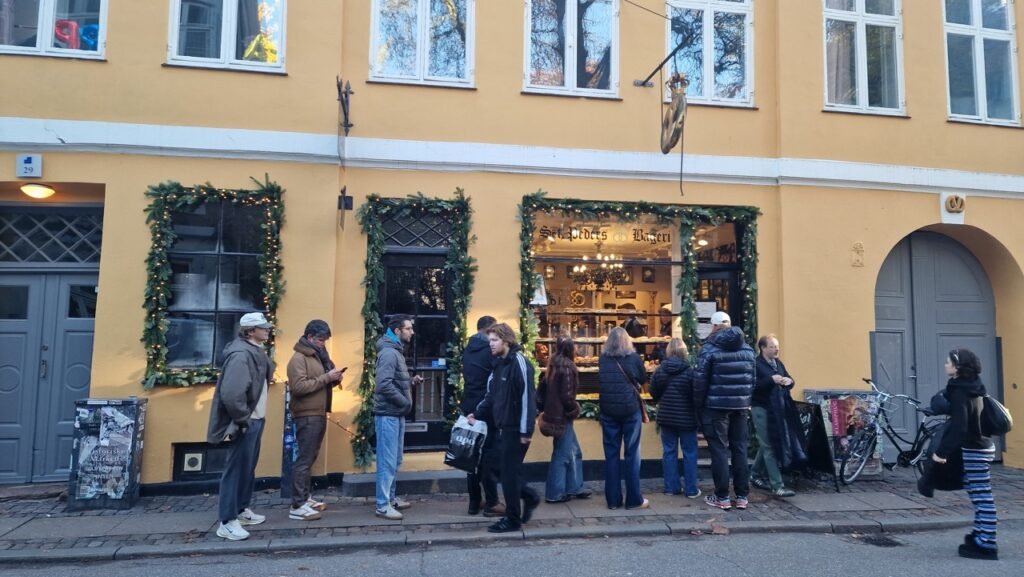
At least, it does until you try to turn around. People were coming in, others were trying to get back out with their purchases, and the line stretched onto the sidewalk. Almost every conversation I heard was in English. I order in English myself, so I can hardly complain about anyone else doing the same. Still, I’d come to get a feel for a neighborhood bakery, and that morning it felt more like a stop on everyone’s sightseeing route. Honestly, that did take away some of the charm for me.
The selection, though, was still generous. I counted what looked like about five cardamom buns on display. There could easily have been more in the back, but after all those unsuccessful afternoon visits, I was glad to see them.
What I Tried at Sankt Peders Bageri
The Cardamom Bun
A cardamom bun is usually the first thing I try at a Danish bakery. I’ve eaten enough of them around Copenhagen to know what I like, and looking at this one, I wasn’t sure I was going to get it. It looked noticeably drier than the soft, fluffy buns I love at Juno the Bakery and Andersen Bakery.
The first bite settled that. The top had a lovely little crunch, and underneath it the dough was denser than I’m used to but still tender. I particularly liked those two textures together. And there was enough cardamom that I could taste it from the first bite.
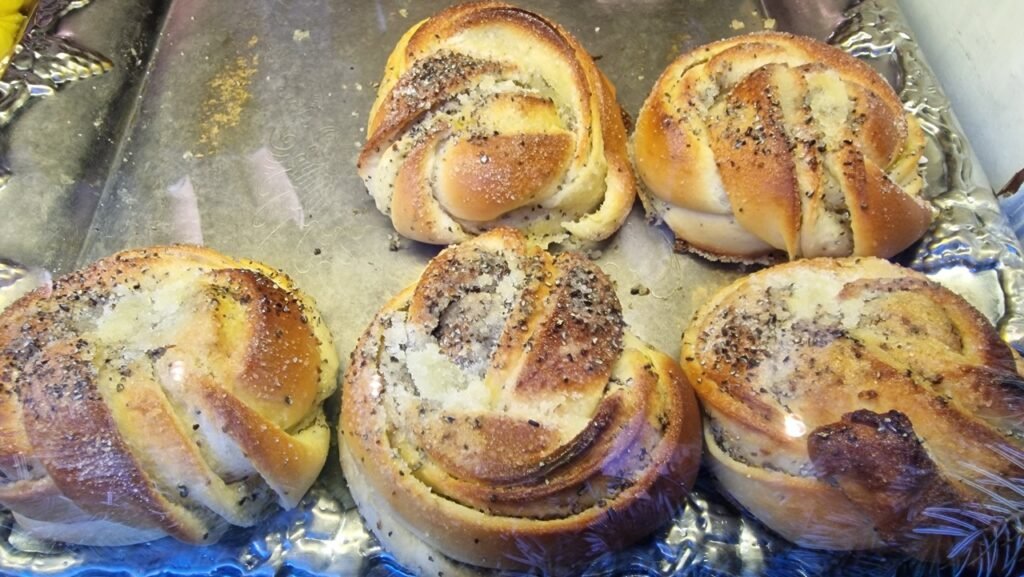
If you’ve read my review of Andersen & Maillard, you might remember how moist and almost syrupy their cardamom bun was. At Sankt Peders Bageri, it was the crisp top I liked best. I’d put this one among the best cardamom buns I’ve tried in Copenhagen.
The Pistachio Pastry
I thought this one was made with croissant dough until I bit into it. What I liked best was the filling. The cream had a strong pistachio flavor, and it was spread through the pastry well enough that I could taste the dough and the filling together. That was the one thing I’d wished for with the pistachio cube at Andersen & Maillard, where most of the cream had ended up at the bottom.
Even so, this was the one pastry at Sankt Peders Bageri that looked a little more impressive than it tasted. I enjoyed it, especially the pistachio cream, but if I only had room for one sweet pastry, I’d take the cardamom bun.
The Tebirkes
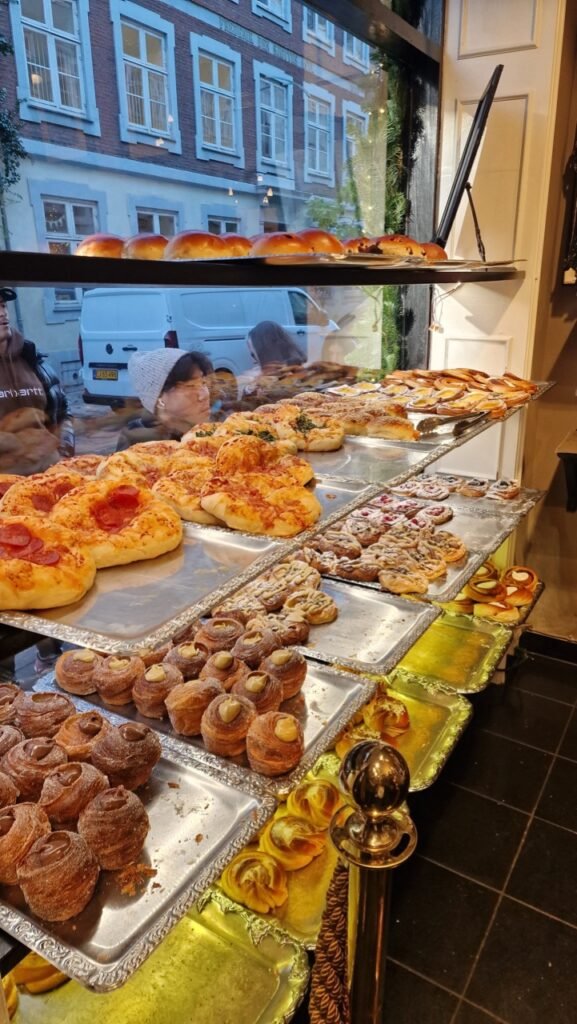
A tebirkes is a Danish pastry you can recognize by its poppy-seed topping. This was the first time I’d included one in these bakery reviews, and what surprised me was how light it was. There was just a subtle hint of marzipan inside. I could taste it, but it still left plenty of room to enjoy the pastry itself.
This is one I’d recommend if you’re standing at the counter looking for something traditionally Danish and don’t particularly feel like a rich, cream-filled pastry.
The Bun With Butter and Havarti
When I ordered my bun with butter and cheese, the woman behind the counter asked whether I wanted the saltier cheese. That was a first. I’ve ordered this breakfast at quite a few Copenhagen bakeries, and nobody had ever given me that choice before. I went for the saltier one, and I could see from the package that it was Havarti.
The roll she put it in was huge. The crust crackled when I bit down, and the middle was soft enough that I could taste the butter and cheese with every bite. The saltiness of the Havarti worked beautifully with the butter. I remember trying to say something about it for the video and having very little to offer beyond how good it was.
For all the pretty things in that window, this simple breakfast might have been my favorite thing I ate here.
The Plain Sourdough Loaf
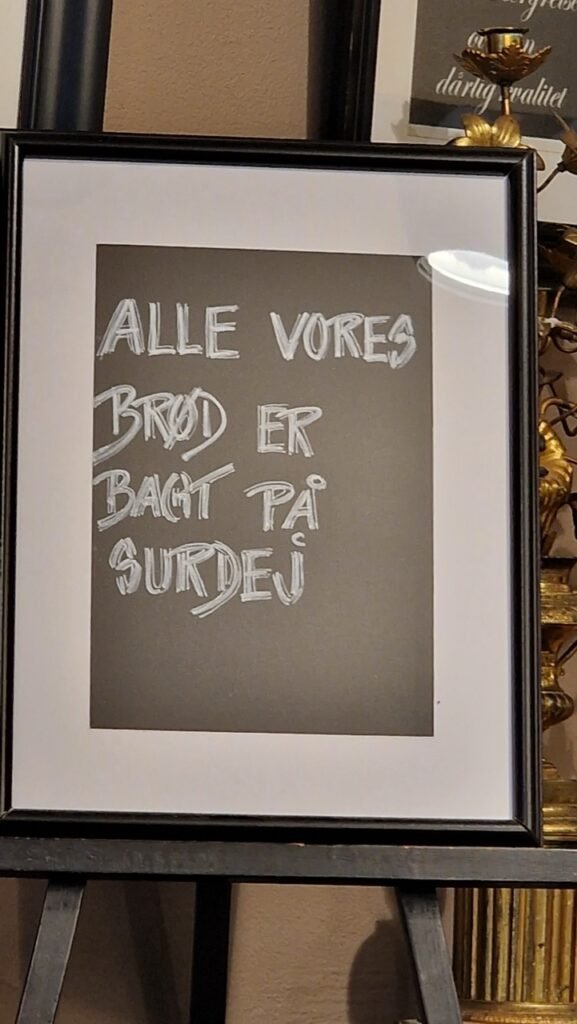
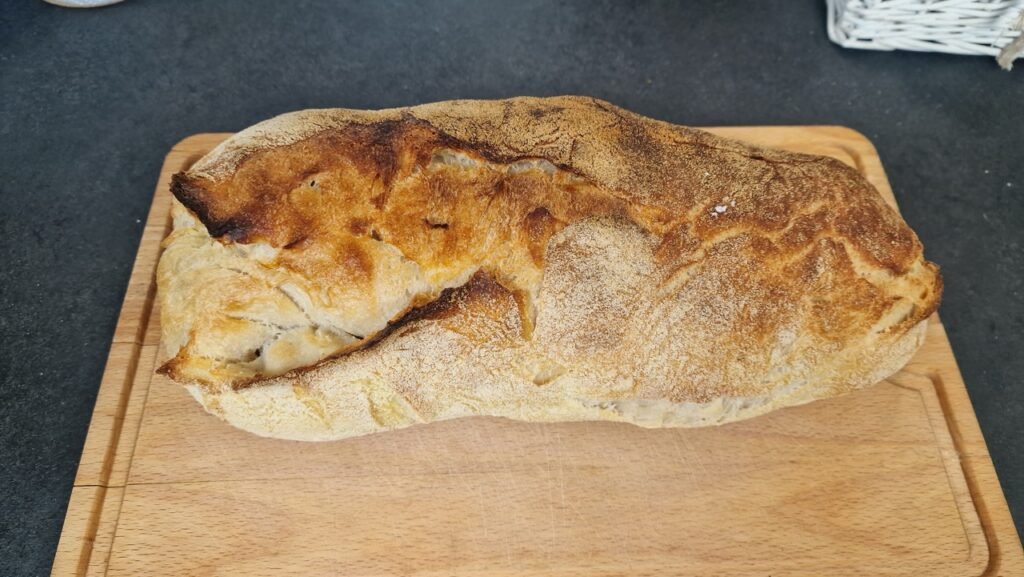
There’s a sign above the counter that reads “Alle vores brød er bagt på surdej” — “We make all our bread with sourdough starter.” I deliberately chose the plain loaf. I wanted to see what their everyday bread was like, and I cut into it later.
I usually expect quite a bit of crunch from a Copenhagen sourdough, along with a light interior full of big holes. This loaf had a gentler crust and a fairly dense crumb. It was soft, substantial, and full of flavor. The best way I can describe it is that it tasted like a really good, old-fashioned loaf of bread.
One of the other signs on the wall says they bake bread the way people did in the old days. I liked that detail when I saw it. I liked it even more once I’d tasted the loaf.
Is Sankt Peders Bageri Worth the Wait?
Yes, especially if you want to try traditional Danish baking while you’re exploring central Copenhagen. For me, the interesting thing about this visit was how differently I felt about the shop before and after I tried the food. Standing in that crowd, I wondered how much of the bakery’s popularity came down to its location. Eating the cardamom bun, and later slicing into that loaf, I could understand why so many of you had sent me here.
Of the bakeries I’ve tried so far on this tour, Sankt Peders Bageri comes closest to what I imagine a really good Danish bakery might have been like thirty or forty years ago. If you’re going with someone, I’d get the bun with butter and Havarti and a cardamom bun and split both. That way, you won’t have to decide which one you want more.
My one practical tip is to make this a morning stop. When I visited, the hours posted in the window were 7:30 a.m. to 5 p.m. Monday through Friday, 8 a.m. to 4 p.m. Saturday, and closed Sunday. Right below those hours was the sign explaining that they close early if they sell out. Having found that door closed more than once, I wouldn’t save this one for the afternoon.
This article is not sponsored. I paid for everything I tried, and all opinions are my own.