What if you have only one day in Oslo, but you don’t just want to see the most important sights—you also want to get a taste of the local food culture?
I did exactly that on a recent visit and came away with wonderful memories of the Norwegian capital. Not only of its most important sights, but also of its local culinary scene.
Here I want to share my experience and give you a practical guide on how to spend one precious day in Oslo. If you’re not particularly interested in food, simply follow the sightseeing part of the itinerary. But if, like me, you enjoy getting at least a little taste of another culture through its food, I’ll also give you some very practical ideas on where to go and what to eat such as an interactive map for this one-day tour.
How to Get to the City From the Airport
Fortunately, getting from Oslo Airport OSL to the city center is very easy and very fast. There are two different train options, and both get you there in around 20 minutes, so the airport transfer won’t steal too much from your precious day.
I have a separate guide on this, complete with a video, which you can check out through the link above, so I won’t get into all the details here.
What I do think is worth sharing is that if you choose the “slower,” less-advertised Vy train, you get a very useful public transport option for the rest of your day in Oslo.
And yes, “slower” definitely deserves quotation marks here. The Vy train takes only 23 minutes from Oslo Airport (OSL) to Oslo Central Station, or Oslo S—just four minutes longer than the fastest Flytoget Airport Express train.
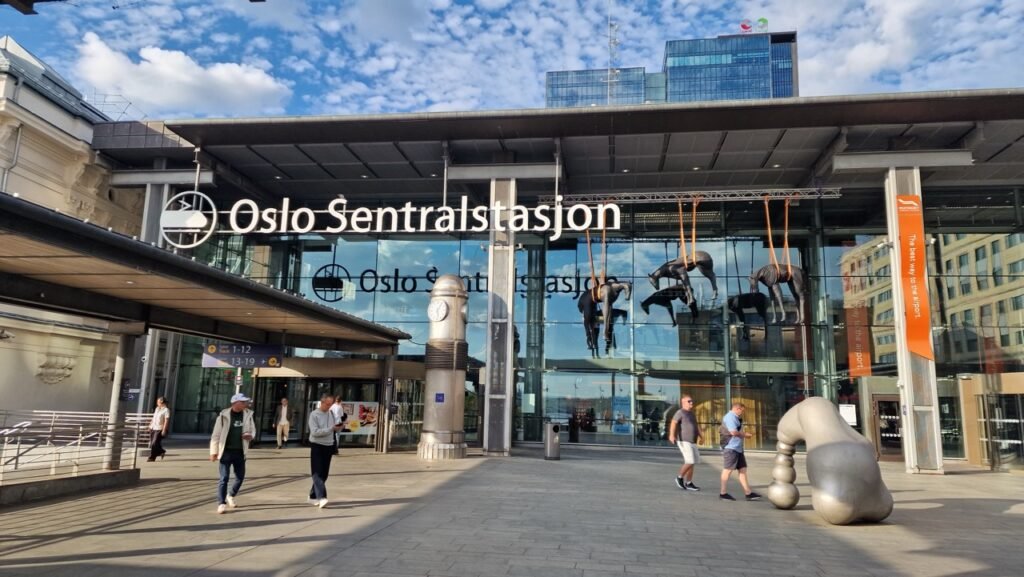
Oslo S – Oslo Central Station in the heart of the city
Regular Ruter tickets are also valid on Vy trains within Oslo and Akershus. So if you download the Ruter app and buy a 24-hour ticket covering all four zones between the airport and central Oslo, you can use that same ticket for the Vy train from the airport and then continue traveling around Oslo by metro, tram, bus, and other included Ruter services for the rest of the day.
Once activated, you basically have a 24-hour public transport pass on your phone that also covers your airport journey.
Prices can of course change, but at the time of our visit, this all-inclusive 24-hour ticket cost us less than a single one-way ticket on the more expensive Flytoget Airport Express train—which, as I mentioned above, would have saved us only four minutes on the actual train ride.
For a one-day Oslo itinerary, that makes the Vy + Ruter combination particularly useful.
A Walk in the City Center
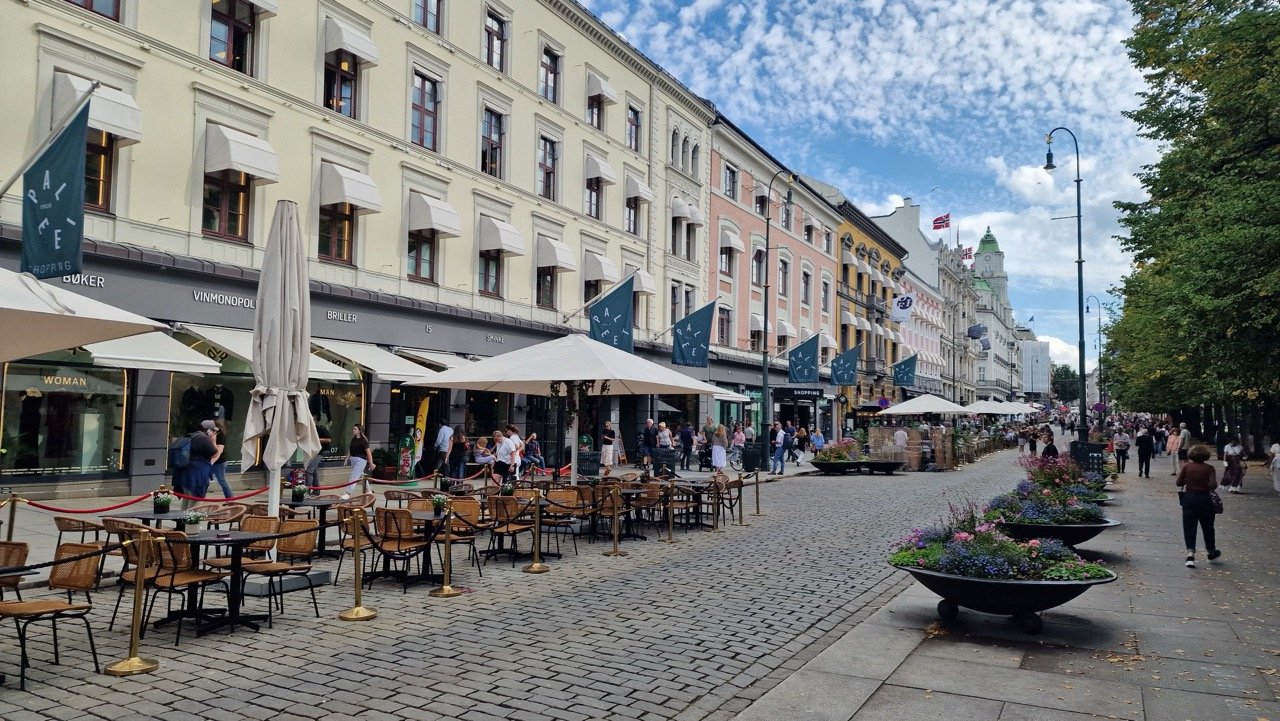
Oslo is actually a pretty compact city if you want to see the most important sights in a single day. Simply walking between Nationaltheatret and Oslo S in the city center, mostly along Karl Johans gate—often referred to as Oslo’s main street—will already give you a very good impression of the Norwegian capital.
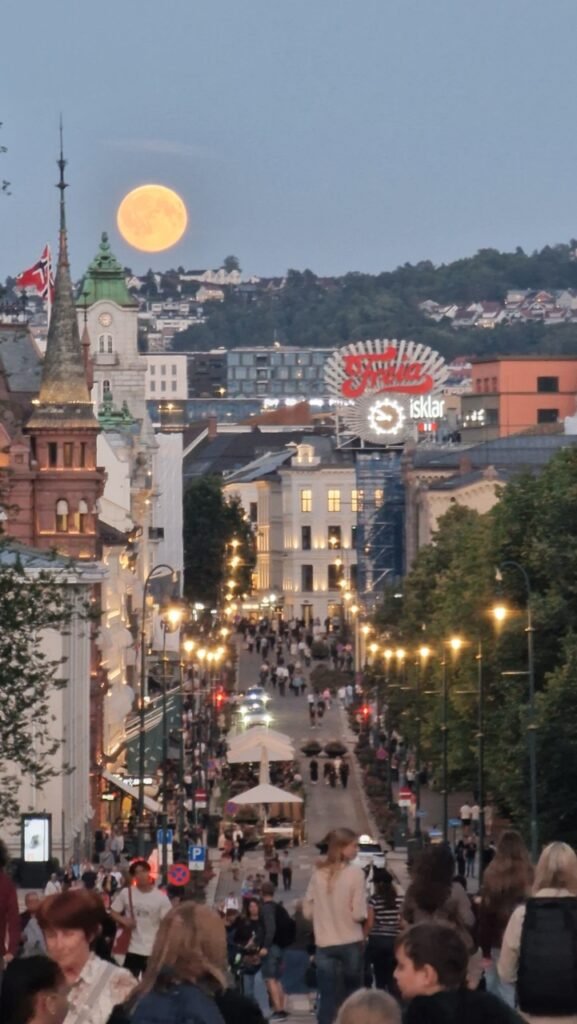
You’ll get a real feel for Oslo city life, while also passing surprisingly close to many of its most important sights. You’ll need to meander a little from Karl Johans gate itself here and there, but that’s exactly what I recommend.
So whether you have only an hour or half a day for central Oslo, Karl Johans gate and the streets around it are where I would start.
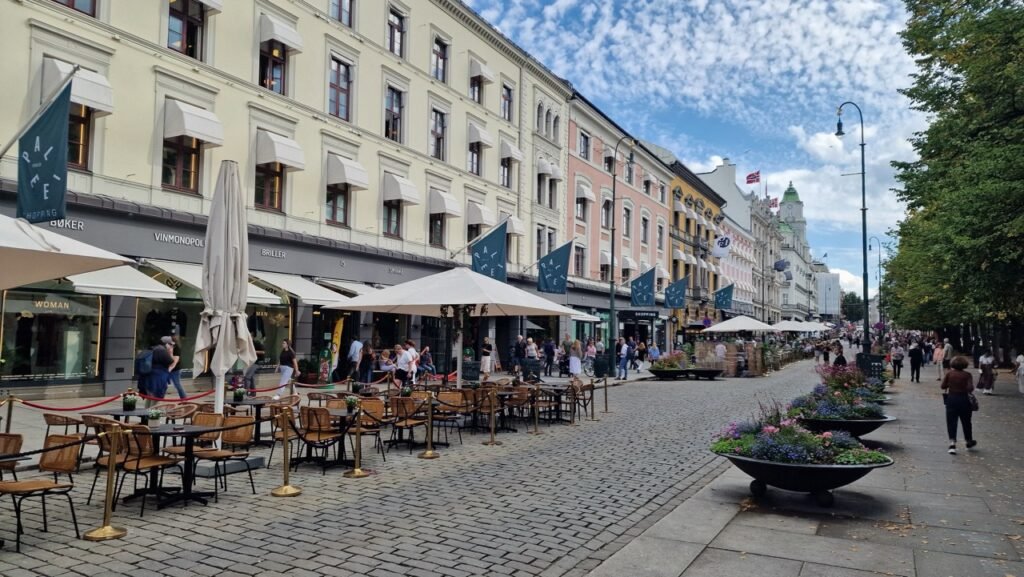
And there is one more practical detail worth mentioning. Many of the trains connecting Oslo Airport with the city continue beyond Oslo S and also stop at Nationaltheatret, near the other end of Karl Johans gate. This can be extremely convenient for a one-day itinerary: you can get off at one end of the city-center walk and, depending on your train, head back to the airport from the other instead of retracing your steps.
The Royal Palace
At the western end of Karl Johans gate, opposite Nationaltheatret, sits the Norwegian Royal Palace, Det kongelige slott.
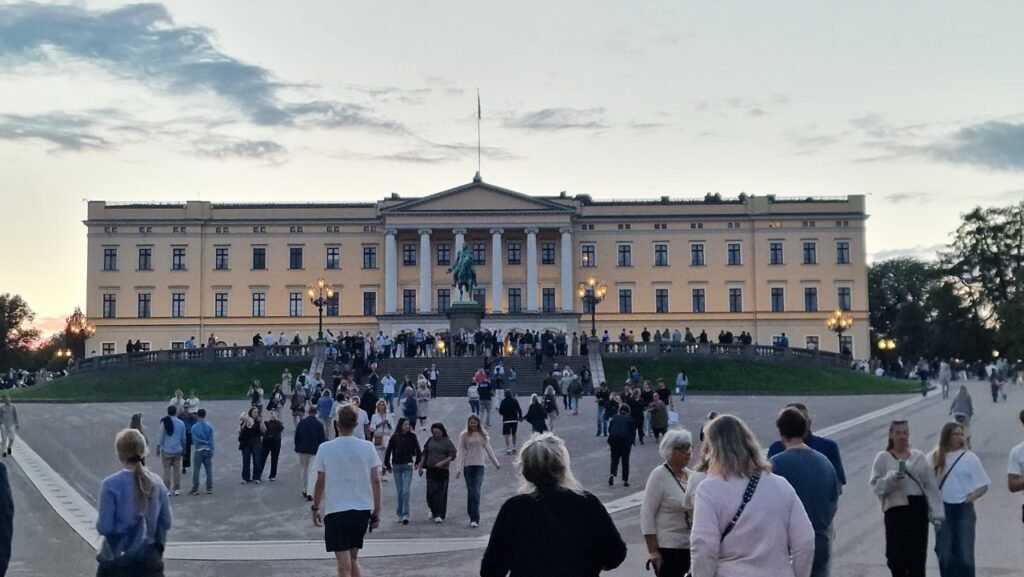
The palace is the official residence of the Norwegian monarch and one of the most important landmarks in Oslo. The building itself is elegant rather than overwhelming, but its position at the top of the street gives it a very prominent presence.
It is also surrounded by Slottsparken, the Royal Palace Park, which is open to the public and makes this a pleasant place to start—or finish—your walk through central Oslo. Even if you do not go inside, it is well worth walking up to the palace for the view back down Karl Johans gate.
Nationaltheatret
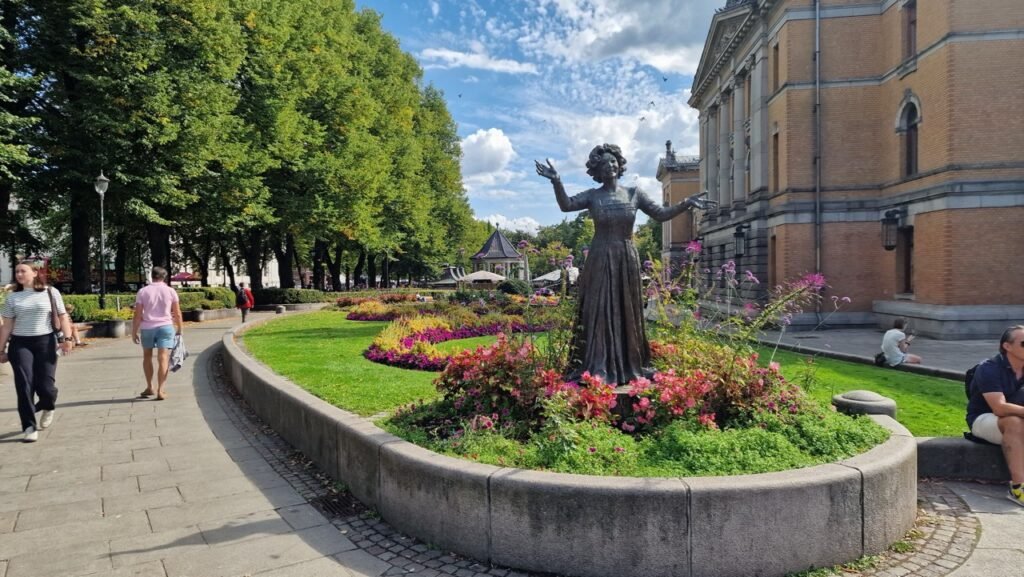
Just below the Royal Palace, in Studenterlunden, you’ll pass Nationaltheatret, Norway’s National Theatre. The building opened in 1899 and is worth a quick look even if you’re not going to a performance. In front of it stand statues of two giants of Norwegian literature, Henrik Ibsen and Bjørnstjerne Bjørnson, which were unveiled when the theater opened.
The University of Oslo – Faculty of Law
Almost opposite the theater, you’ll find another impressive group of buildings around Universitetsplassen, belonging to the University of Oslo. This historic city-center complex includes Domus Media, Domus Academica, and Domus Bibliotheca, and today several of these buildings are used by the university’s Faculty of Law – Det juridiske fakultet.
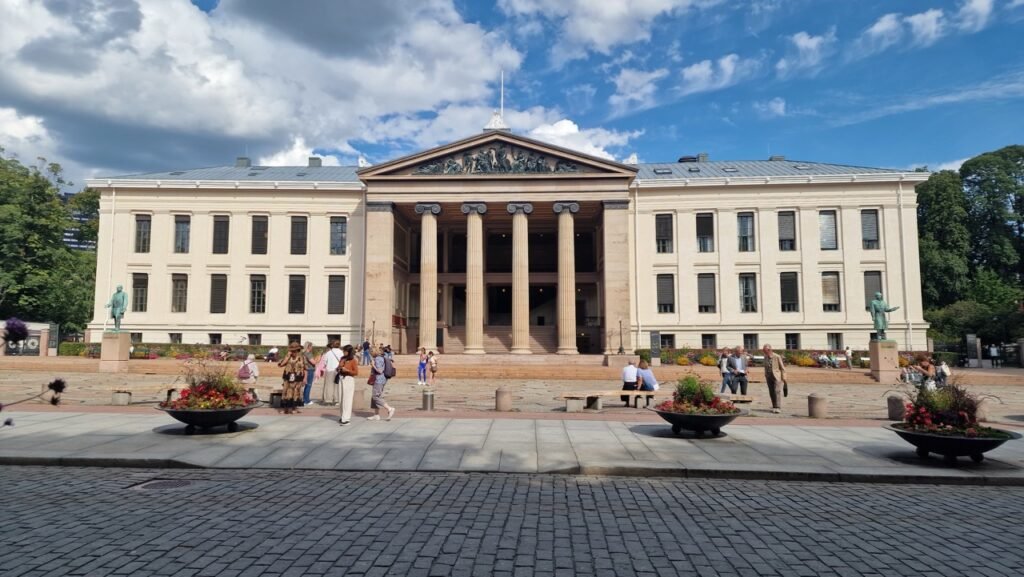
Even if you have no reason to enter, the classical façades and the open square make this one of the nicest architectural stretches along Karl Johans gate, and it takes only a minute or two to walk through.
Oslo City Hall, Aker Brygge and Tjuvholmen
A short detour toward the waterfront takes you to Oslo City Hall, or Oslo rådhus, one of the city’s most recognizable buildings. This is also where the Nobel Peace Prize ceremony is held every December.
I personally skipped these during my one day in Oslo. With only a limited amount of time, I had to prioritize.
If you have a little more time, though, this is also the natural place to continue toward Aker Brygge and Tjuvholmen, two neighboring waterfront areas filled with restaurants, cafés, modern architecture, and harbor views. They offer a very different side of Oslo from Karl Johans gate and the historic city center.
For a relaxed one-day visit, especially in good weather, this whole waterfront stretch could easily be worth adding to your walk.
The Norwegian Parliament
Right along Karl Johans gate you’ll also pass Stortinget, the home of the Norwegian Parliament.
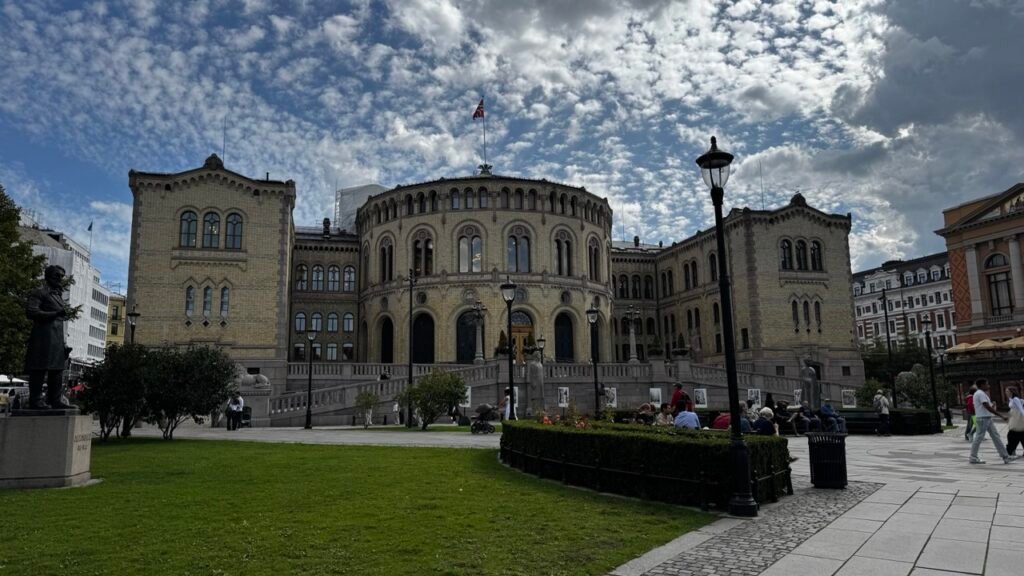
The building sits prominently in the middle of the city center, so it is almost impossible to miss if you follow this route. Even if you don’t go inside, it is worth stopping for a few minutes to take in the distinctive semicircular façade and the open square in front.
For a one-day walk through central Oslo, it fits perfectly into the route between the Royal Palace area and Oslo Cathedral.
Grass Roots Square and the Government Quarter
One detour I was particularly glad we made was through Oslo’s Government Quarter, Regjeringskvartalet. The area itself was surprisingly impressive, with monumental government buildings, modern architecture, open public spaces, and art integrated directly into the surroundings.
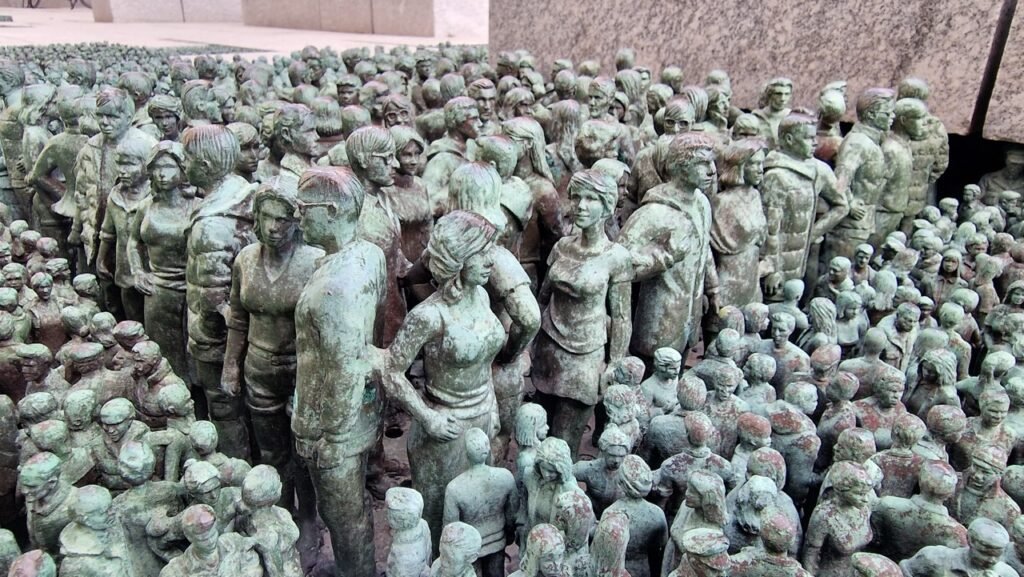
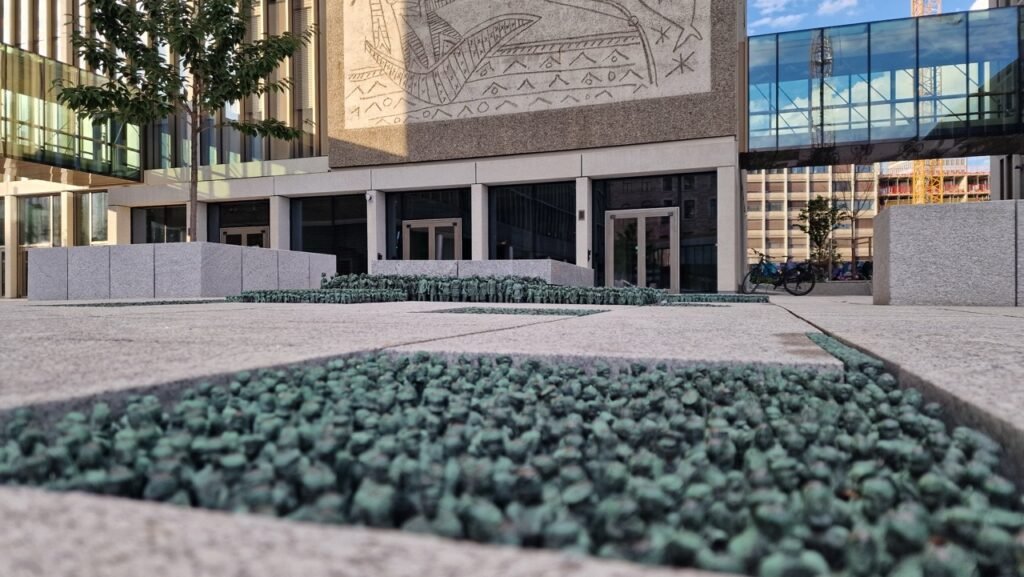
The highlight for me was Grass Roots Square, an unusual artwork by South Korean artist Do Ho Suh. Look closely between the paving stones and you’ll discover around 50,000 tiny bronze human figures, seemingly supporting the square above them—a clever symbol of society and democracy being built on ordinary people. The artwork now sits at Einar Gerhardsens plass in the heart of the renewed Government Quarter.
It’s very easy to walk past without noticing what is under your feet, which somehow makes discovering it even better.
Oslo Cathedral
Continuing east along Karl Johans gate, you’ll soon reach Oslo Cathedral, or Oslo domkirke, just off the main street at Stortorvet.
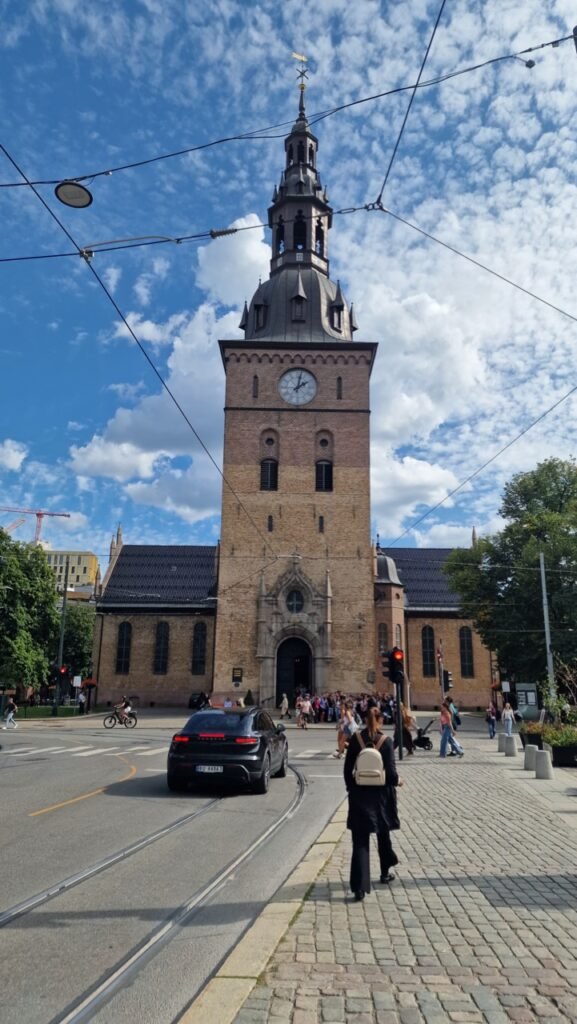
The current cathedral dates back to the late 17th century and is the main church of the Diocese of Oslo. Compared with some of Europe’s grand cathedrals, it is relatively modest in size, but its location right in the heart of the city makes it an easy and worthwhile stop.
Even if you don’t go inside, it only takes a few minutes to walk over from Karl Johans gate and have a look before continuing toward Oslo S.
Oslo S and the Tiger
At the eastern end of Karl Johans gate you’ll reach Oslo S, the city’s main railway station. The station itself is more useful than beautiful, but it is an important landmark for a one-day visit—and most likely where you arrived from the airport.
Right in front of it, at Jernbanetorget, stands Oslo’s famous bronze tiger. It refers to Oslo’s old nickname, Tigerstaden, or “The Tiger City,” and has become one of the city’s most recognizable photo spots.
Oslo Opera House and Bjørvika
From Oslo S, it’s only a few minutes on foot to the Oslo Opera House, one of the city’s most recognizable modern landmarks.
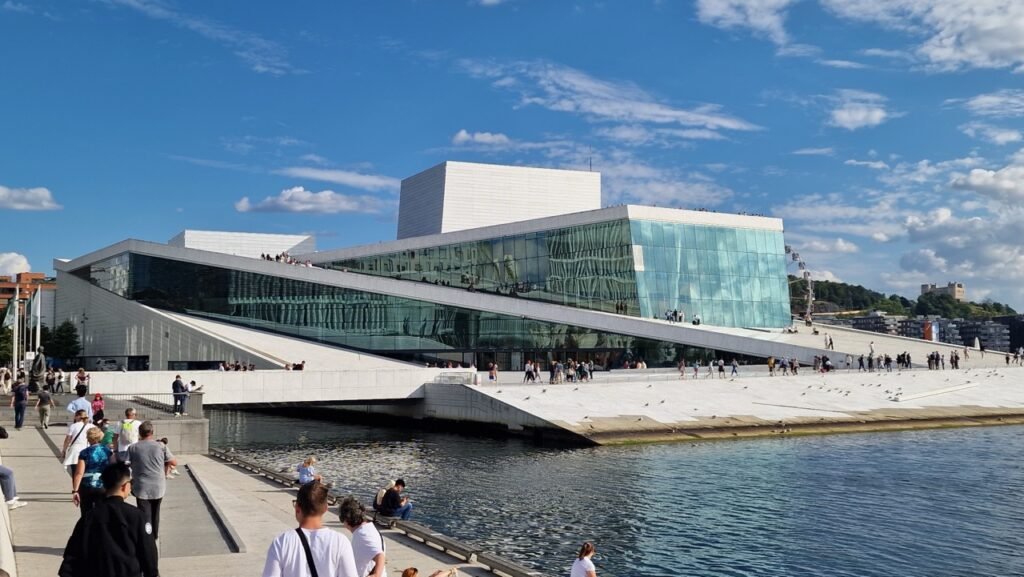
Opened in 2008, the building is famous for its sloping white roof, which you can actually walk up. Even if you have no intention of seeing a performance, it’s worth climbing to the top for the views over the Oslofjord and the surrounding Bjørvika district.
This is also where Oslo suddenly feels much more modern. Around the Opera House you’ll find the newer waterfront developments, including the Barcode skyline and the MUNCH museum, all within a very compact area.
For me, this was one of the nicest contrasts during my one day in Oslo: you can walk straight from the older city center around Karl Johans gate into a completely different, much more contemporary part of the city in just a few minutes.
Akershus Fortress
Another major sight that is definitely worth knowing about is Akershus Fortress, or Akershus festning, overlooking Oslo’s harbor.
The medieval fortress dates back to the late 13th century and has served as both a royal residence and an important military stronghold. Today, you can walk around much of the grounds and enjoy some excellent views over the waterfront and Oslofjord.
I personally skipped Akershus during my one day in Oslo simply because there wasn’t enough time to fit everything in. But if history interests you, or you have a little more time than we did, this would probably be one of the first sights I would add to the itinerary.
Tasting Local Food in Oslo
Now, the Norwegian food scene might not be as rich as the Italian one, for example, but I would never miss the chance to try local specialties when visiting another city.
And keep in mind that Oslo is a very international city. Just by walking its streets, you can come across almost any cuisine on the planet.
As is the case in many European cities these days, if you’re not specifically looking for local food, it can actually be the easiest thing to miss. International restaurants are everywhere, while traditional Norwegian dishes often require a little more intention to find.
So for this one day in Oslo, I made sure that sightseeing wasn’t the only priority. I also wanted to taste at least a few things that actually felt Norwegian.
Skolebrød
Let’s start with probably the easiest Norwegian specialty to try in Oslo: skolebrød.
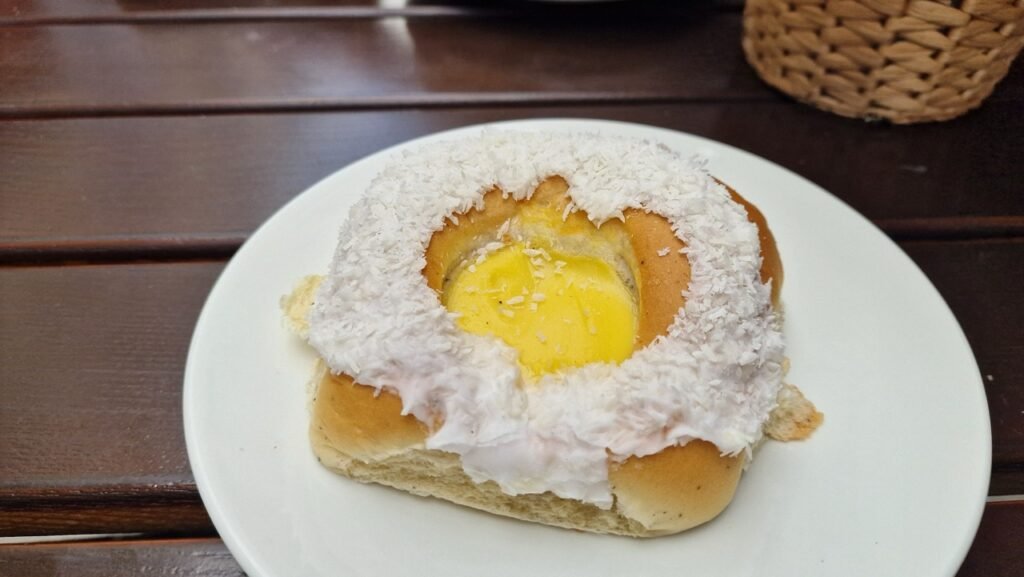
You can find it in bakeries all over the city, so unlike some traditional dishes, you don’t really need to go searching for it. It’s a sweet bun filled with vanilla custard, usually topped with icing and coconut.
I really liked the one I tried. There is nothing particularly complicated or unusual about the pastry itself, but the coconut gave it a very distinct flavor and made it much more memorable than I expected.
If you want to try just one simple Norwegian pastry during your day in Oslo, this is probably the easiest place to start.
Vaffel med Brunost
Another very Norwegian sweet treat is vaffel med brunost, and we tried ours at one of Oslo’s best-known waffle spots, Haralds Vaffel.

Norwegian waffles are quite different from the thick Belgian or American versions. They are usually thinner, softer rather than crispy, and traditionally cooked in a heart-shaped waffle iron. On their own, they are mildly sweet and quite simple, which makes the toppings especially important.
I went for the version with jam, sour cream, and brunost—probably the most traditional combination you can choose.
And this is where things get interesting. The jam brings sweetness and fruitiness, the sour cream adds a cool, slightly tangy contrast, while the brunost gives the whole thing that unmistakable caramel-like, slightly salty flavor. Brunost, Norway’s famous brown cheese, is made by cooking down whey until the milk sugars caramelize, which explains its very distinctive color and taste.
Altogether, it sounds like an unusual combination, but it works surprisingly well. Sweet, sour, creamy, and slightly savory at the same time, all on top of a warm, soft waffle.
For me, this felt much more distinctly Norwegian than the skolebrød. Not necessarily better, but definitely something I would recommend trying at least once while you’re in Oslo.
Tip: This is where that 24-hour Ruter ticket comes in handy. Haralds Vaffel, and several of the food stops coming up next, are a little farther from the immediate city center. You can walk, but if you want to save time during one day in Oslo, hopping on a tram or bus is much easier.
Pølse i Lompe at Syverkiosken
If you want something savory after all the sweets, pølse i lompe is probably one of the most Norwegian street foods you can try. Instead of putting the sausage into a regular hot-dog bun, it is wrapped in lompe, a thin, soft flatbread made mainly from potatoes and flour. It’s a very simple combination, but also a very traditional one in Norway.

We tried ours at Syverkiosken, at Alexander Kiellands plass. It’s one of Oslo’s last traditional hot-dog kiosks, and definitely one of the most famous places in the city to try pølse i lompe. Their sausages are heated in a seasoned stock, while the toppings are made in-house.
The lompe itself is soft and mild, so unlike a big bread bun it doesn’t overpower the sausage. The whole thing feels lighter and more straightforward than the hot dogs most of us are used to—basically sausage, potato flatbread, and whatever toppings you choose.
Kaffistova – Traditional Norwegian Food
If you’re looking for traditional Norwegian food in Oslo, Kaffistova is probably one of the restaurants you want to have on your list. It has been around since 1901, so you could say they’ve had some time to learn their trade. Traditional Norwegian food is still very much the focus here.
Our experience started with a little confusion. We tried to reserve a table over the phone and were told that we couldn’t, but that we should simply show up around 7:30. When we did exactly that, we were initially told there were no free tables. Fortunately, they managed to find one for us in the end, and from that point on the service was nice.
The menu during our visit was surprisingly small, with only a handful of dishes in the meat and fish categories. So this is not necessarily the restaurant where you can sit down and sample every famous Norwegian dish in one evening. But what they do serve is very much rooted in traditional Norwegian cooking, and the menu can change, so it’s worth checking what is available when you visit.
I went for the Norwegian meatballs, or kjøttkaker, which came with brown gravy, boiled potatoes, lingonberry jam, and mashed peas. As it turns out, that combination is about as traditional as it gets: Norwegian kjøttkaker are commonly served with boiled potatoes, brown gravy, mashed dried peas or other vegetables, and lingonberries.
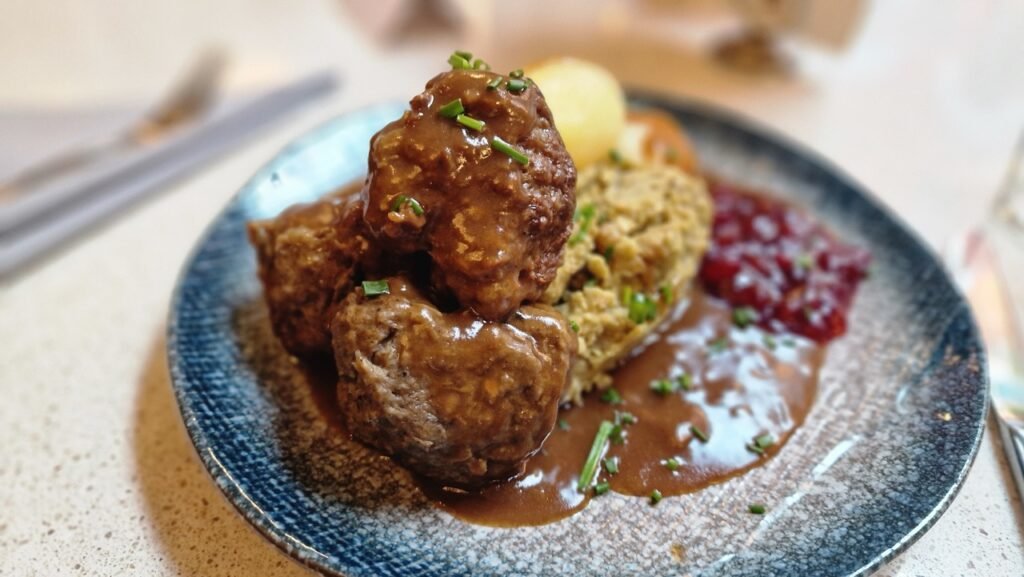
It took me a few bites to get used to the taste, but I mean that in a good way. These were quite different from the Swedish meatballs most international visitors probably know. They were larger, denser, and more intensely flavored. The texture almost reminded me of a cooked pâté: compact and finely worked rather than loose and juicy, with the seasoning coming through much more strongly.
And Kaffistova is apparently quite serious about its kjøttkaker. The restaurant says it sells more than four tonnes of them every year, which probably tells you something about how closely this dish is associated with the place.
We also tried their reindeer burger, ordered with a gluten-free bun. The gluten-free bun admittedly didn’t make it the most photogenic burger I’ve ever seen, but having that option at all was a big plus.
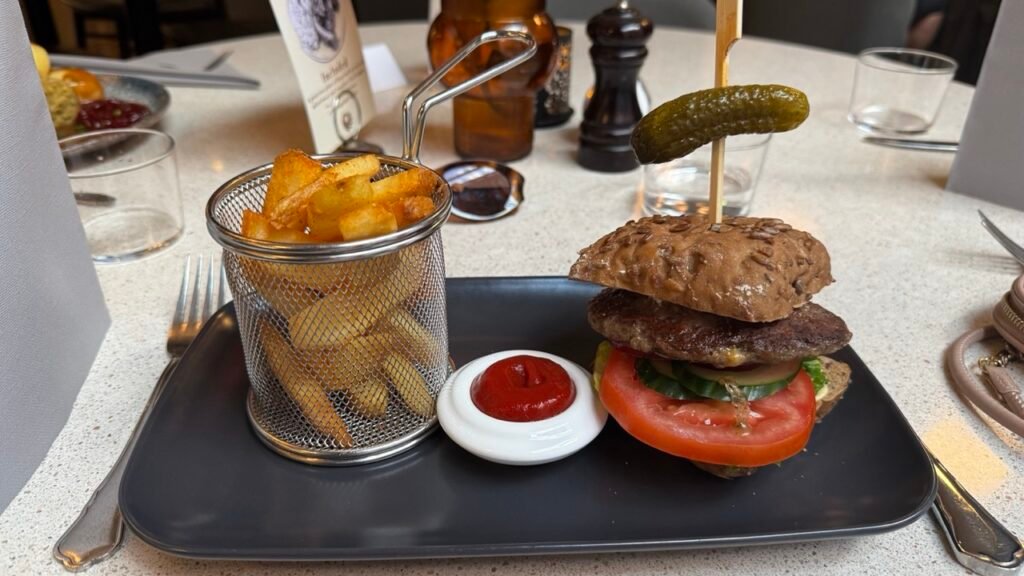
Reindeer has a distinctly stronger, somewhat gamey flavor than regular beef, so you immediately know you’re eating something different. It is also one of the meats strongly associated with Norwegian food, particularly the cuisine of northern Norway and Sámi traditions.
The World’s Best Cake – Or Rather, the One We Didn’t Get
My biggest disappointment at Kaffistova had nothing to do with the food we actually ate.
I had specifically planned to try Verdens beste, literally “The World’s Best,” also known as Kvæfjordkake. It’s one of Norway’s best-known cakes, and Kaffistova had been one of the places where I was particularly looking forward to trying it.
Unfortunately, they had changed their menu about a week before our visit and removed the cake.
That would have been disappointing enough, but it also led to one of the stranger service moments of the evening. I couldn’t see the cake in the display, but one of the waiters assured us that they still had it and took my order. Then nothing happened.
After about 20 minutes, I asked another member of staff what had happened. She was extremely apologetic and explained that the waiter who had taken our order had already left—and apparently hadn’t realized that the cake had been removed from the menu.
So no World’s Best Cake for me this time.
With such a short visit, I simply didn’t have enough time left to hunt for it elsewhere. But if you do, don’t let my bad luck stop you: Verdens beste is served at several places around Oslo, and I definitely think one of Norway’s most famous cakes is worth seeking out.
A strange experience, especially because I had been looking forward to this particular Norwegian treat before we even arrived in Oslo. But it also proves one useful point: Kaffistova’s menu does change, so if there is one specific dish or dessert you really want to try, it’s worth checking shortly before your visit rather than relying on an older menu.
Glutenfrihuset Tøyen – A Great Stop for Gluten-Free Pastries
If you’re gluten-free, Oslo is actually quite easy to navigate. You can find gluten-free pastries at several places around the city, and Baker Hansen, for example, usually has a few different options at multiple locations.
But if you want a much larger selection, Glutenfrihuset Tøyen is the place I would specifically seek out.
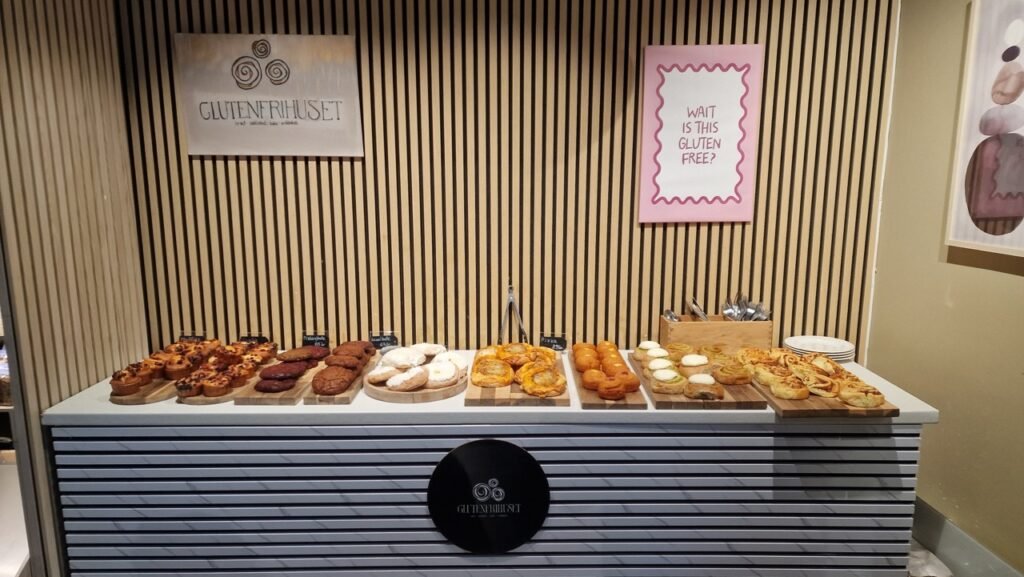
It requires a small detour from the immediate city center, but in our case it was absolutely worth it. They had a wide range of gluten-free baked goods, so instead of choosing from one or two token options, you actually get the feeling of being in a proper bakery.
The highlight for us was the cinnamon roll. Gluten-free pastries can sometimes be a little dense or dry, but this one was surprisingly fluffy, soft, and genuinely delicious.
If someone in your group is gluten-free, I would definitely put Glutenfrihuset Tøyen on the list. It was one of those food stops that felt worth the extra tram or bus ride.
Håndbakt Tøyen – Coffee and Cardamom Buns
And if you happen to be traveling with someone who eats gluten while others don’t, we found a very convenient solution almost opposite Glutenfrihuset: Håndbakt Tøyen.
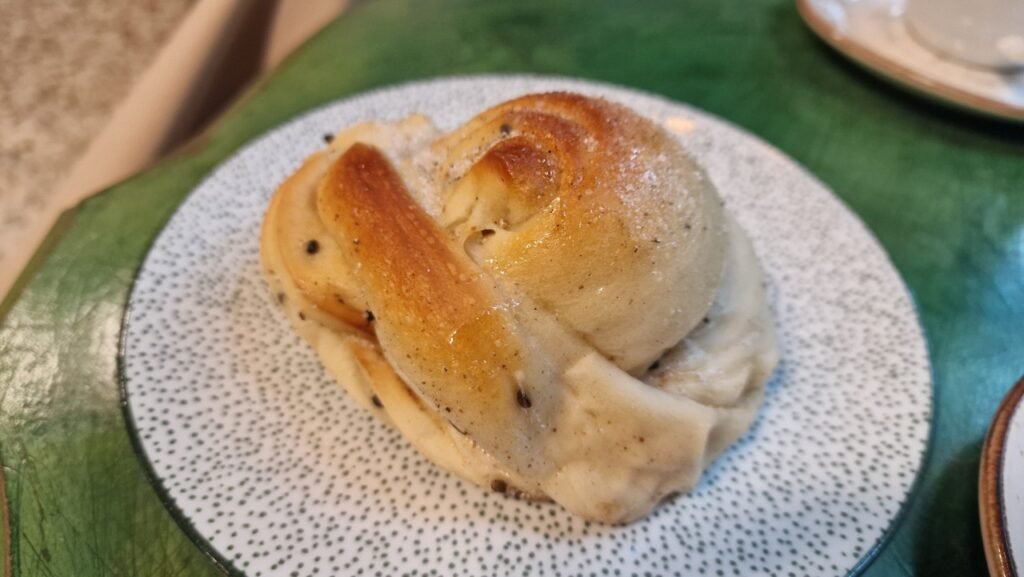
It’s a nice little coffee shop with a very local feel, well away from the most touristic parts of Oslo. The coffee was good, and so were their cardamom buns, another classic Nordic bakery treat.
Compared with the Danish cardamom buns I’m more used to, these felt noticeably fluffier and a little less intense in cardamom. Personally, I prefer the denser, more strongly spiced Danish style, but this was still a very enjoyable pastry and definitely worth trying.
So if your group has mixed dietary needs, this little corner of Tøyen works particularly well: gluten-free pastries on one side of the street, excellent regular baked goods and coffee almost opposite.
A Sad and Unexpected Memory of Oslo
Our one day in Oslo also happened to coincide with a very sad moment in Norwegian history.
On our last evening, we noticed an immense number of people walking toward and away from the Royal Palace. At first, we had no idea what was happening. Only later did we see in the news that King Harald V’s condition had become critical.
Hundreds of people had gathered around the palace, many bringing flowers and quietly standing together in what felt like an informal vigil. It was one of those moments when you suddenly realize that you are witnessing something much bigger than your own trip.
The following morning, King Harald’s death was announced. He had died at Oslo University Hospital at 6:35 AM on August 28, 2026.
Before leaving Oslo, we went back to the Royal Palace. Even more people had gathered by then, and the number of flowers had grown considerably.
What struck me just as much was how the whole city seemed to change overnight. Advertising screens in metro stations, at train stations, on public transport, and elsewhere around Oslo were showing a simple portrait of the king with 1937–2026 underneath.
It was obviously not something we had expected to experience during a short visit to Oslo, and certainly not a happy memory. But it became an inseparable part of how I will remember that day and the city.

Oslo Day Visualized on a Map
Here you can find this one day Oslo itinerary on an interactive map.