A long weekend in the Canary Islands might sound a little strange at first, but as you’ll see, it’s actually not such a crazy idea. (A video trip report was also planned when I first wrote this article.)
I’ve tried it myself, and I can honestly say that if you only have a few days to spend in Tenerife, or you’re simply looking for a more interesting, unusual, perhaps even exotic way to spend a long weekend, this is definitely an option worth considering!
So let’s look at what I experienced during my three-day long weekend in Tenerife, the Canary Islands.
Flying From Budapest to Tenerife With Wizz Air
I flew round-trip from Budapest to Tenerife with Wizz Air. At the time of my trip in 2019, this wasn’t just a convenient option. It was also the only nonstop flight from Hungary to Tenerife, and its schedule was almost perfectly suited to a long weekend.
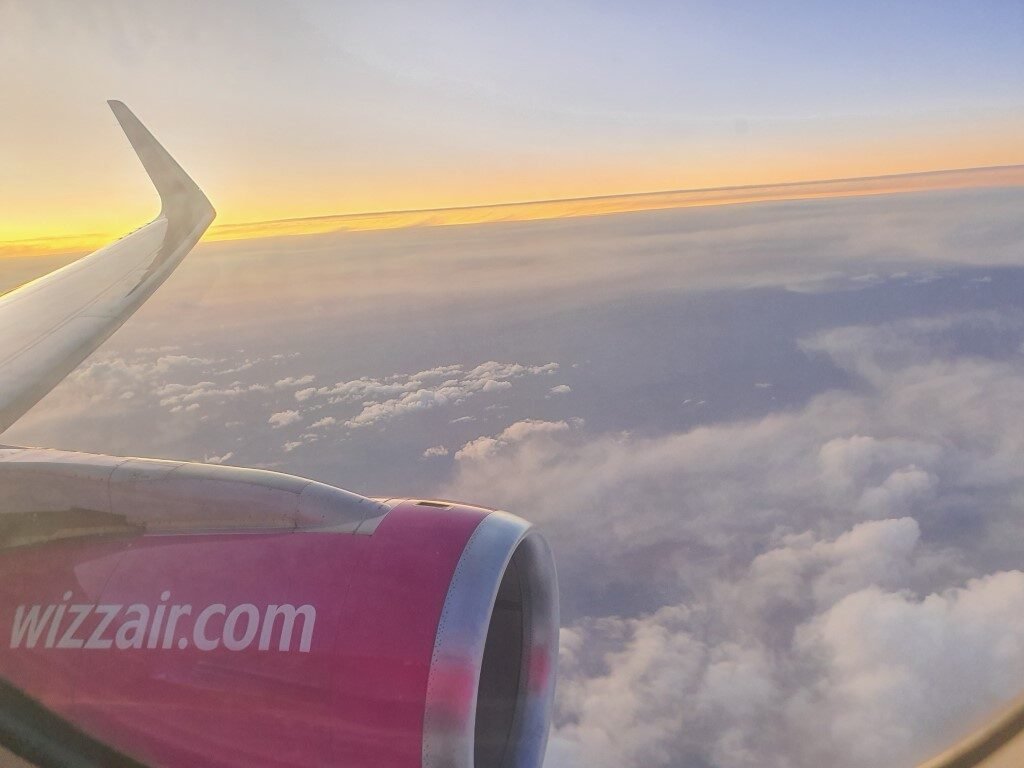
Back then, flights departed on Fridays and Mondays, and even the departure times worked out remarkably well for a short trip.
With a Friday departure around noon from Budapest, you could still get a few things done at home before leaving. And thanks to the one-hour time difference, combined with the Spanish habit of staying up and eating later in the evening, you still had time to get a taste of the island after arriving. Whether that meant a walk along the ocean or a nice dinner, your vacation could begin that very same evening.
On Monday, you still had the island to yourself until the early afternoon. You only needed to get to the airport around 3:30 or 4 p.m.
Of course, the flight isn’t particularly short. You’re on the plane for about five and a half hours, which almost feels like a transatlantic journey. And let’s face it, Wizz Air isn’t exactly famous for its spacious cabins or onboard services.
Still, the flight attendants were friendly, and despite being packed in like sardines, I found the seats reasonably comfortable. With a good book or a movie you’ve downloaded yourself, the flight is perfectly manageable. And you’ll definitely want to bring your own entertainment, because there was no onboard entertainment system on these flights.
After flying over Italy, the Mediterranean, and northern Africa, the Canary Islands eventually appear below you, and the plane begins its descent toward Tenerife South Airport.
The island’s iconic volcano, Mount Teide, dominates the landscape—provided you’re sitting on the right side of the plane, of course.
You might also notice some surprisingly large covered plantations. These are banana plantations, growing one of Tenerife’s most important agricultural products alongside tobacco. Canary Island bananas are considerably smaller than the ones we’re generally used to buying in Hungary, but they’re absolutely delicious.
When I arrived, the Atlantic winds even treated us to a pleasantly bumpy landing. Apparently, that’s something you should be prepared for around here.
Flying to Tenerife can also be surprisingly inexpensive. If you’re flexible with your dates, don’t insist on traveling during peak season, and can manage with a small carry-on bag, you might find very affordable round-trip tickets.
Back when I traveled, prices could be as low as €123–€185 round-trip.
I brought a checked bag as well, mainly because I wanted to bring presents home for the kids. I ended up paying approximately €410 for my round-trip ticket in late September 2019, booking roughly three weeks before departure.
What’s the Weather Like in the Canary Islands?
Speaking of peak season, one of the biggest reasons to consider a trip to the Canary Islands is the weather.
The islands are relatively close to the Tropic of Cancer, at roughly the same latitude as the Sahara, a few hundred kilometers west of the southern part of Morocco. And since they’re surrounded by the Atlantic Ocean, they don’t really experience the four distinct seasons we’re used to in Central Europe.
The weather is remarkably similar throughout the year. Daytime temperatures around the coast are often close to 20°C (68°F) even in winter, while summer temperatures generally stay below 30°C (86°F). At night, temperatures are often somewhere between 15°C and 22°C (59–72°F).
There’s a reason Tenerife is often called the Island of Eternal Spring.
The weather is pleasantly mild throughout the year, which actually makes the months outside the traditional summer vacation season particularly appealing.
Just imagine leaving the chilly fall weather back home and walking around in shorts in October, enjoying sunshine and temperatures around 25°C (77°F).
For me, that alone can make a trip to Tenerife worthwhile.
But What Exactly Is Tenerife?
Tenerife is the largest and most populated of the Canary Islands’ eight main islands, and one of the archipelago’s most popular tourist destinations.
If you’re planning a long weekend from Hungary, I’d recommend forgetting about visiting multiple islands. At the time of my trip, Tenerife was the only island with a direct flight that worked well for a weekend getaway, and traveling between islands would have taken up too much of those precious few days.
Ryanair also operated a direct flight to Gran Canaria, but only once a week, in the middle of the week.
Besides, Tenerife alone has more than enough to keep you busy for a weekend—or even a much longer vacation.
Before we get to the most interesting sights and what I managed to see during my three days on the island, let’s talk about two practical things that are worth considering on almost any trip, but are particularly important in the Canary Islands: accommodations and renting a car.
Where to Stay in Tenerife
You’re not very likely to find me on an organized vacation package. And let’s face it, travel agencies in Hungary probably don’t offer many packages advertised as “A Long Weekend in the Canary Islands.”
It’s not exactly a huge market.
Most people who travel all the way to Tenerife want to stay for at least a week. But that shouldn’t stop you from planning a shorter getaway. It certainly didn’t stop me, and the experience was absolutely worth it.
For a long weekend, though, you’ll most likely have to arrange your own accommodations.
Fortunately, that shouldn’t be difficult. Tourism is a major part of Tenerife’s economy, so there are plenty of places to stay.
I stayed at the Vigilia Park Hotel in Puerto de Santiago, which, if I understood correctly, was fairly popular among Hungarian visitors.
I was very happy with my choice. Three nights cost me €180 for what was essentially a one-bedroom apartment with a living room and a wonderful view.
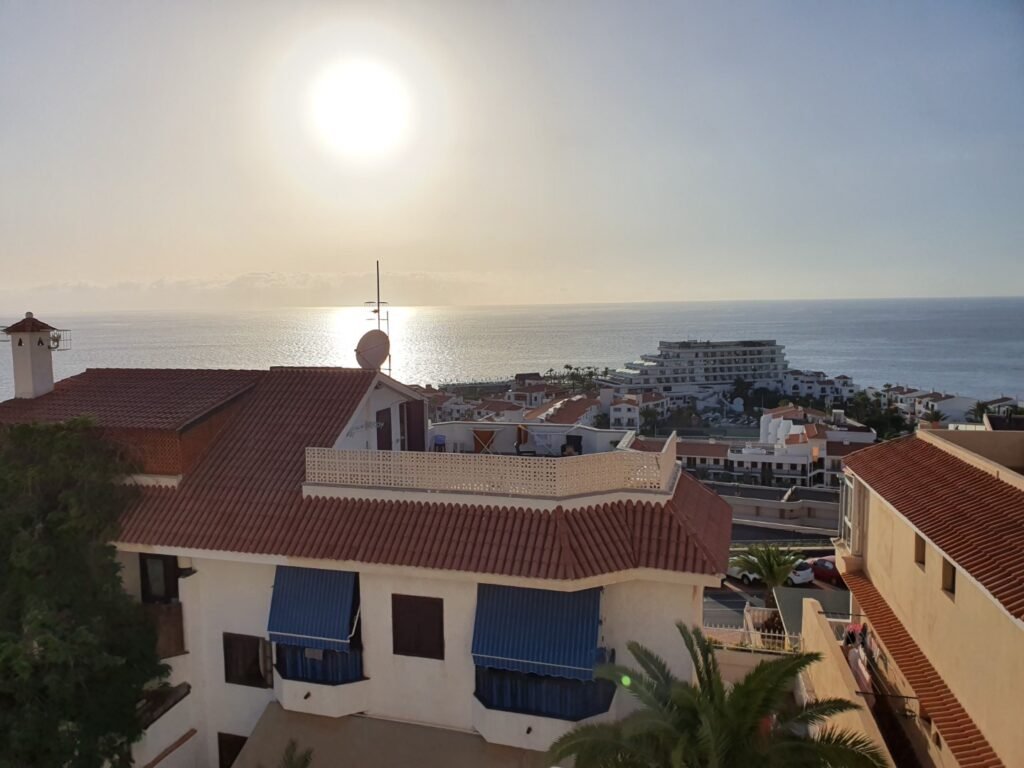
Another big advantage was the location. It was easy to reach, but it wasn’t in one of those places I’d describe as a tourist factory.
Some towns in southern Tenerife seem to exist almost entirely to accommodate the hundreds—or even thousands—of tourists brought in from all over Europe and the rest of the world.
Maybe that’s exactly what some people enjoy. But personally, if I have the chance to experience at least a little of how local people live, why wouldn’t I?
And here’s a funny little bonus.
Just a stone’s throw from Vigilia Park, you’ll find what might be the Lidl supermarket with the most beautiful view in the world!
Imagine going grocery shopping and, after passing through the checkout, finding yourself thinking not about your shopping or whether you need to return something, but about the incredible view of the Atlantic Ocean.
That’s not exactly an everyday supermarket experience, is it?
Renting a Car in Tenerife
Now let’s talk about renting a car.
Public transportation on Tenerife is actually very good. But if you’re only staying for a few days and want to see as much of the island as possible, it’s going to be difficult to do that without a rental car.
The good news is that, at least when I visited, the Canary Islands were relatively inexpensive. So if you’ve already decided to spend a long weekend here, renting a car probably won’t be the expense that breaks your budget.
You can read my detailed tips in my separate article about renting a car in the Canary Islands.
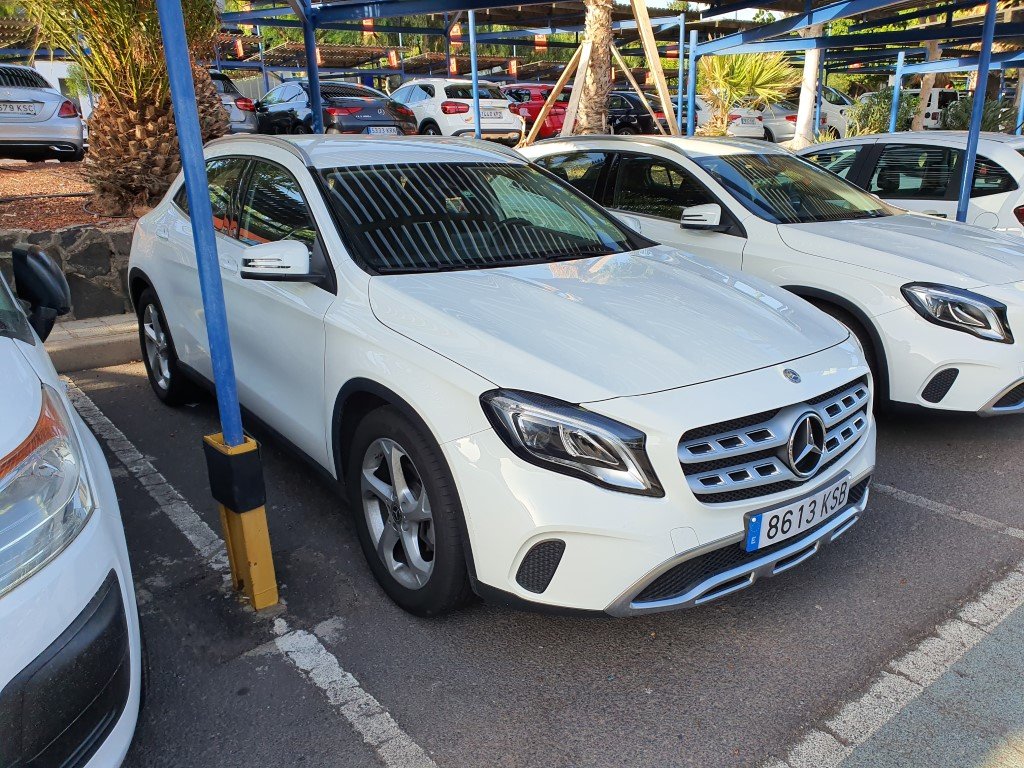
During my trip, rentals could start at around €20 per day. The automatic Mercedes GLA 180 I rented cost exactly €137.22 for three days.
That price included everything, including insurance. The only additional expense was gas, which was also relatively inexpensive on the islands.
When I visited, a liter of gas cost €0.98, compared with roughly €1.20ű back home in Hungary. At the exchange rate at the time, that made gas about 15% cheaper in Tenerife.
In total, I spent €55 on gas, and that was enough to explore a pretty substantial part of Tenerife, driving back and forth and up and down the island.
Why Are the Canary Islands So Affordable?
The Canary Islands have traditionally been relatively inexpensive compared with many other European vacation destinations.
Of course, that doesn’t mean everything costs a fraction of what you’d pay in Hungary. But the islands have a special tax status within Spain, which helps keep many taxes lower than in other parts of Europe.
And that can make a noticeable difference to everyday expenses, including gas, accommodations, restaurants, and grocery shopping.
Let me give you a few examples from my trip.
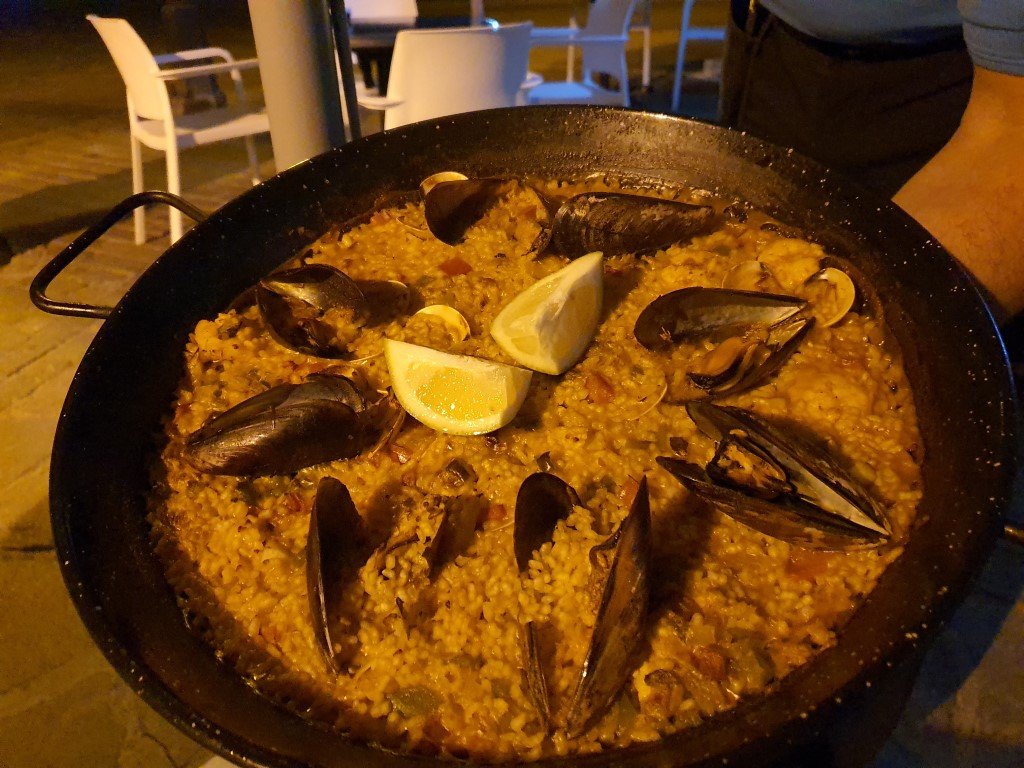
One evening, three of us enjoyed an excellent dinner right by the ocean. And I mean literally next to the Atlantic.
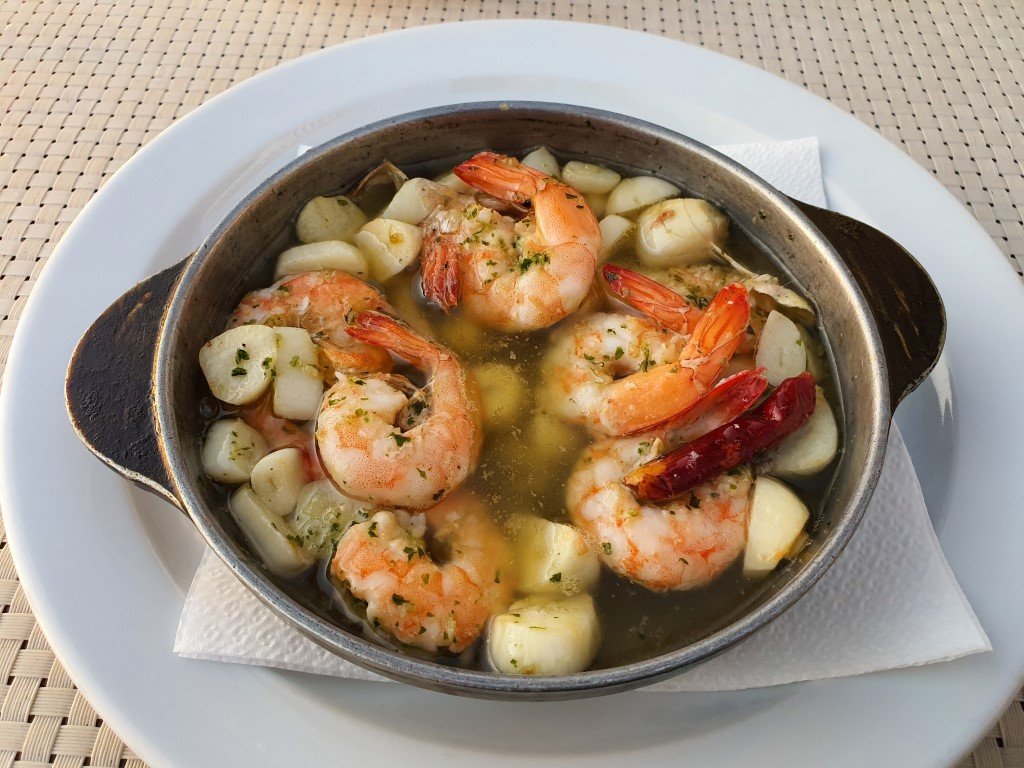
We ordered two large seafood paellas and two servings of a Spanish specialty called gambas al ajillo, or garlic shrimp, along with our drinks.
The entire bill came to €53.90.
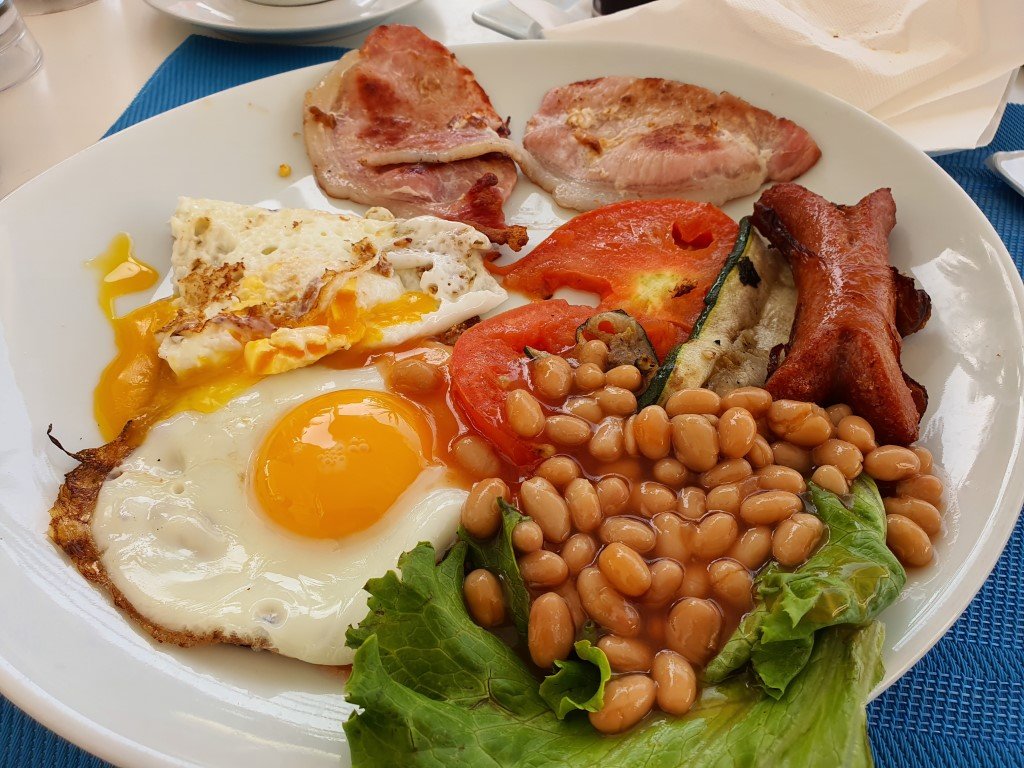
At another restaurant, we ordered two very generous full English breakfasts and three coffees. The total bill was €18.20.
Of course, what counts as cheap is always relative.
But compare those prices with what three people would have paid for similar meals in Budapest at the time, and I think you’ll understand why I found Tenerife so affordable.
What Can You See in Tenerife in 3 Days?
Now let’s get to the sightseeing. What can you actually experience during three days—or one long weekend—in Tenerife?
Beaches
My first recommendation is simple: don’t leave Tenerife without spending some time at the beach!
Even if you only take a walk along the ocean, it’s an experience in itself. But depending on the weather and the beach you choose, swimming can also be an option throughout much of the year.
The ocean temperature around Tenerife doesn’t usually drop much below 20°C (68°F), even during the winter months. In summer, it can reach around 22–23°C (72–73°F), and the shallow water along sandy beaches can feel especially pleasant when the sun is shining.
And you don’t even have to go far from shore to experience something amazing!
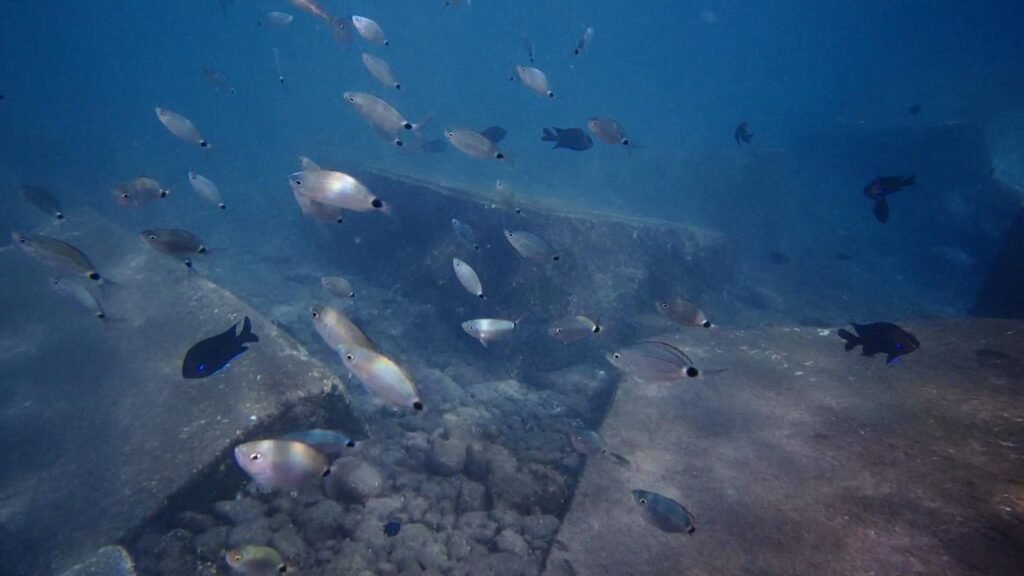
I didn’t bring any scuba diving equipment, but even with a simple snorkeling mask, I was able to see an incredible variety of fish underwater.
And this was during the last days of September, in water that didn’t feel cold at all, while back home in Hungary we were already getting ready for the colder months.
The Northern Coast
The most popular beaches among tourists are generally along Tenerife’s southern and southwestern coasts.
But if you’re looking for a truly memorable experience, I’d also recommend visiting one of the more secluded beaches along the northern coast.
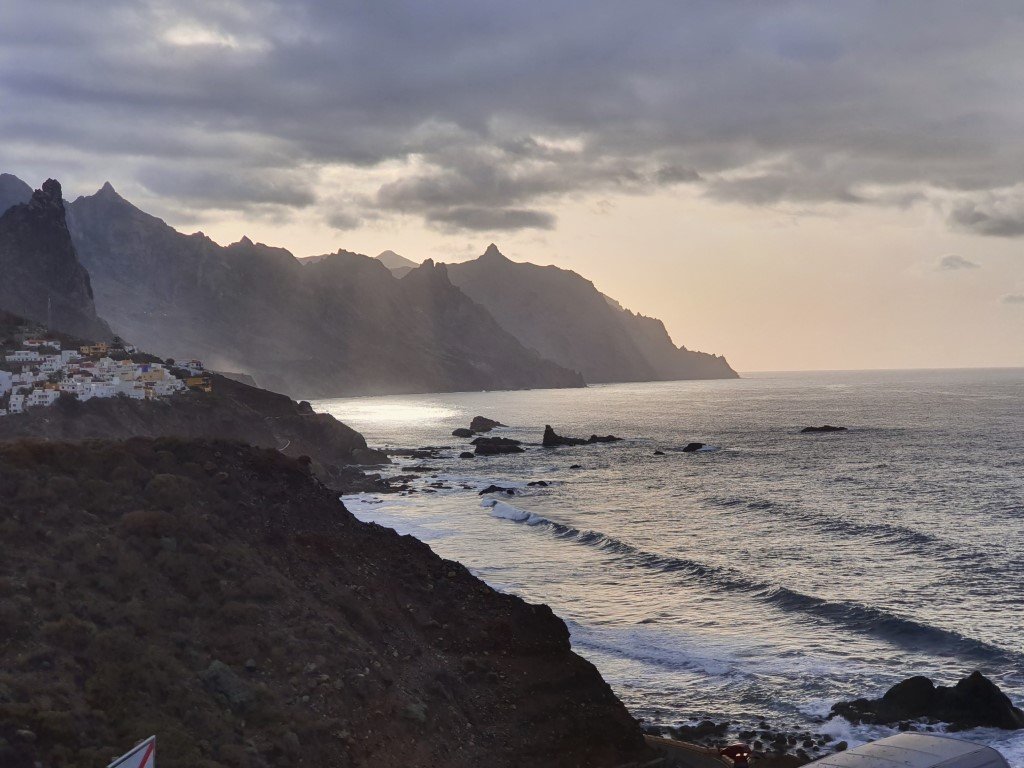
Many beaches here are covered in black volcanic sand, as you’ll find in several other parts of the island. But what really makes the northeastern coast unforgettable is the enormous Atlantic surf.
This part of Tenerife feels surprisingly remote. You need to drive along winding mountain roads for a good hour to reach some of these places, but the journey itself is absolutely breathtaking.
I certainly didn’t regret spending one of my afternoons exploring the mountains in the north.
And the landscape is completely different from what you’ll see in much of the rest of Tenerife.
Thanks to the moist air carried by the northeastern winds, the vegetation here is incredibly lush and green. It’s a striking contrast to the dry, almost Martian landscapes found in other parts of the island.
Mount Teide
Of course, if there’s one place you absolutely have to visit in Tenerife, whether you’re here for a few days or several weeks, it’s Mount Teide.
At 3,718 meters (12,198 feet), Teide is an active volcano, and you can even make your way up toward its summit.
Although the volcano is still considered active, Tenerife’s last volcanic eruption was in 1909. Teide National Park attracts millions of visitors, and I certainly didn’t feel that I was heading into some unusually dangerous tourist destination.
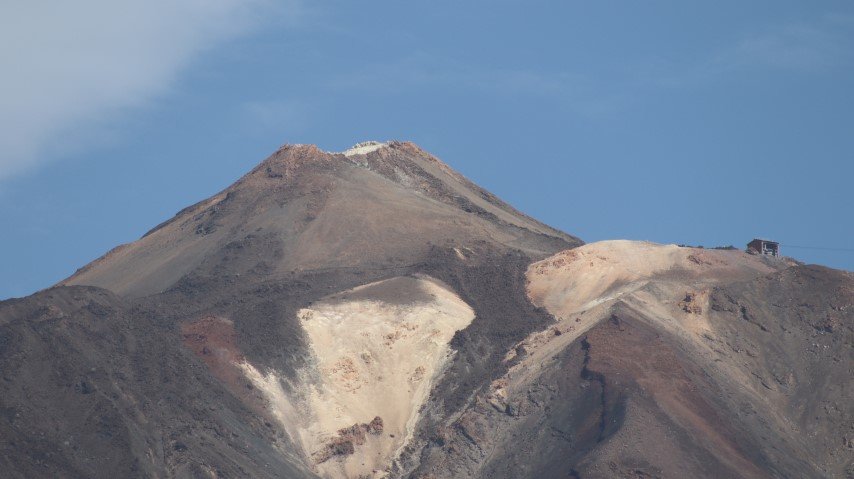
In a way, the entire island is one enormous mountain rising out of the Atlantic Ocean, with the summit of Teide somewhere near the center, sometimes covered in snow during winter.
You can drive up to approximately 2,300 meters (7,550 feet) on excellent, well-maintained roads from different parts of the island.
And even that drive is a fantastic experience.
For one thing, the landscape sometimes looks as though you’ve landed on Mars. For another, the roads are so good that you might almost forget you’re already driving more than 2,000 meters (6,560 feet) above sea level.
From there, you could continue climbing on foot. But I found the cable car a much more appealing option. It takes you almost all the way to the summit.
To reach the summit itself, you need a special permit, which you can request online. However, places are limited and often get booked up two or three months in advance.
I hadn’t arranged a permit early enough, so I missed that opportunity.
In the end, though, I didn’t regret it. More on that in a moment.

I recommend booking your cable car tickets online in advance, including your preferred time slot.
That’s exactly what we did. Unfortunately, when our reserved day arrived, the wind was so strong that we received an email that morning informing us that the cable car wasn’t operating.
Luckily, we were able to reschedule our tickets and try again on Monday morning.
And thanks to our late-afternoon return flight, that still fit perfectly into the last day of our trip.
The cable car ride itself isn’t particularly extraordinary. But arriving at the upper station is a completely different story.
You’re suddenly standing at an altitude of 3,555 meters (11,663 feet). I’d never been that high above sea level in my life.
One of the first things you notice is the cold.
Of course, temperatures around 8–10°C (46–50°F) don’t sound especially cold if you’re used to high elevations in Austria, Switzerland, or Slovakia.
But compared with the pleasant 25°C (77°F) weather we’d been enjoying elsewhere on Tenerife, it certainly felt chilly.
And there’s something even more striking: the thin air.
At this altitude, the available oxygen is roughly two-thirds of what you’re used to at sea level.
And in Tenerife, sea level isn’t some abstract concept. Just a few hours earlier, I’d literally been standing right next to the ocean.
Believe me, you’ll notice the difference when you start walking.
I made the mistake of setting off along the rocky trail at a pretty determined pace—almost running, you might say.
It didn’t take long before I had to stop, catch my breath, and take a few deep breaths just to adjust to the conditions.

San Cristóbal de La Laguna
There was one more major attraction I managed to fit into my three-day Tenerife trip: San Cristóbal de La Laguna.
Today, the city has practically merged with Santa Cruz de Tenerife, the island’s capital, but it has a completely different atmosphere.
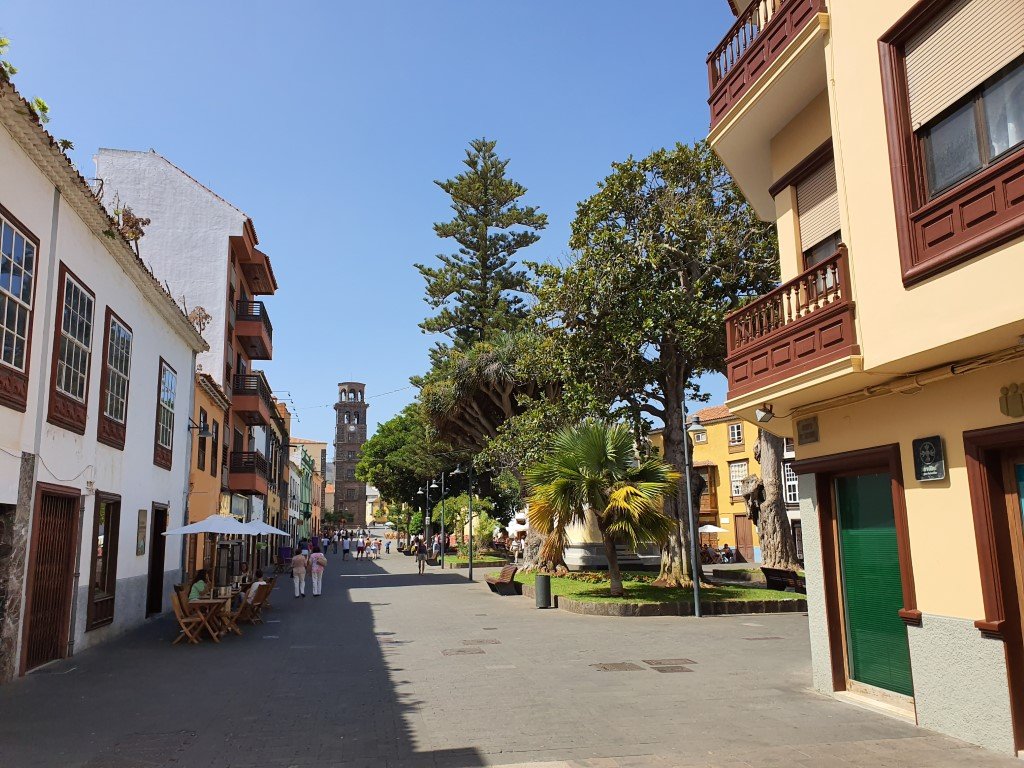
La Laguna is a little Spanish jewel, and I strongly recommend visiting it if you’re in Tenerife.
It was originally the island’s capital, and it’s no coincidence that its historic center is now a UNESCO World Heritage Site.
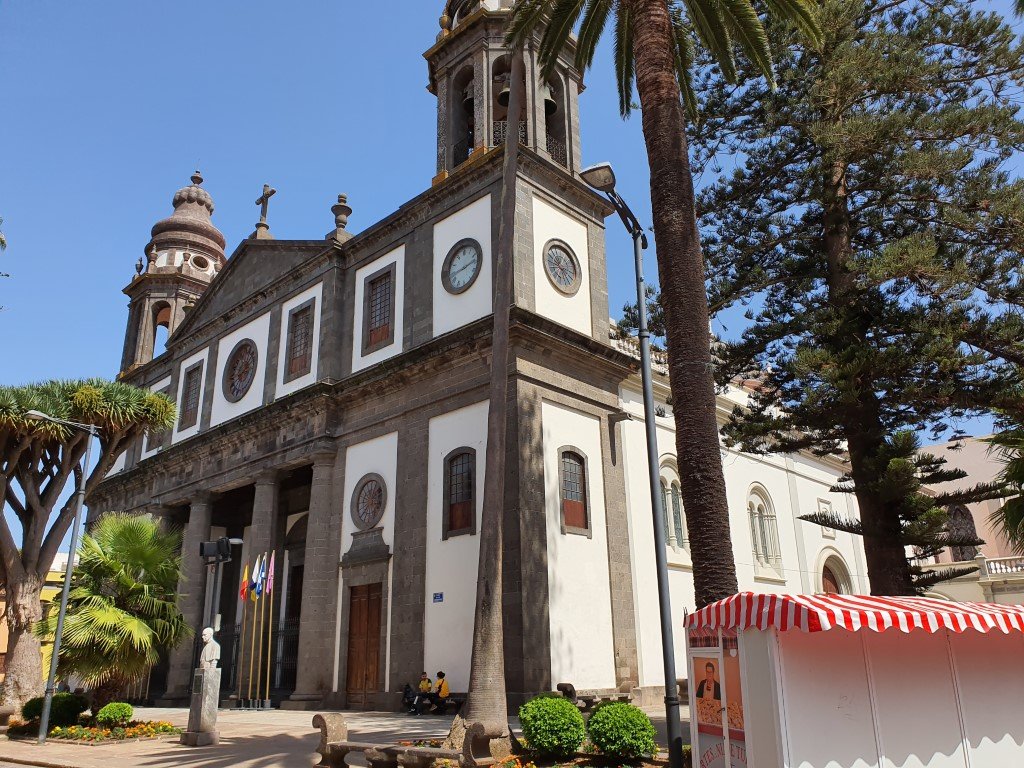
You could easily spend an entire day here, wandering among the beautiful buildings that have a distinctly Spanish atmosphere with something of a colonial feel.
Just walking around is enjoyable enough. But there are also plenty of shops and restaurants, both traditional and modern, for visitors who enjoy combining sightseeing with shopping and eating.
I happened to find a very good burger restaurant here.
Of course, that’s about as far from an authentic Spanish dining experience as you can get. But that wasn’t really the point.
At a terrace that felt more like a local bar than a tourist restaurant, we also tried one of Spain’s simplest—and increasingly popular—sweet treats: churros.
With chocolate, of course. Or as the Spanish say, churros con chocolate.
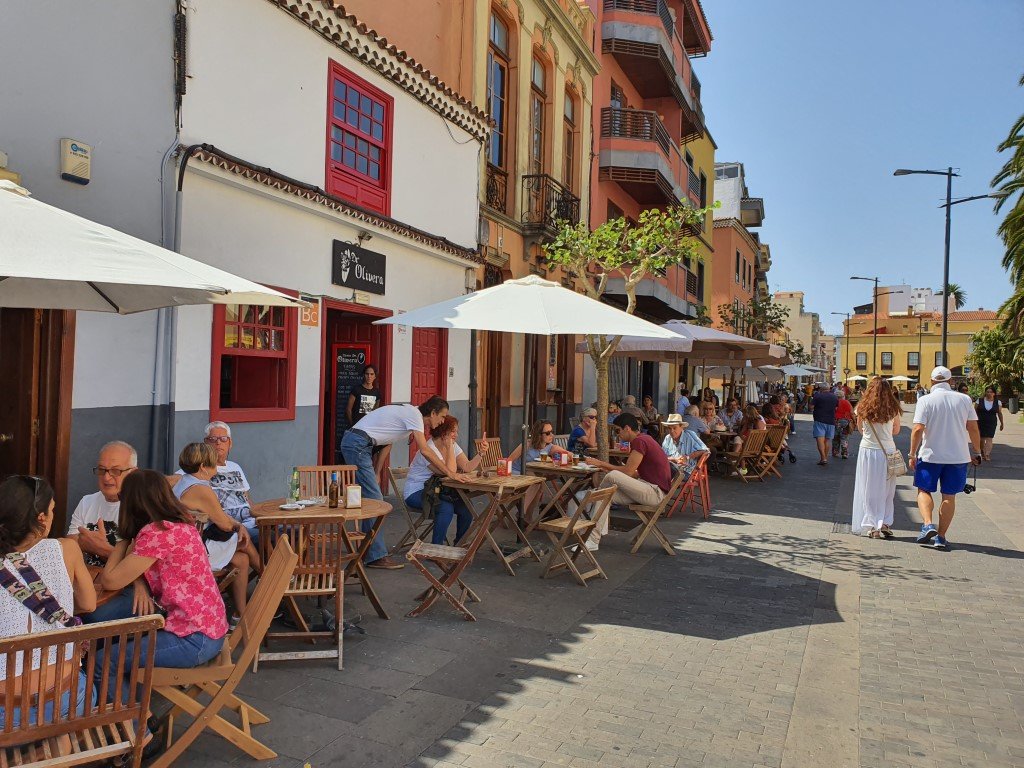
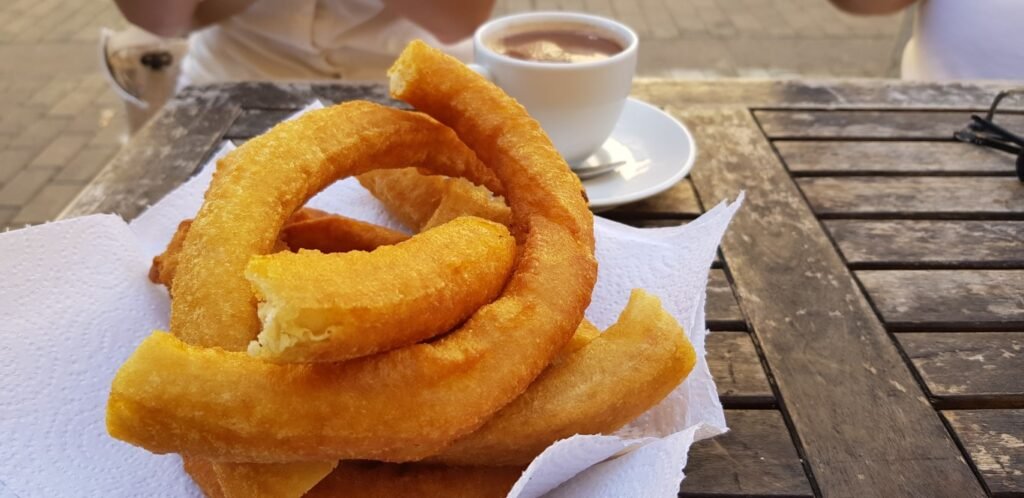
Even if you only have an hour or two to spend in San Cristóbal de La Laguna, don’t skip it!
I know that might sound strange in a trip report about the Canary Islands. After all, you can find beautiful beaches and impressive mountains in many places throughout Europe and the rest of the world.
But this particular atmosphere, with its historic buildings, little shops, and just the right number of tourists to keep the city lively without overwhelming it, is surprisingly difficult to find—even in Spain.
If there’s one thing I can promise, it’s that a visit to San Cristóbal de La Laguna will give you some wonderful memories of the Canary Islands.
Santa Cruz de Tenerife
I didn’t actually get to explore Tenerife’s capital, Santa Cruz de Tenerife, during this trip.
Or rather, not completely.
On our way back from the northern part of the island, we drove through the city, and following the coastal road gave me at least a brief glimpse of its busy streets and surprisingly cosmopolitan atmosphere.
Santa Cruz really is a big city.
Although the city itself has a population of around 200,000—which is already quite substantial by Hungarian standards—the greater urban area includes several municipalities that have practically grown together into one continuous city, with more than half a million residents.
And when you consider the economic development of the Canary Islands, perhaps it shouldn’t come as a surprise that the little I saw of Santa Cruz felt like a genuinely cosmopolitan city.
There were plenty of ten-story buildings, along with a few much taller towers reaching twenty or even thirty stories.
It certainly wasn’t the sleepy little island town that someone unfamiliar with Tenerife might imagine.
Is a Long Weekend in Tenerife Worth It?
All in all, I had a wonderful time, and I can wholeheartedly recommend the Canary Islands—and Tenerife in particular—to anyone, whether you’re planning a longer vacation or just a few days away.
The pleasantly warm, springlike weather, the Atlantic Ocean, the Spanish love of life, the delicious food, and the incredibly beautiful landscapes are almost guaranteed to put you in a good mood.
And that’s true regardless of what time of year you visit or how long you stay.
For my three-day trip, I spent a total of approximately €825 on travel and accommodations.
Of course, whether that’s a lot or a little is something everyone has to decide for themselves.
It’s not unusual to spend a similar amount on a long weekend closer to home. And personally, I don’t think the experience of exploring Tenerife can really be compared with spending a few days soaking in the pool at a countryside wellness hotel in Hungary.
But that’s entirely a matter of personal preference. If a relaxing hotel weekend is your idea of a perfect getaway, that’s absolutely fine with me.
And you certainly don’t have to spend as much as I did to have a great time in Tenerife.
As I mentioned earlier, you might be able to find flights for half of what I paid. You can also manage without renting a car and still visit some interesting places, and there are cheaper accommodation options as well.
Just one example: in El Médano, only a short distance from Tenerife South Airport and a few blocks from the beach, I found a charming hostel where three nights for one person, including breakfast, could cost as little as €60 at the time.
Whatever your budget, I’m convinced Tenerife has something special to offer.
And if you decide to hike all the way to the summit of Mount Teide, you might even find the experience quite literally breathtaking!