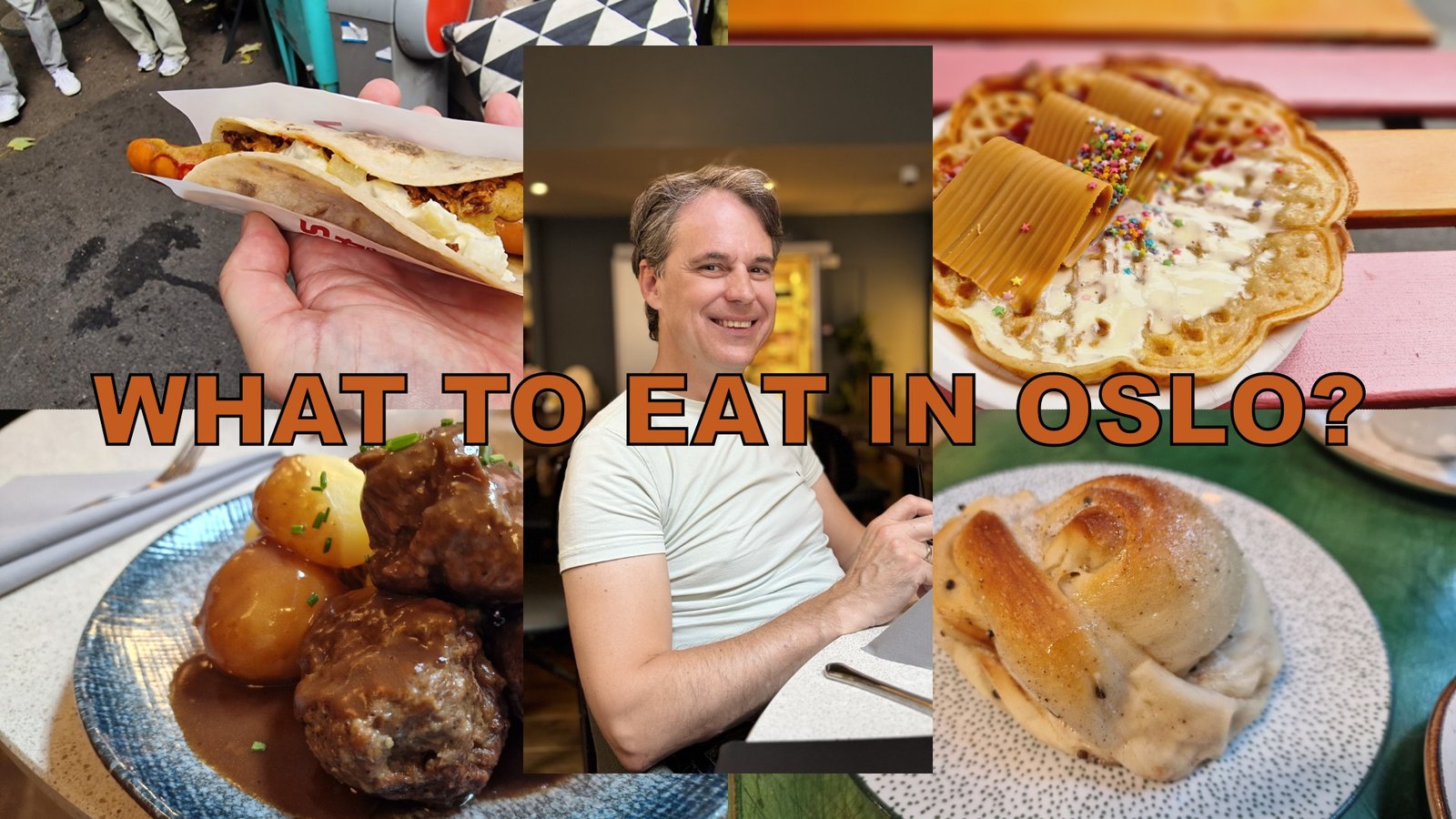
I had just one day in Oslo, the capital of Norway, but I wanted to explore the local food scene and get a firsthand taste of what Norwegians traditionally eat.
This isn’t a Michelin-starred restaurant tour. Every place I visited can easily fit into a regular travel itinerary. Whether you’re spending just one day in the city or staying longer, here are my recommendations for where to go and what to try for a real taste of Norway in its magnificent capital.
Prefer to Watch?
I also made a video version of this Oslo food tour, showing the places we visited and, more importantly, the actual food we tried—from skolebrød and Norwegian waffles to pølse i lompe, kjøttkaker, and reindeer.
If you prefer to see the food and the places for yourself before deciding what to add to your Oslo itinerary, you can watch the full video below.
Getting to the City
The first step, of course, was getting into the city center from Oslo Gardermoen Airport.
It’s a pretty straightforward train journey that takes around 20 minutes. I have a whole separate guide on how to get from Oslo Airport to the city center, so check that out if you need the details.
What I do want to mention here, though, is that we took the cheaper Vy train, and the journey to Oslo Central Station—usually called Oslo S—still took only 23 minutes.
Our Ruter 24-hour tickets were valid on this train, so once we activated them, all our public transportation to and from the airport and within Oslo was covered for the next 24 hours.
As you’ll see, this came in very handy because some of the food places we visited were a little beyond the immediate walkable city center.
Skolebrød
The first thing I tried might not be the most adventurous, but it is unmistakably Norwegian.
Since this one-day trip wasn’t only about food, we began by getting to know Oslo along what you might call its main street, Karl Johans gate.
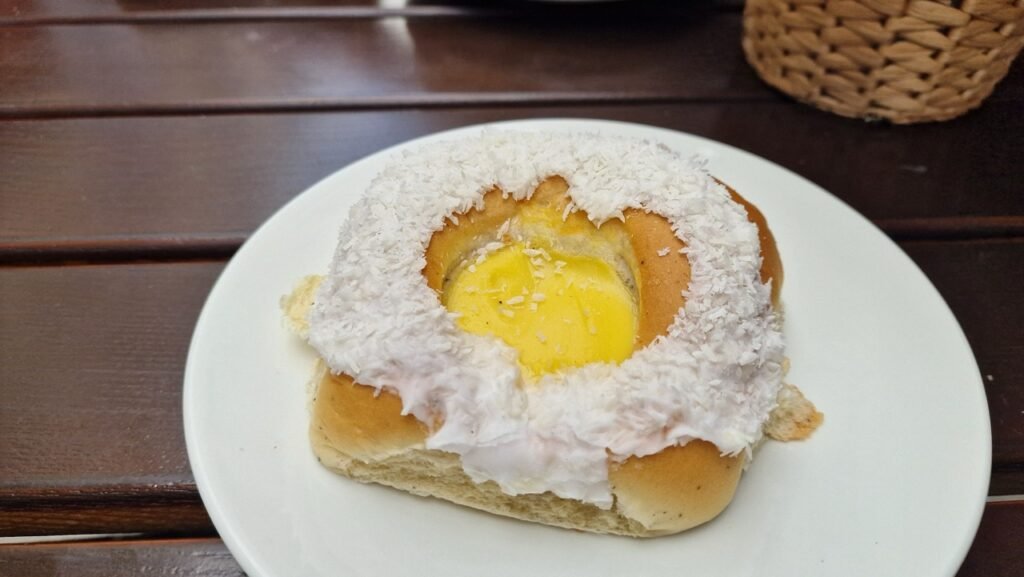
At a bakery called Baker Hansen, just off this main pedestrian area, I ordered a skolebrød as my first Oslo treat.
Skolebrød literally means “school bread,” and it’s one of Norway’s most popular pastries. You can find it in bakeries across Oslo and throughout the country.
It’s a sweet bun filled with vanilla custard and usually topped with icing and coconut.
Skolebrød might not sound particularly unusual—you can find similar pastries across Europe and elsewhere in the world. But the exceptionally soft dough, pronounced coconut flavor, and smooth vanilla custard made it much more memorable than I expected.
If you want to try just one simple, everyday Norwegian pastry during your stay in Oslo—or anywhere in Norway—this is probably the easiest place to start.
Vaffel med Brunost at Haralds Vaffel
Let’s stay with the sweet flavors and try something much more distinctive.

We took the tram—putting that 24-hour ticket to good use—to Haralds Vaffel, probably one of Oslo’s best-known waffle shops.
What I tried here was a genuine Norwegian specialty: vaffel med brunost. It’s a classic Norwegian waffle topped with the country’s famous brown cheese.
Norwegian waffles are quite different from the thick Belgian or American versions. They’re usually thinner and softer rather than crispy, and they’re traditionally cooked in a heart-shaped waffle iron. On their own, they’re mildly sweet and quite simple, which makes the toppings especially important.
I went for a fully loaded version with jam, sour cream, and brunost, a combination of several classic Norwegian toppings.
You don’t even need to remember all of them. Just ask the staff for their most traditional option.
The jam brings sweetness and fruitiness, the sour cream adds a cool, slightly tangy contrast, and the brunost gives the whole thing an unmistakable caramel-like, slightly salty flavor.
Brunost—Norway’s famous brown cheese—is made by cooking down whey until the milk sugars caramelize, which explains its distinctive color and taste. And if you like it, it’s something you can easily take home from a larger supermarket or the airport.
I really enjoyed this combination, and I’m glad I tried a proper Norwegian waffle. If you can fit this little detour into your Oslo visit, I think Haralds Vaffel is definitely worth a stop.
Pølse i Lompe at Syverkiosken
Before we sit down for the main meal of the day, let’s try another typical Norwegian bite.
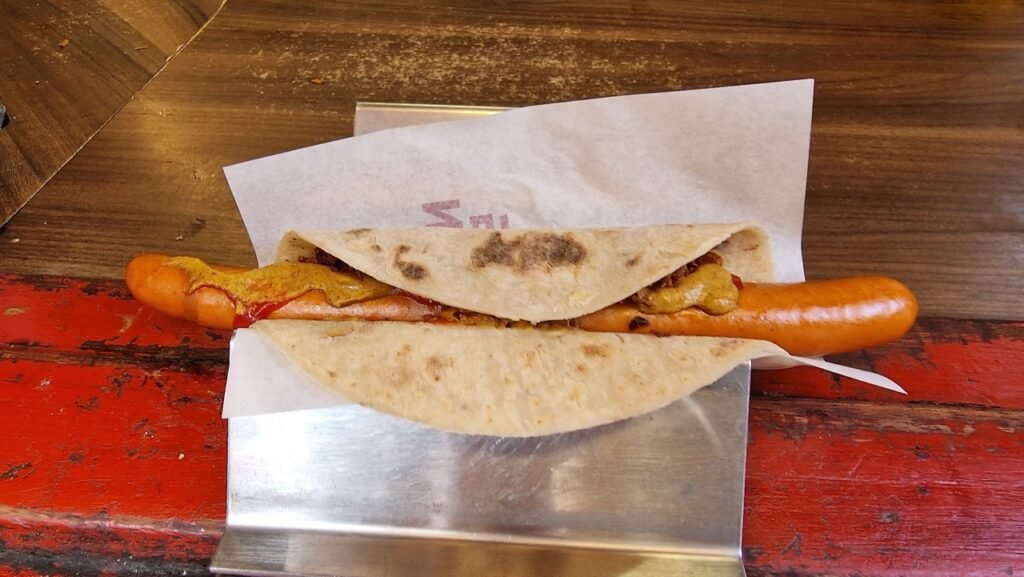
Pølse i lompe is basically the local take on a hot dog, with the sausage wrapped in a thin, soft potato flatbread—a lompe—instead of a bun.
It’s an extremely simple combination, but also a very traditional one. In fact, it’s probably one of the most Norwegian street foods you can try.
We took the tram there and the bus back to visit Syverkiosken, one of Oslo’s last traditional hot-dog kiosks and definitely one of the city’s best-known places to try pølse i lompe.
A lompe is a typically Norwegian soft, round potato flatbread. It’s made mainly from cooked, mashed potatoes, with a little flour and salt. It’s then cooked without oil, traditionally on a flat griddle known as a takke.
Lompe can be eaten with a variety of sweet and savory fillings, but one of its best-known uses is pølse i lompe, with a sausage wrapped inside it.
Honestly, I liked it much more than a conventional hot dog—though that is, of course, a matter of taste.
You’re not biting into a puffy bread roll, but into a thin yet surprisingly substantial flatbread. That allows the flavors of the sausage and toppings to come through much more clearly. It also doesn’t give you that heavy, bloated feeling you sometimes get from a bun, only to leave you hungry again half an hour later.
Pølse i lompe is traditionally served with ketchup, mustard, and crispy fried onions. But here—and at other places that serve it—you’ll find several more modern options as well.
I ordered mine with potato salad, which, according to the owner, is also a very typical Norwegian topping.
Kaffistova – Traditional Norwegian Food
We tried one restaurant during our visit: Kaffistova, a traditional place that has been serving Norwegian food in downtown Oslo since 1901.
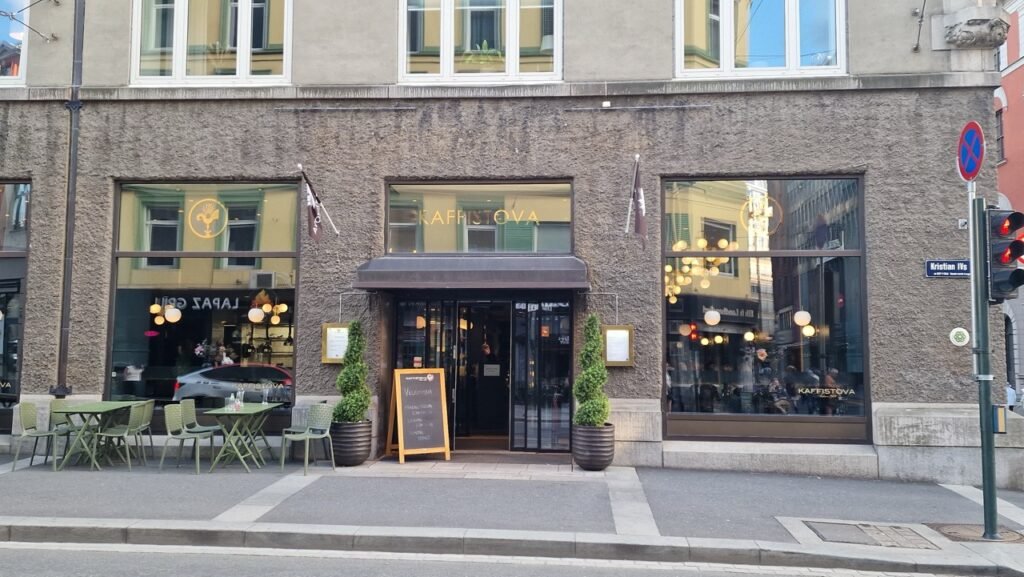
Our experience began with a little confusion.
We tried to reserve a table by phone and were told that we couldn’t, but that we should simply show up around 7:30. When we did exactly that, a waiter initially told us there were no tables available.
Fortunately, they managed to find one for us in the end, and from that point on, the service was friendly.
The menu during our visit was surprisingly short, with only a handful of meat and fish dishes.
So this isn’t necessarily the kind of restaurant where you can sit down and sample every famous Norwegian dish in a single evening. But what they do serve is firmly rooted in traditional Norwegian cooking.
The menu can also change, so it’s worth checking what’s available when you visit.
I ordered the Norwegian meatballs, or kjøttkaker, which came with brown gravy, boiled potatoes, lingonberry jam, and mashed peas.
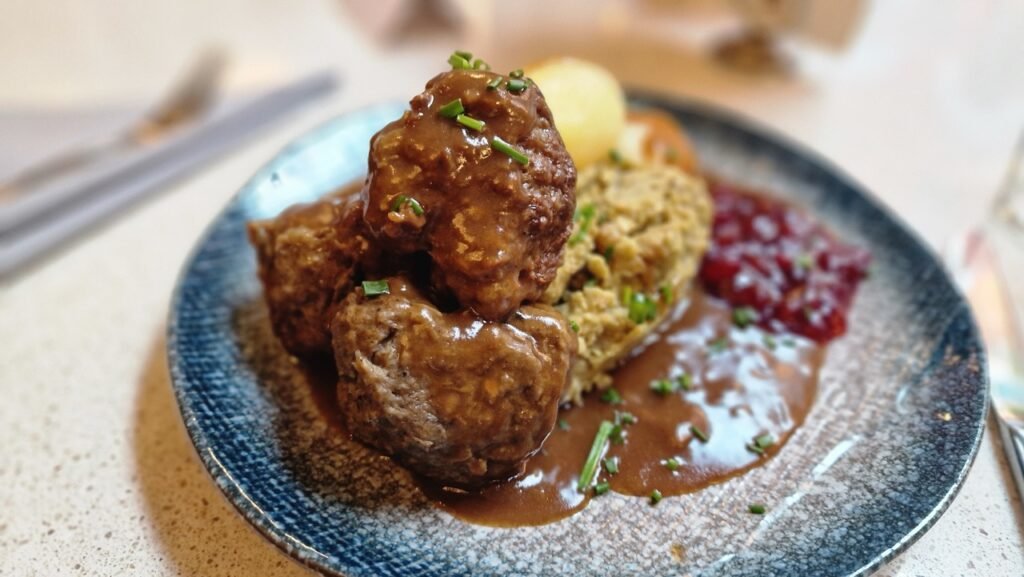
As it turns out, that combination is about as traditional as it gets: Norwegian kjøttkaker are commonly served with boiled potatoes, brown gravy, mashed dried peas or other vegetables, and lingonberries.
It took me a few bites to get used to the flavor, but I mean that in a good way.
These were quite different from the Swedish meatballs most international visitors probably know. They were denser and more intensely seasoned.
The texture almost reminded me of a cooked pâté: compact and finely worked rather than loose and juicy, with the seasoning coming through much more strongly.
And Kaffistova is apparently quite serious about its kjøttkaker. The restaurant says it sells more than four metric tons of them every year, which probably tells you something about how closely this dish is associated with the place.
We also tried their reindeer burger, ordered with a gluten-free bun.
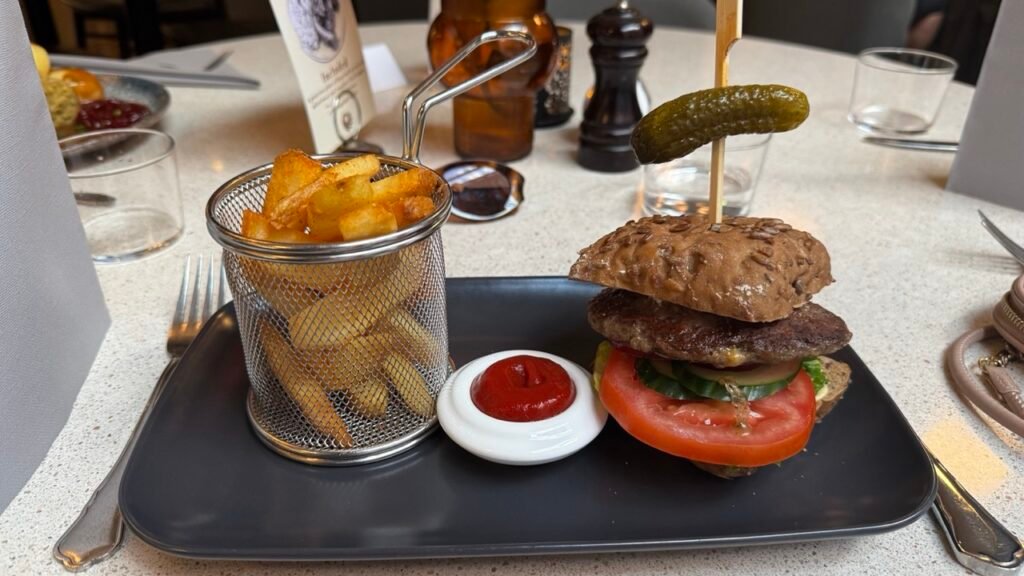
Admittedly, the gluten-free bun didn’t make it the most photogenic burger I’ve ever seen, but having that option at all was a big plus.
Reindeer has a distinctly stronger, somewhat gamey flavor than regular beef, so you immediately know you’re eating something different.
It’s also one of the meats most strongly associated with Norwegian food, particularly the cuisine of northern Norway and Sámi traditions.
The World’s Best Cake – Or Rather, the One We Didn’t Get
My biggest disappointment at Kaffistova had nothing to do with the food we actually ate.

I had specifically planned to try Verdens beste, which literally means “the world’s best.” Also known as Kvæfjordkake, it’s one of Norway’s best-known cakes, and Kaffistova was one of the places where I was particularly looking forward to trying it.
Unfortunately, they had changed their menu about a week before our visit and removed the cake.
That would have been disappointing enough, but it also led to one of the stranger service moments of the evening.
I couldn’t see the cake in the display, but one of the waiters assured us that they still had it and took my order.
Then nothing happened.
After about 20 minutes, I asked another member of staff what had happened. She was extremely apologetic and explained that the waiter who had taken our order had already left—and apparently hadn’t realized that the cake had been removed from the menu.
So, no World’s Best Cake for me this time.
With only one day in Oslo, I simply didn’t have enough time left to hunt for it elsewhere. But if you have more time, don’t let my bad luck stop you. Verdens beste is served at several places around Oslo, and I definitely think one of Norway’s most famous cakes is worth seeking out.
Glutenfrihuset Tøyen – A Great Stop for Gluten-Free Pastries
If you’re gluten-free, Oslo is actually quite easy to navigate.
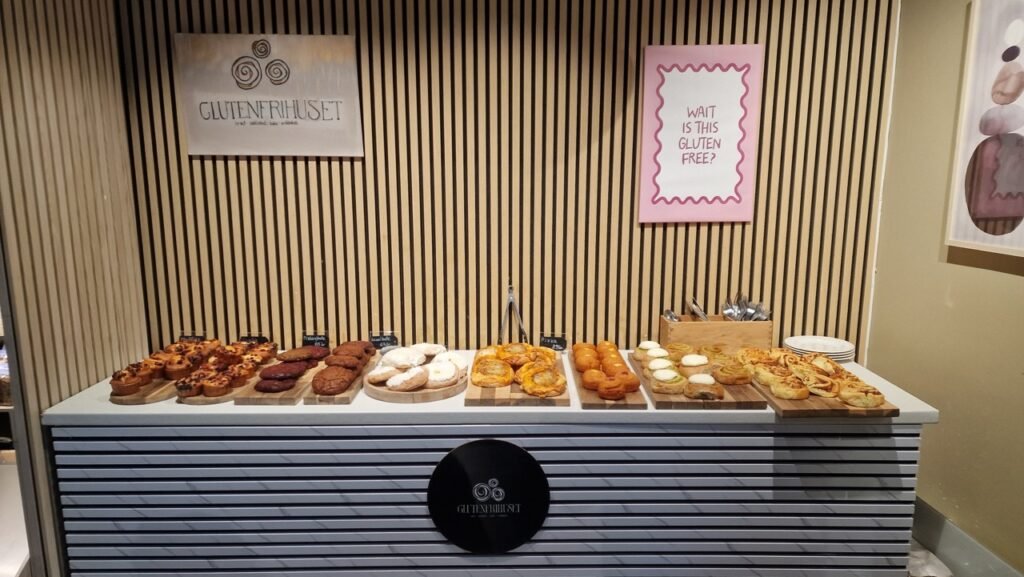
You can find gluten-free pastries at several places around the city, and Baker Hansen—the bakery where we tried the skolebrød—usually has a few different options at several of its locations.
But if you want a much larger selection, Glutenfrihuset Tøyen is the place I would specifically seek out.
It required a small detour from the immediate city center, but it was absolutely worth it.
They had a wide range of gluten-free baked goods, so instead of being limited to just one or two choices, you get the rare pleasure of choosing from a proper bakery counter—even when you avoid gluten.
The highlight was the cinnamon roll.
Gluten-free pastries can sometimes be a little dense or dry, but this one was surprisingly fluffy, soft, and genuinely delicious.
If you or someone in your group is gluten-free, I would definitely put Glutenfrihuset Tøyen on your list.
Håndbakt Tøyen – Coffee and Cardamom Buns
And if you happen to be traveling with a group where some people eat gluten and others don’t, we found a very convenient solution almost directly across the street from Glutenfrihuset.
Håndbakt Tøyen is a lovely little coffee shop with a very local feel, well away from Oslo’s most touristy areas.
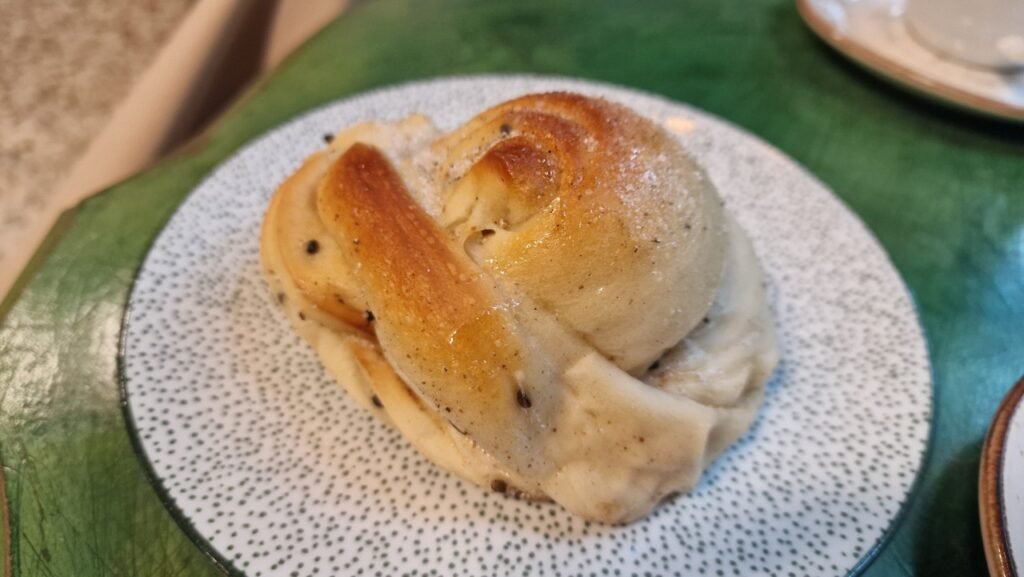
The coffee was good, and so were their cardamom buns, another classic Nordic bakery treat.
Compared with the Danish cardamom buns I’m more familiar with, these felt noticeably fluffier and a little less intense in cardamom.
Personally, I prefer the denser, more strongly spiced Danish style, but this was still a very enjoyable pastry and definitely worth trying.
So if your group has mixed dietary needs, this little corner of Tøyen works particularly well: gluten-free pastries on one side of the street, with excellent regular baked goods and coffee almost directly opposite.
Taking a Little Norwegian Food Home
Since this was such a short visit to Oslo, I added just a couple of grocery items to my bag before heading home.
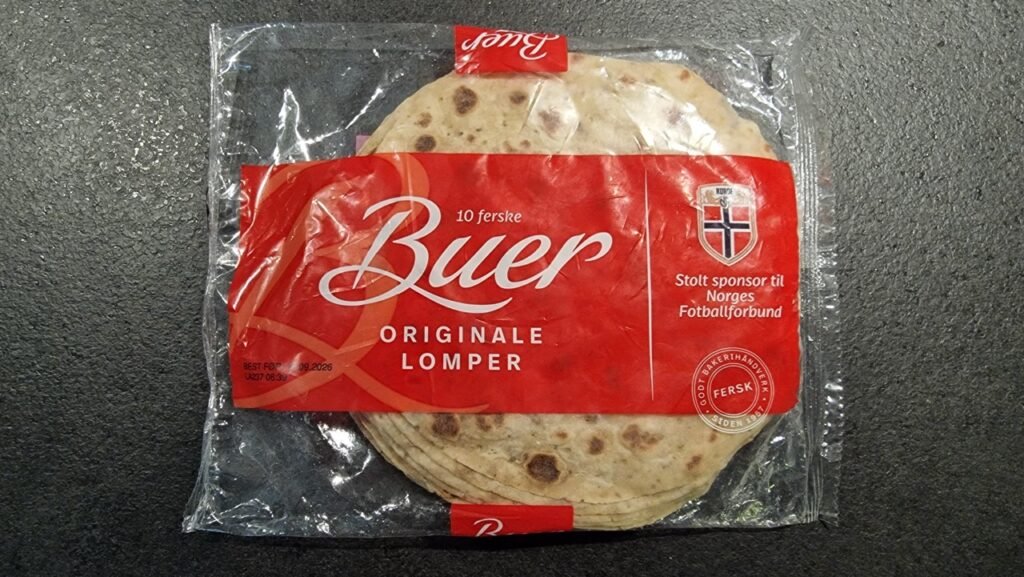
Lompe, Norway’s potato flatbread, is something you can make at home, but it’s much easier to pick up a package at practically any supermarket in the country.
Brunost, or Norwegian brown cheese, on the other hand, isn’t something most people would attempt to make at home.
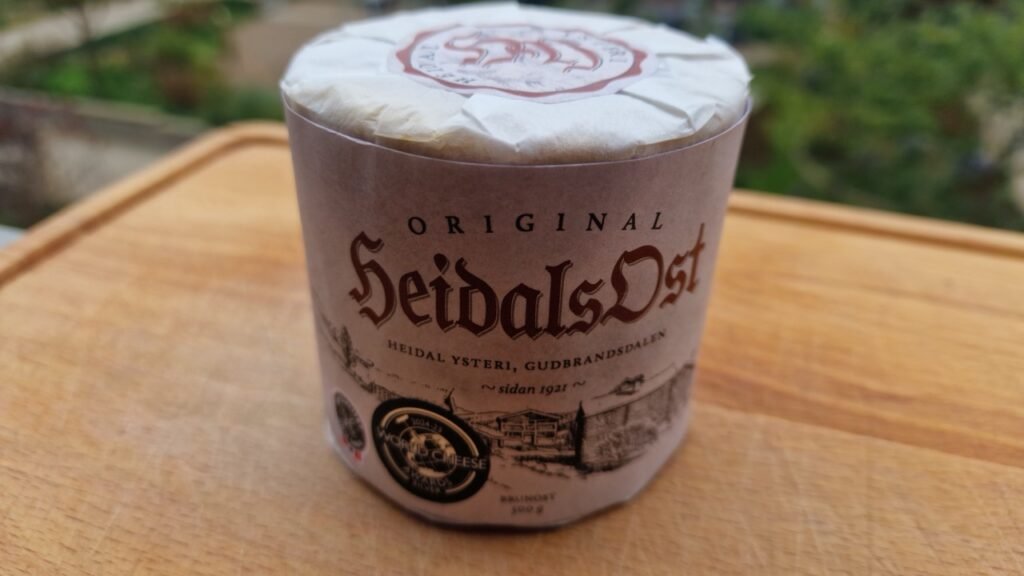
I found it a little harder to track down, but fortunately, the specialty shops at Oslo Airport stocked it. So I was able to take a package home, and one of these days I’ll make the famous vaffel med brunost myself.
There’s only one thing missing from my kitchen for the authentic Norwegian version: the classic heart-shaped waffle iron.
My One-Day Taste of Oslo
So that was my one-day taste of Oslo: from skolebrød and brown-cheese waffles to pølse i lompe, Norwegian meatballs, reindeer, and the cake that got away.
Of everything I tried, pølse i lompe was probably the biggest surprise.
Simple as it is, it’s the one I would most happily eat again tomorrow—although I still have unfinished business with Verdens beste.
And that’s exactly what I like about exploring local food when traveling. It doesn’t always have to mean expensive restaurants or elaborate dishes. Sometimes a potato flatbread wrapped around a sausage tells you just as much about a place—and gives you an even better memory to take home.