If you’re vacationing in the Canary Islands, I wholeheartedly recommend renting a car. After all, given where these islands are located, you’re almost certainly not going to arrive in your own vehicle. And as a tourist, having a rental car isn’t just incredibly convenient—it also gives you a tremendous amount of freedom.
With a rental car, exploring any of the islands, whether it’s Tenerife, Gran Canaria, Lanzarote, or somewhere else, becomes much easier. You can visit the most important attractions without much trouble and choose whichever beaches you like best.
Since these islands are relatively isolated, a huge number of visitors rent cars, and there are plenty of companies offering rental services. But where should you rent a car? And what should you pay attention to when renting a car in the Canary Islands?
My Recommended Car Rental Company
You’ll find my Canary Islands car rental tips and price examples further down, but first, let me quickly share a link to Autoreisen, the company I rented my car from.
This isn’t an advertisement—I don’t receive any money from them. I was simply very happy with their service, and friends of mine who live in the Canary Islands also use them regularly. They have rental locations at almost all the major transportation hubs throughout the islands.
And another thing I particularly appreciate is that they don’t play games with their prices. You pay what you see on their website when making your reservation.
Tips for Renting a Car in the Canary Islands
Book your rental car online in advance. Make sure you receive a confirmation, and I also recommend printing it out. When booking, you’ll need to provide your driver’s license number and other details, and usually your arriving flight number as well. This is also when you should indicate whether anyone else will be driving the car, providing their information too, of course.
There’s one thing you really need to pay attention to: make sure you choose the correct pickup and drop-off locations!
In most cases, this will be the airport you’re flying into. For example, if you’re arriving on a Wizz Air flight from Budapest to Tenerife, your pickup location would be Tenerife South Airport, also known as Tenerife Sur Reina Sofía.
But there are plenty of rental locations to choose from, and Tenerife alone has two airports. So double-check everything before confirming your reservation.
Another important detail is to enter the pickup and return times accurately. For pickup, I recommend using your flight’s scheduled arrival time. For the return, choose a time about one or two hours before your flight is scheduled to depart.
Rental companies generally charge by full 24-hour periods. So if you pick up a car at 4 p.m. and return it at 4 p.m. a few days later, you’ll pay the same amount as if you returned it at 10 a.m. that day.
If you’re flying with Wizz Air on the Budapest route mentioned above, the aircraft arrives and then turns around for the return flight, so the timing works out quite conveniently.
With that in mind, booking your car for pickup at 5 p.m. and returning it at 5 p.m. can be a practical option.
Once you’ve landed at the airport, head to the rental company where you booked your car. There are usually quite a few rental desks, so make sure you’re standing in the correct line.
And here’s another tip.
At Tenerife South Airport, at least, several rental companies have service counters accessible both from the restricted arrivals area—which only arriving passengers can enter—and from the public part of the terminal.
Most passengers naturally go to the counter inside the arrivals area because that’s where the signs direct them. As a result, the line there can get pretty long.
With Autoreisen, I found a very useful little trick. Simply leave the restricted arrivals area, but don’t leave the airport building. Instead, find their counter in the public arrivals hall, where there are usually fewer people waiting.
Car rental employees in the Canary Islands generally speak Spanish and English. But even if you don’t speak either language, showing them your printed reservation should make it clear what you’re there for.
They’ll ask for your driver’s license, probably your passport or national ID card, and your credit or debit card. The paperwork itself is usually very quick, and this is when the rental fee is charged to your card.
You’ll then receive the car key and your rental agreement.
The rental agreement also serves as the vehicle’s registration paperwork, so don’t go looking for a separate registration document inside the car.
In my experience, the car was handed over with a full tank of gas, and the staff told me which parking area to find it in. From there, it was up to me to locate the vehicle, and I was free to start exploring.
At the airport parking lot, the exit barrier automatically recognized the rental car’s license plate and opened as I drove out.
Make sure you always keep the paperwork you received when picking up the car with you. It’s also important to remember that only people listed on the rental agreement are allowed to drive it. Don’t hand over the keys to anyone who wasn’t included in the reservation.
Returning Your Rental Car in the Canary Islands
Make sure you return the car on time, according to your reservation, and to the exact location you selected when booking.
In most cases, this will be the same location where you picked it up. However, many rental companies also offer the option of returning the vehicle somewhere else, such as another airport or even another island.
Since my rental car was provided with a full tank, I had to return it the same way. Make sure you stop at a gas station and fill up before handing the car back.
I recommend allowing an extra 15–20 minutes for refueling, so you don’t end up returning the car late just because you had to stop for gas.
Once you arrive at the airport, park in any available space marked with your rental company’s logo.
Take absolutely everything out of the car. I honestly have no idea how easy—or difficult—it would be to recover something you’ve accidentally left behind in a rental vehicle, and I wouldn’t want to find out.
Lock the car, then take the keys to your rental company’s kiosk in the parking lot.
And here’s something important: you don’t return the keys to the same counter where you picked them up!
In most cases, you simply drop the keys into a designated box, and that’s it. Your car rental in the Canary Islands is officially over.
If an employee collects the keys in person, tell them which parking space you used. You can also write down the space number and show it to them if that’s easier.
Usually, the only question they’ll ask is whether you’ve filled up the gas tank.
Car Rental Prices in the Canary Islands
As for prices, the Canary Islands have traditionally been a relatively affordable destination, and renting a car was no exception.
When I originally researched rental prices here, you could find cars for as little as €20 per day.
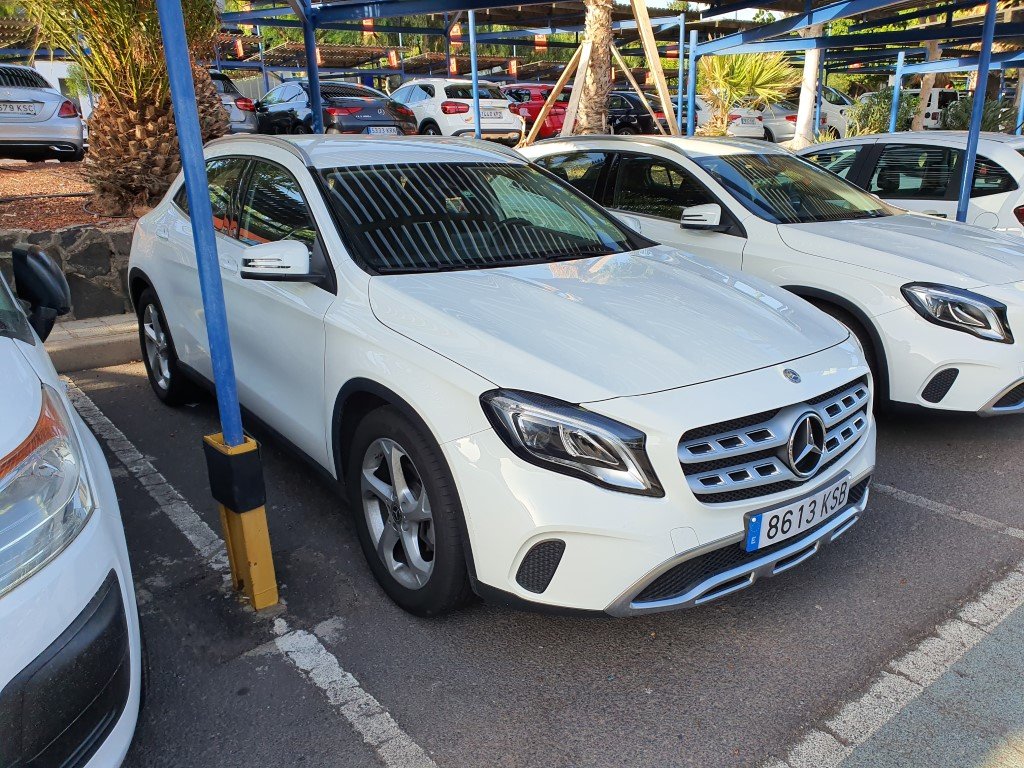
For example, the automatic Mercedes GLA 180 you can see in the pictures above cost me exactly €137.22 for three days, or roughly €45 per day.
That price included everything, including insurance. The only additional expense I had was gas.
And that’s another reason I’m happy to recommend Autoreisen. In my experience, there were no hidden fees. The amount I paid was exactly what I’d seen on their website when making the reservation.
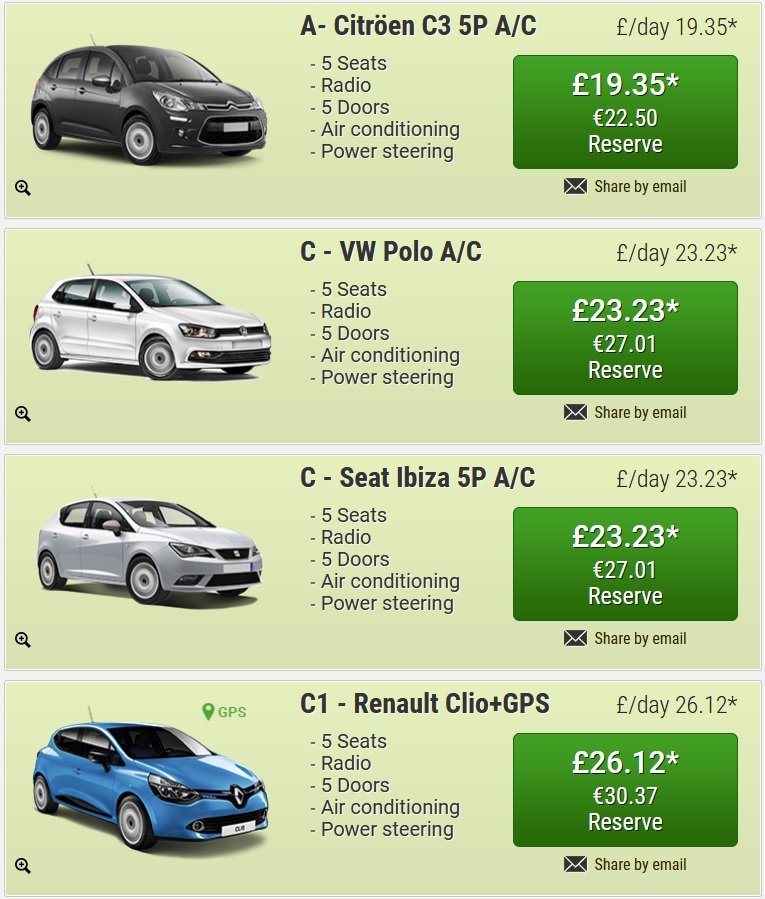
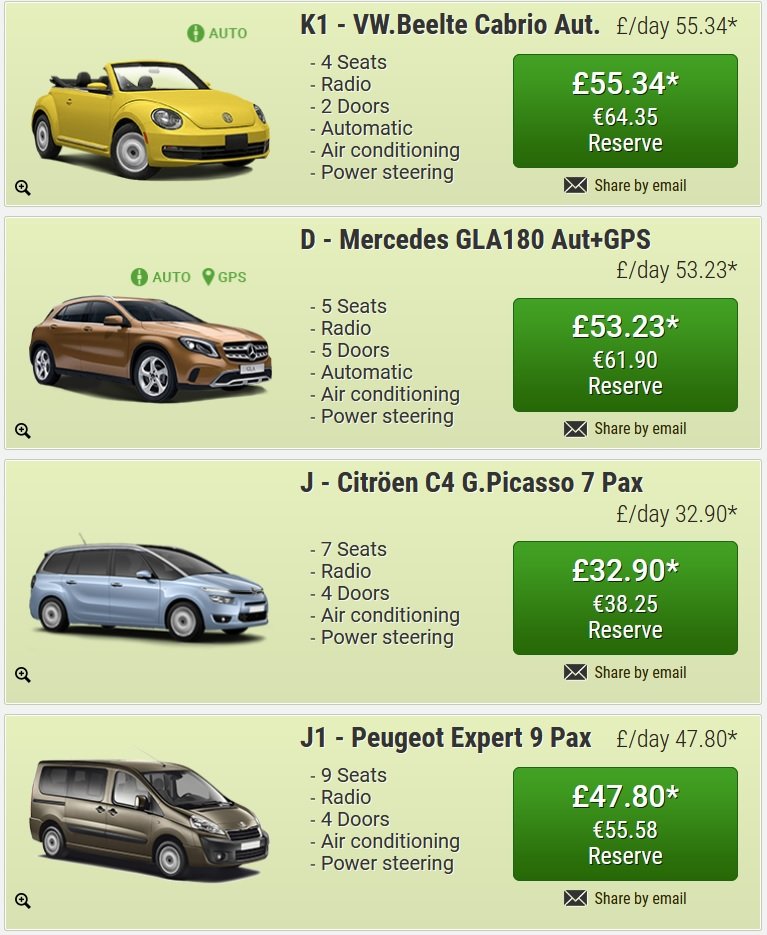
I’ve included the screenshots below as examples of Canary Islands car rental prices. Of course, rates can change at any time. These particular images show some of the cheapest and most expensive options available in spring 2020.
An important note about these prices: I saved these screenshots from the rental company’s website in February 2020, just before the coronavirus pandemic turned the world upside down.
It’s worth checking out my separate article about renting a car in Tenerife, which I wrote about a year and a half later, in fall 2021. Unfortunately, by then, prices at the very same rental company had sometimes tripled for the exact same cars!