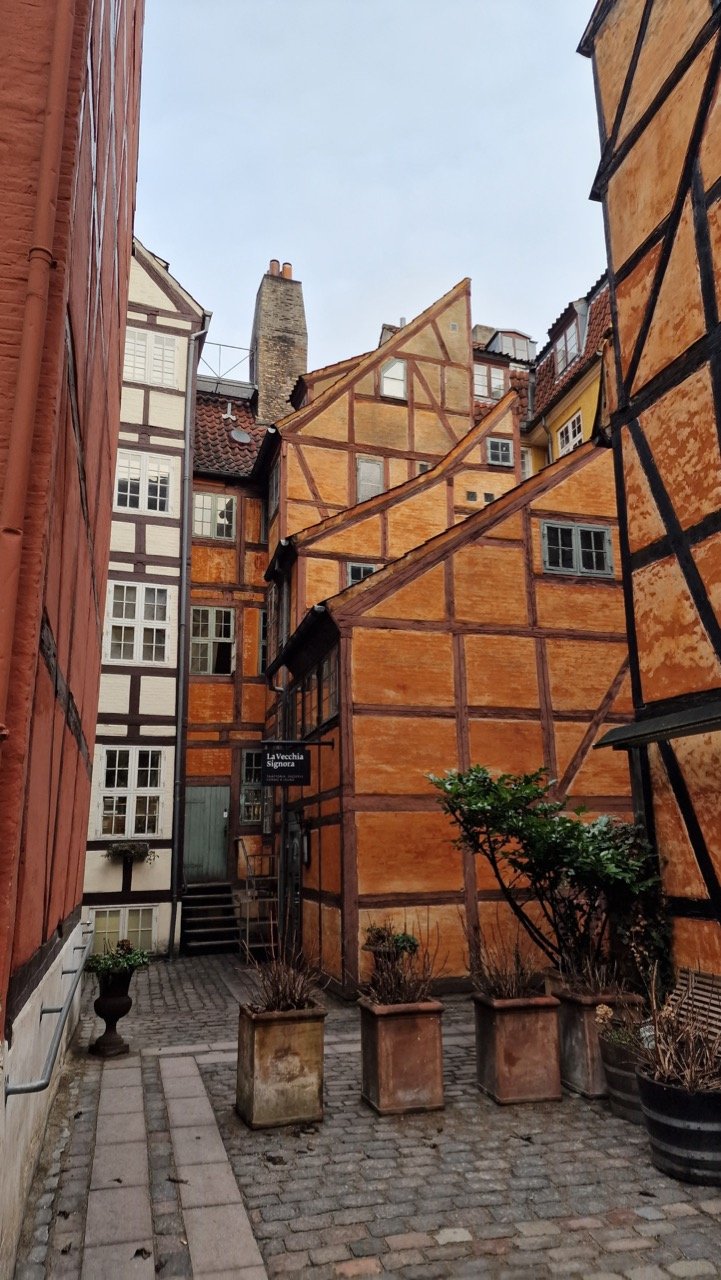
Visiting one or more of Copenhagen’s hidden passageways is a lovely way to make your visit feel a little more special. They’re right in the heart of the old city center, in the same streets and squares where most tourists spend their time. Yet behind some of those ordinary doorways, you can step into a completely different world.
Some lead past charming old houses and through connected courtyards. Others are covered shopping arcades, with glass roofs and decorative details that deserve a closer look. They all give you another reason to pay attention to what lies behind Copenhagen’s streetfronts.
Here are eight passageways to explore, plus one small bonus courtyard. The entrance details and interactive map below will help you work a few into your own walk.
Interactive map of Copenhagen passageways
Use the map to find the entrances to all eight passageways and the bonus courtyard. Most connect two streets, so you can include them as short detours while exploring the city center.
Vimmelskaftet 43, 1161 København, Denmark
Vimmelskaftet 41, 1161 København, Denmark
Strøget is the collective name for several pedestrian streets, including Østergade, Amagertorv, and Vimmelskaftet. Those individual street names are the ones to use when looking up the numbered addresses.
| Stop | Where to find it |
|---|---|
| 1 Boltens Gård | Gothersgade 8A, with a connection to Store Kongensgade |
| 2 Sankt Annæ Passage | Store Kongensgade 40 and Bredgade 25 |
| 3 Pistolstræde | Between Østergade on Strøget and Ny Østergade |
| 4 Bernikowgården | Østergade 26, connecting to Kristen Bernikows Gade |
| 5 Jorcks Passage | Vimmelskaftet 42 and Skindergade 31–35 |
| 6 Kringlegangen | Gråbrødretorv 17 and Valkendorfsgade 32 |
| 7 Klostergangen | Amagertorv 29, connecting to Læderstræde 32–34 |
| 8 Sankt Petri Passage | Between Nørregade and Larslejsstræde |
| Bonus courtyard | Vimmelskaftet 41, with the same entrance and exit |
1 Boltens Gård
Kongens Nytorv is a natural place to begin. This magnificent square is a metro hub and a starting point for visiting the colorful houses of Nyhavn. But it’s also worth exploring the blocks around the square, where you’ll find our first hidden passageway.
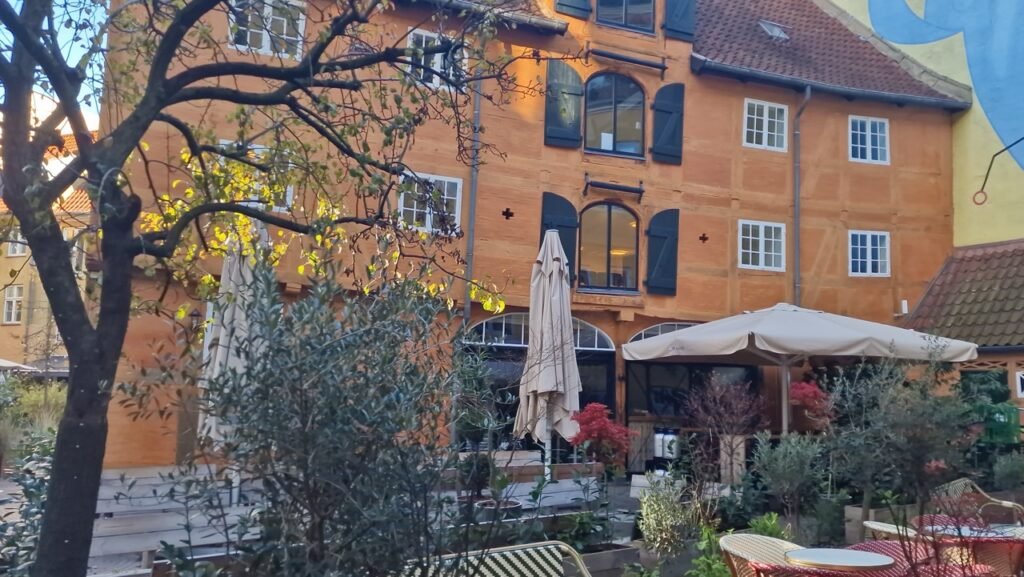
The entrance to Boltens Gård is on Gothersgade. It looks a bit run-down, with worn doors and marked walls, and it’s easy to imagine a visitor walking straight past without thinking of going inside.
Behind it, though, are charming old buildings and places to eat and drink. Restaurants and bars share the courtyard with shops, offices, and homes.
The courtyard takes its name from the wine merchant Henrik Bolten, who transformed the property in the 1700s. One building to look for is the old half-timbered house from around 1755. It originally housed stables and now contains a beer bar, so you can stop for a drink in a building that once sheltered horses.
Entrance: Gothersgade 8A. The passage continues through to Store Kongensgade.
2 Sankt Annæ Passage
Sankt Annæ Passage is a short walk from Boltens. I found this one a little less interesting, if I’m being honest, simply because the buildings inside didn’t strike me as quite as old or as charming. Nevertheless, walking through its connected courtyards is another enjoyable little addition to a Copenhagen visit.
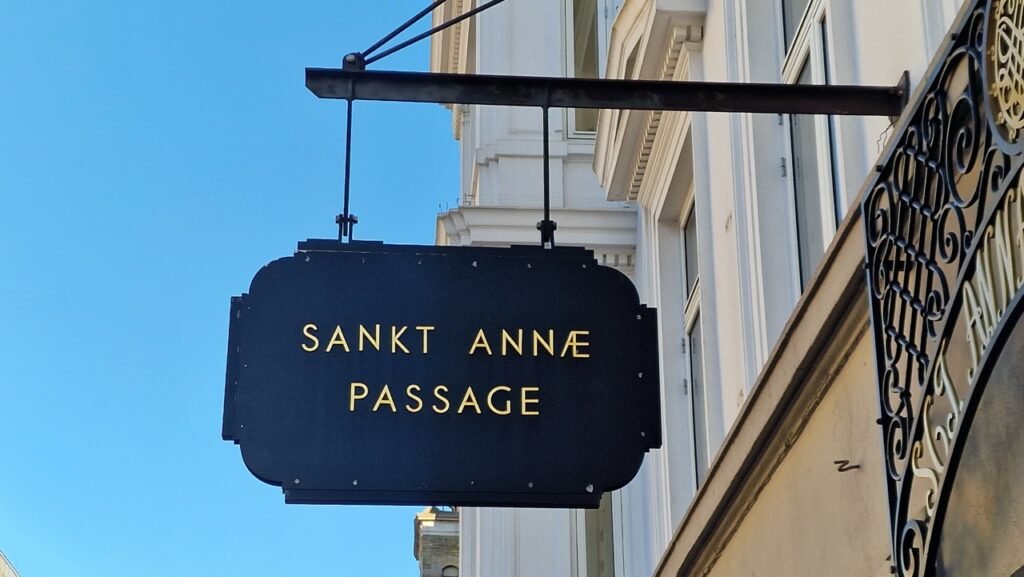
The passage runs through the block between Store Kongensgade and Bredgade. It was built between 1916 and 1918, so even though it feels newer than Boltens, it’s still more than a century old.
Near the Bredgade entrance, look for the historic telephone booth, one of Copenhagen’s earliest. It was provided for residents at a time when having a telephone at home was still unusual.
There’s also a food-related aside here. The western entrance, on Store Kongensgade, faces Landgreven, where the very first Gasoline Grill opened in 2016. This is where the famous Copenhagen burger chain began, at an actual gas station.
Entrances: Store Kongensgade 40 and Bredgade 25.
3 Pistolstræde
Pistolstræde is one of my favorites. It’s extremely easy to include in a visit because its entrance is right off Strøget, the pedestrian shopping street that almost every tourist walks along. Inside, you’ll find some very charming half-timbered houses.
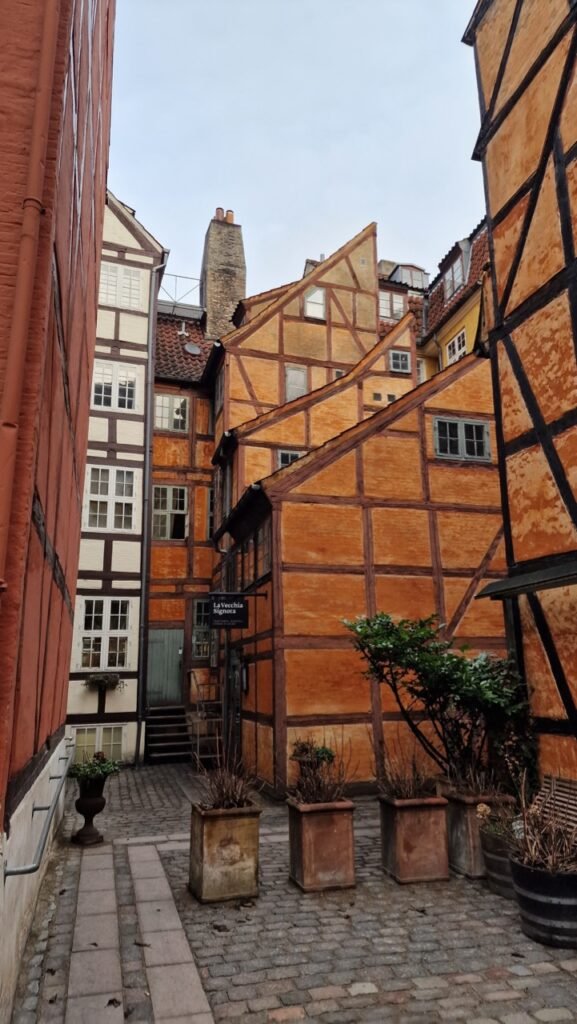
Several buildings here date from the early to mid-1700s, giving you a glimpse of Copenhagen more than 250 years ago. It’s well worth taking a moment to look around before continuing your shopping or sightseeing.
The name comes from the shape of the alley and courtyard. Together, they resemble a pistol, with the courtyard forming the handle.
Pistolstræde was originally a dead-end alley. Today, it connects through to Ny Østergade, so it makes a lovely little shortcut as well as a place to explore.
Entrances: From Østergade, the eastern section of Strøget, and from Ny Østergade.
4 Bernikow Gården
Our next stop is right next to Pistolstræde, so you won’t have far to walk. Bernikow gården is another passage tucked away just off Strøget, but this one has a different feel.
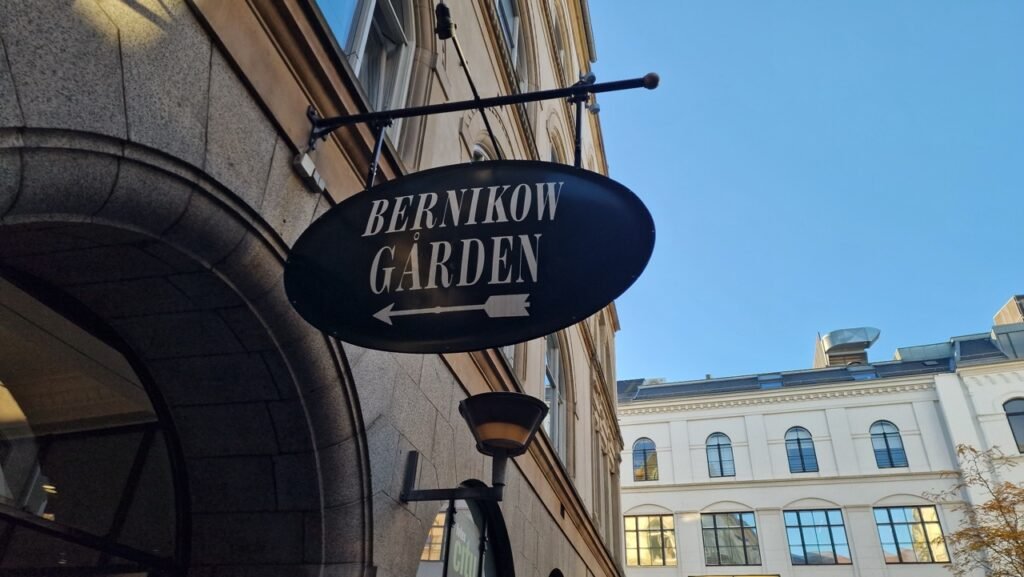
Here, you enter a covered shopping arcade, with shops along the sides and a glass roof overhead. The enclosed space is part of its appeal, especially when Copenhagen’s weather isn’t cooperating.
Make sure you look up. The flowers hanging above you are made of paper. They belong to Floratransforma, an installation by Veronica Hodges, which represents an almond grove with thousands of paper blossoms.
There’s also a coffee shop here, so you can sit down under the glass roof and spend a little longer enjoying the surroundings.
Entrances: Østergade 26 on Strøget, with a connection to Kristen Bernikows Gade.
5 Jorcks Passage
A little farther along Strøget, you’ll find Jorcks Passage. Like Bernikowgården, this is a covered shopping arcade, with shops opening onto a courtyard and a glass roof overhead.
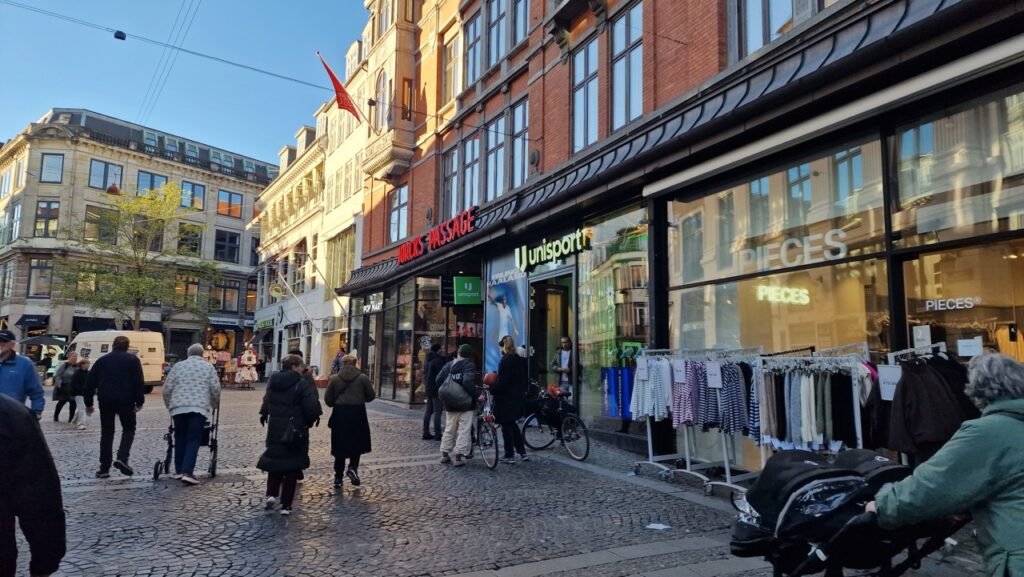
Take a moment to look at the ornate façades around you and the mosaic floor beneath your feet. There’s quite a bit to admire in this little space.
The passage opened in 1896 and takes its name from the businessman Reinholdt Jorck, who had it built. The glass roof was added in 2014 to help protect the original mosaic floor.
There’s also an unexpected piece of history here. The buildings once housed Copenhagen’s telephone exchange, which remained here until 1910. That connection to the city’s communications history comes up again at our final stop, Sankt Petri Passage.
Entrances: Vimmelskaftet 42, right on Strøget, and Skindergade 31–35.
6 Kringlegangen
Kringlegangen is another favorite of mine. It has some of the most unassuming entrances you could imagine for such a charming passageway.
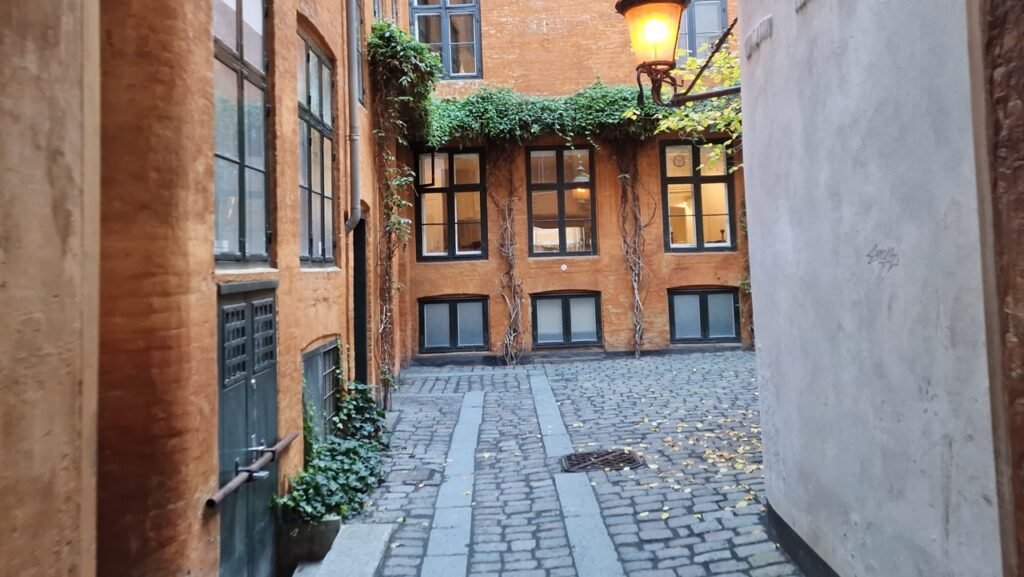
On the Gråbrødretorv side, the entrance is tucked away between two restaurant terraces. The name above the doorway at least hints that there’s something interesting waiting inside.
From the Valkendorfsgade side, it looks like an ordinary doorway that gives you very little idea of what lies beyond.
Step inside, though, and you’ll find orange-painted walls, green window frames, and candelabra that give the passage a mysterious yet calming atmosphere. This is exactly the kind of place I enjoy discovering behind an everyday streetfront.
The route through the courtyards opened in the 1970s, creating a connection between Gråbrødretorv and Valkendorfsgade.
Entrances: Gråbrødretorv 17 and Valkendorfsgade 32.
7 Klostergangen and Klostergården
Back on Strøget, look for the entrance marked Klostergården at Amagertorv 29, opposite the Church of the Holy Spirit, or Helligåndskirken.
Behind that gateway, Klostergangen leads through three small courtyards, unfolding one after another as you make your way into the block.
The name recalls a charitable home for unmarried women that once occupied the property. The front building was rebuilt after Copenhagen’s great fire of 1795, while the courtyard layout was created during a renovation in 1918.
Before entering, take a look at the façade above the doorway. Its Latin inscription commemorates the charitable work of the Petersen family, whose foundation provided the home here.
Entrances: Amagertorv 29 on Strøget and Læderstræde 32–34 on the other side of the block.
Bonus courtyard at Vimmelskaftet 41
There’s one small addition to the eight passageways: a charming courtyard nearby at Vimmelskaftet 41, on the Strøget pedestrian route.
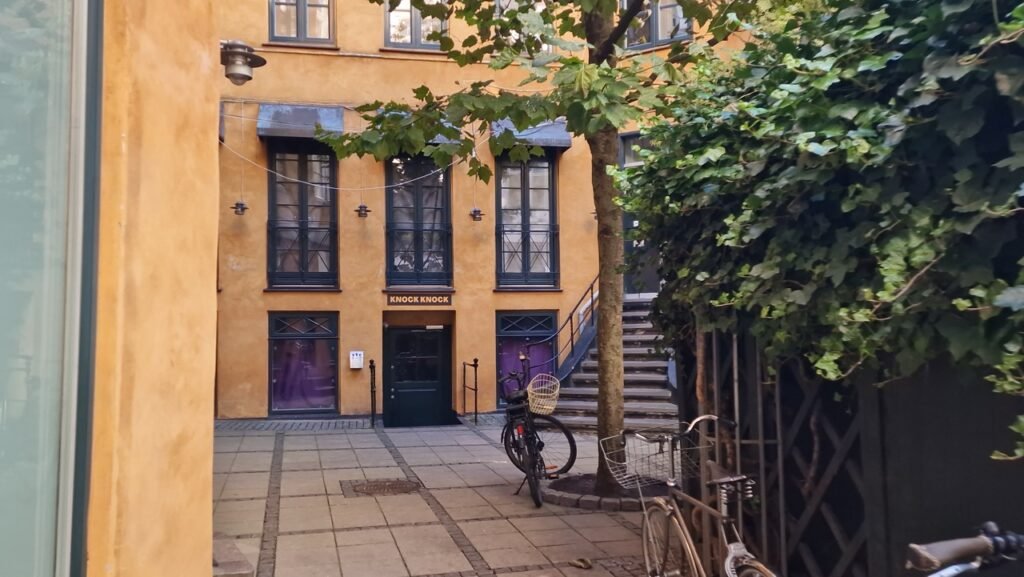
Another doorway leads you away from the shopping street into a little space surrounded by orange walls and green window frames, with a tree in the middle.
This one is a dead end, so you’ll need to leave through the same entrance. It’s a lovely little discovery to add while you’re exploring this part of the city center.
Entrance and exit: Vimmelskaftet 41.
8 Sankt Petri Passage
Our final stop is Sankt Petri Passage in Copenhagen’s Latin Quarter, a short walk from Nørreport Station.
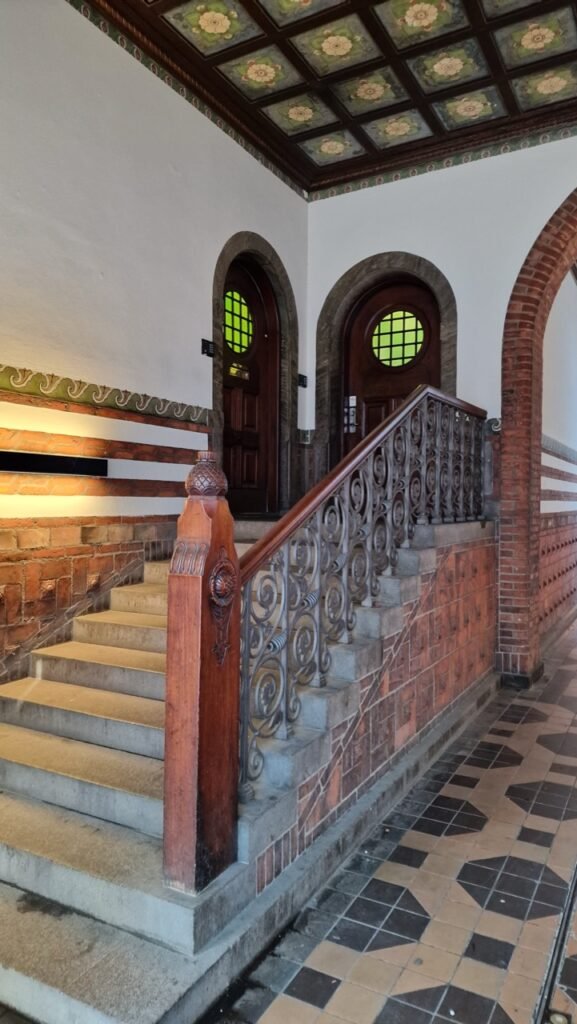
The tall red-brick buildings have plenty of architectural detail to admire. What makes this passage particularly interesting to me, though, is who works inside them: global companies including Google and Red Bull have offices here. Google lists its Copenhagen office at Sankt Petri Passage 5.
It’s quite unexpected to walk into a hidden passageway and discover such familiar names behind the façades. Knowing that makes me look at these old buildings a little differently.
There’s also a connection to Jorcks Passage. The telephone exchange that once occupied that arcade later moved into this complex, which was built for the telephone company KTAS in the early 1900s. The historic buildings have since been adapted to accommodate modern offices.
Entrances: From Nørregade and Larslejsstræde.
Planning your passageway walk
What makes these places so easy to include in a Copenhagen visit is their location. They’re all in the old city center, close to the streets and squares you’re likely to explore anyway.
You can begin around Kongens Nytorv with Boltens Gård and Sankt Annæ Passage, then follow Strøget toward Pistolstræde, Bernikowgården, and Jorcks Passage. Kringlegangen, Klostergangen, and the bonus courtyard fit into the central part of the walk, with Sankt Petri Passage bringing you toward Nørreport.
I filmed most of these stops in under an hour and a half. That gives you an idea of how close together they are, although you can easily spend longer taking photos, looking at the details, or stopping for a coffee.
You also don’t need to visit every single one. Choosing a couple that fit your route is enough to add something a little different to your day.
Some entrances are gated, so check the signs when you arrive rather than assuming every route is accessible at all hours.