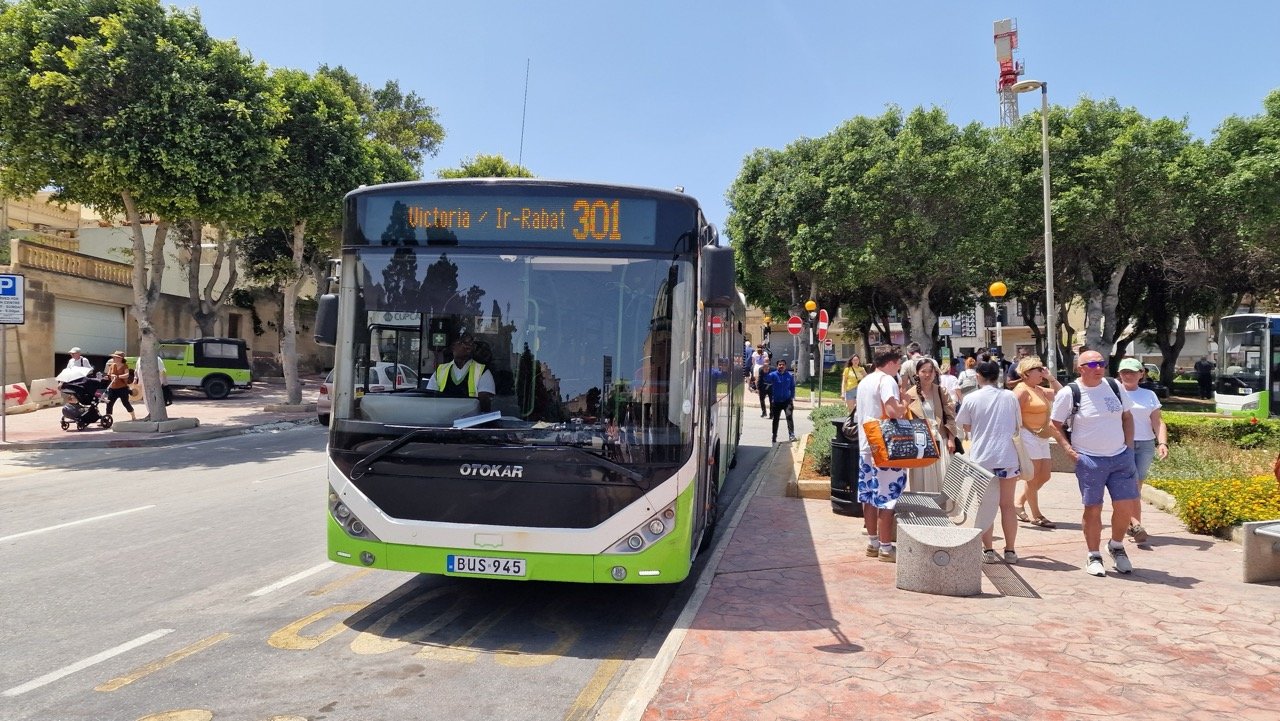
When the question is whether Copenhagen prices are high or not, it’s better to ask whether they’re very high—or just a little high.
Copenhagen isn’t a cheap place. Let’s state that upfront. But when it comes to prices, everything is relative—on several levels—and it also very much depends on what, exactly, you’re looking at.
What’s Most Expensive: Services
What’s unmistakably pricey in Copenhagen is anything that’s a service, or comes with service attached. That’s hardly surprising: people in Denmark enjoy a high standard of living, taxes are high, and you feel all of that when you pay for a service. Here are a few typical examples.
Restaurants and Cafés (Copenhagen Food Prices)
Wherever you’re coming from, restaurants and cafés will likely be the most expensive items in Copenhagen compared with other cities. Of course—especially with restaurants—the spread is huge, but here are a few examples of what to expect:
- Coffee in a café: 35–45 DKK (€4.7–6)
- Fast-casual meal (e.g., in a mall or at a street-food stall), no drink: 100–130 DKK (€13.5–17.5)
- Main course in a sit-down restaurant: 200–350 DKK (€27–47)
Hotels (Copenhagen Hotel Prices)
This matters most if you’re visiting as a tourist—then it matters a lot. Accommodation is the most relative of all: compared to what city is Copenhagen cheap or expensive? And what type of stay are we talking about—hostel, a no-frills hotel on the outskirts, or a five-star property downtown? It makes a huge difference.
Here are a few sample ranges (for two people, one night) in a roughly neutral—not holiday—period:
- Hostel (shared room and/or external bathroom): 200–300 DKK (€27–40)
- 2-star hotel (fine for sleep, decent, nothing fancy): 400–600 DKK (€54–80)
- 4-star hotel: 900–1,200 DKK (€120–160)
- 5-star hotel: 1,500–2,000 DKK (€200–270)
A Few More Services
For comparison, here are some additional service prices you might use as a visitor—or as a local:
- Haircut: 250–450 DKK (€33–60)
- Handyman hourly rate: 400–600 DKK (€54–80)
- Museum tickets (not exactly a service, but where else to put it?): 100–150 DKK (€13–20) for adults; free under 18
Copenhagen Prices: Supermarkets
This was one of my biggest surprises—especially with Hungarian eyes. I come from Hungary, a country that currently has some of the lowest wages in the EU, and many still assume that grocery prices, the cost of a shop, must therefore be low.


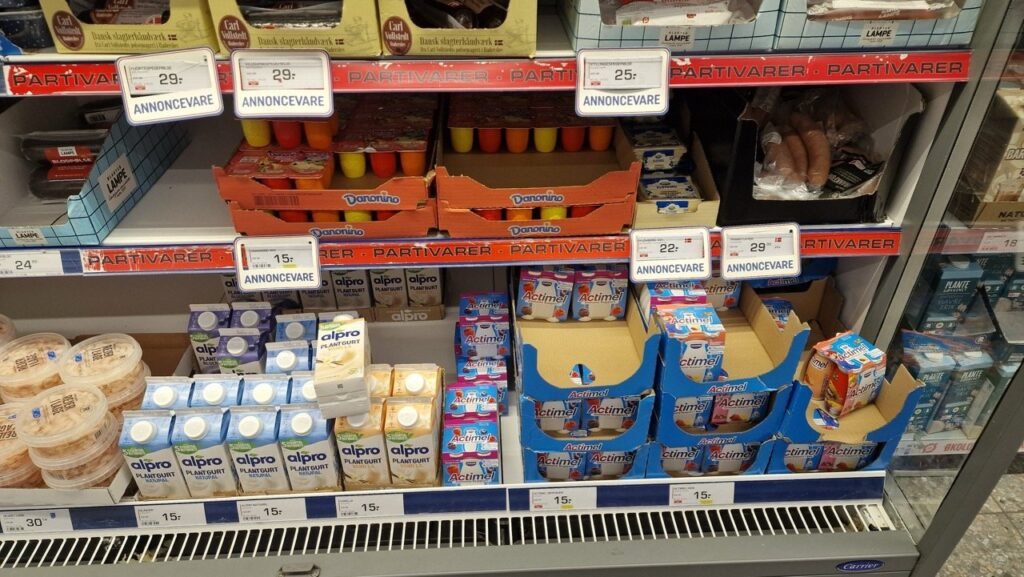


Compared with that—and this applies to many other countries, too—supermarket prices in Copenhagen aren’t high at all. While the spread can still be big, you can do a shop at roughly the same prices as in most other European countries. Whether you live here or you’re staying in an apartment, buying at least part of your food in a grocery store is a good option. Honestly? I don’t see it as penny-pinching; it’s a great way to get to know a place’s food culture—often better than eating solely in restaurants that are flooded by tourists and increasingly uniform the world over.
One more thing: Denmark is big on “more you buy—the less per item you pay” deals, and there are frequent promotions. In supermarkets—and even in some cafés—you’ll often see pricing like: one pack of cold cuts 20 DKK, but 5 for 88; or one pastry 35 DKK, but two for 65.
Here are a few typical grocery prices:
- 10 eggs: 20–40 DKK (€2.7–5.4)
- 1 L milk: 14–17 DKK (€1.8–2.3)
- 250 g butter: 25–40 DKK (€3.3–5.4)
- 1 jar Hellmann’s mayonnaise: 35–45 DKK (€4.7–6)
- 400 g Actimel: 15 DKK (€2)
- 300 g Danonino: 15 DKK (€2)
- 100 g sliced cold cuts: 10–17 DKK (€1.35–2.3)
Copenhagen Public Transport Prices
At first glance, Copenhagen’s public-transport fares can feel confusing because there are many options. If you don’t know the system, it’s easy to get lost—and you might not land on the best value for your needs.
You can read more details about Copenhagen public transport and specific modes/tickets at the linked guide.
Single Tickets
The simplest option is to buy a standard single, available in several places—and the price can vary depending on where (e.g., which app) you purchase it.
Fares are zone-based, and peak weekday hours are pricier. Within the city you’ll most often pay for a 2-zone trip (1 zone is also charged as the minimum). Depending on the time and the app, this runs 19–24 DKK (€2.5–3.2).
Day Tickets
You can also buy a City Pass. First, choose the covered area (1–4 zones = Copenhagen proper; 1–99 zones = Greater Copenhagen), then pick 24, 48, 72, 96, or 120 hours.
Prices vary by area and duration; the longer the pass, the lower the per-day cost.
Currently for 1–4 zones (the City of Copenhagen), a 24-hour pass is 100 DKK (€13.4), and each additional 24 hours adds +60 DKK (€8).
Monthly Passes
If you’re staying longer, consider a monthly. Prices depend on the zones covered, and there are two types: one valid every day, and a slightly cheaper one valid on 20 chosen days within 60 days.
A 2-zone, 30-day monthly—without the metro—is currently 525 DKK (€70), while 3 zones is 690 DKK (€92). Metro access adds +70 DKK (€9.4) per month.
Children’s Fares
Ages 12–16 can buy child tickets at 50% of the standard price. In addition, one child under 12 travels free when accompanied by an adult with a valid ticket.
Copenhagen Prices: Methodology
This article isn’t based on a scientific method; I simply wanted to share my own experience. Prices are, of course, for guidance only.
That’s why the ranges are fairly wide: rather than an imaginary “average,” I give the most typical low–high brackets a given product or service falls into—depending on location, quality, and promotions.
I list prices in the local currency, Danish kroner (DKK), because that’s how everything is posted and paid here. I also provide euro equivalents because the DKK–EUR rate is near-fixed (€1 ≈ 7.46–7.47 DKK). Prices were last reviewed in late 2025.
A Quick USD/GBP Orientation (General, Recent Years)
If you prefer rough comparisons in other currencies, recent years’ typical ranges have been approximately: $1 ≈ 6.5–7.5 DKK and £1 ≈ 8.0–9.5 DKK. Treat these as ballpark figures only; for any serious budgeting, check a live rate and calculate from the DKK amounts above.