Gilleleje, this charming little Danish town, is a great alternative day trip from Copenhagen. You can visit it by public transit in one day, and it gives you a real glimpse not only of Danish nature, but also of everyday life outside the capital.
If you’re curious about Copenhagen, but you’d also like to taste a little bit of “real” Danish life, do what we did: visit Gilleleje.
Why Gilleleje Is Such a Great Experience
Gilleleje [pronounced roughly gil-leh-lie] sits at the northernmost point of Zealand. This is Denmark’s largest island, where most of Copenhagen and its city center are also located, so getting here is not a huge challenge at all. It’s genuinely easy and comfortable to fit into even a visit of just a few days. You’ll find an interactive map at the end of this article.
But what you get here is absolutely worth this little extra excursion. You can step away from Copenhagen, which is charming of course, but with its cosmopolitan personality still doesn’t show you the completely authentic Denmark. In other words, without spending a full week wandering around the countryside, and without necessarily planning a road trip, you can get a taste of that Denmark that has been touched much less by international influences than the capital.
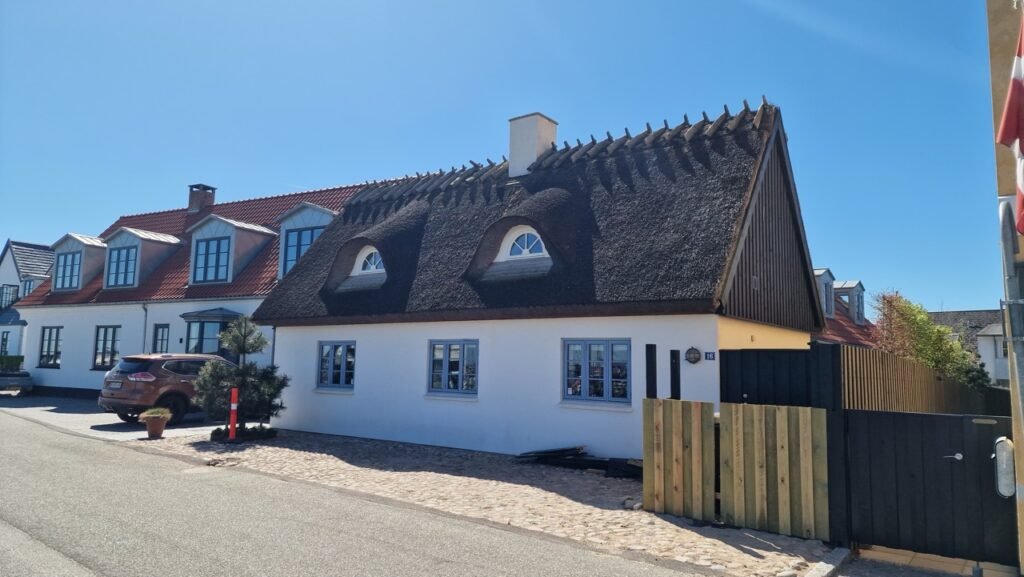
On top of that, Gilleleje is a lovely harbor town. Even if you do nothing else but walk down from the train station to the harbor and eat some good fish, the trip is already worth it. Again, it really comes down to the atmosphere: on a nice spring or summer day, you almost feel like you’re in a Mediterranean harbor, but that Danish calm still touches you at the same time. And then there are the thatched-roof houses, so typical of this area, and something you don’t see in too many places these days.
If you have a little more time and feel like wandering around the area, you can enjoy beautiful seaside walking paths in both directions, admiring not only the water, but also the local villas. And with about a half-hour walk, you can also visit a lighthouse that’s more than 200 years old—and, not least, taste real Danish flavors in some excellent local fish restaurants.
How to Get to Gilleleje
Let’s start with getting there, because even that can be interesting. And of course, you first need to arrive before you can soak up anything of the Danish countryside atmosphere.
You can obviously come by car, and today the easiest thing is simply to type the destination into your GPS. You’ll probably leave Copenhagen on Route 16, and then the road will take you through the hills, farms, horse farms, and forests of North Zealand. Believe me, the journey itself already makes Gilleleje worth visiting.
But the train ride is also a real experience, and from central Copenhagen you can get here by public transit in less than an hour and a half, with just one transfer.
The shorter route goes through Hillerød: first on S-Tog line A, then on the local train toward Helsingør. Hillerød can even be an extra detour with the beautiful Frederiksborg Castle, but the train heading north from here through the forested tracks already promises a fairy-tale ride all the way to Gilleleje.
The other route, through Helsingør, is more of a coastal train experience, running mostly near the sea. And in Helsingør, the train literally passes right through the middle of town. You can also make an extra stop here, either to see the city center or Hamlet’s castle.
Walking Around the Town Center and Harbor
Even with a very easy-going itinerary, you can comfortably explore Gilleleje’s town center and harbor. Both are only a few hundred meters from the train station.
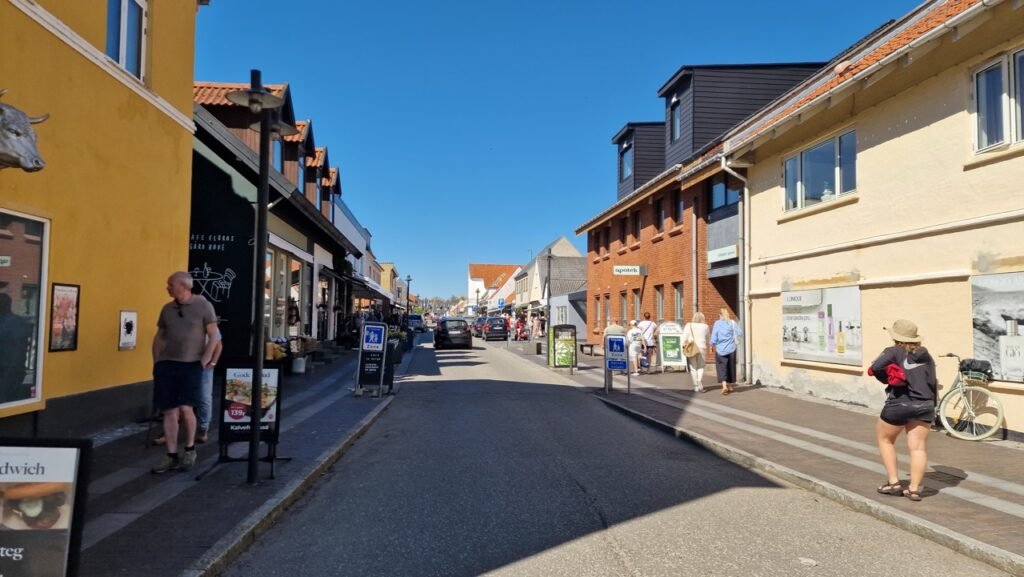
Within the town center, which is not exactly a huge area, two interesting parts caught our attention.
- First, Vesterbrogade, where the small shops make it fun for anyone who enjoys window-shopping and is curious about both slightly more international and completely local offerings. Ceramics, flowers, cosmetics—basically everything is here.
- On the harbor side, you’ll find many beautifully maintained thatched-roof houses. For me, just looking at them was already an experience in itself. But beyond that, the fact that these houses have been fully integrated into the 21st century, both in their surroundings and their interiors—somewhere around here you start to understand how Denmark can still be one of the happiest places on Earth in such a fast-paced and mechanized world.
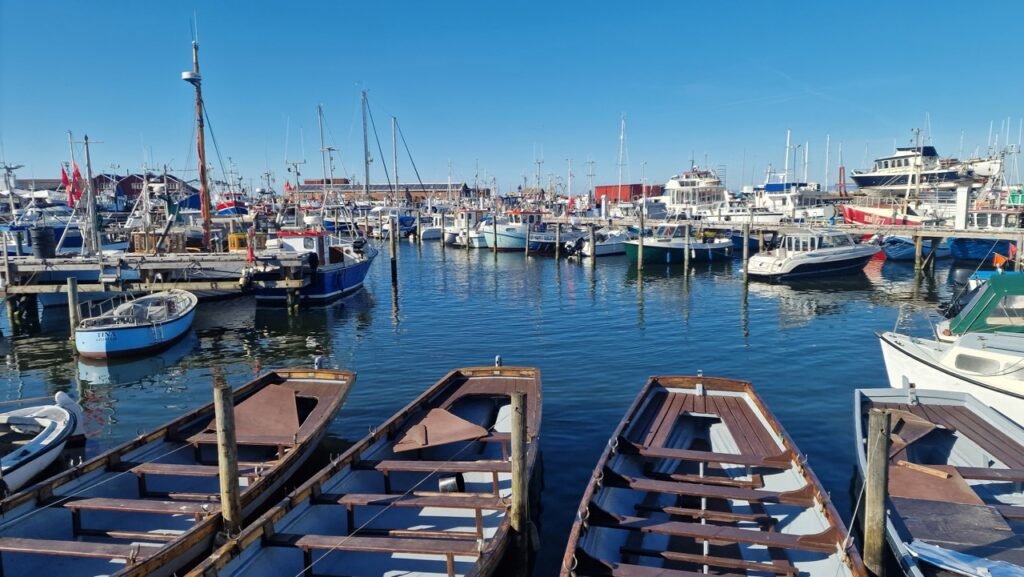
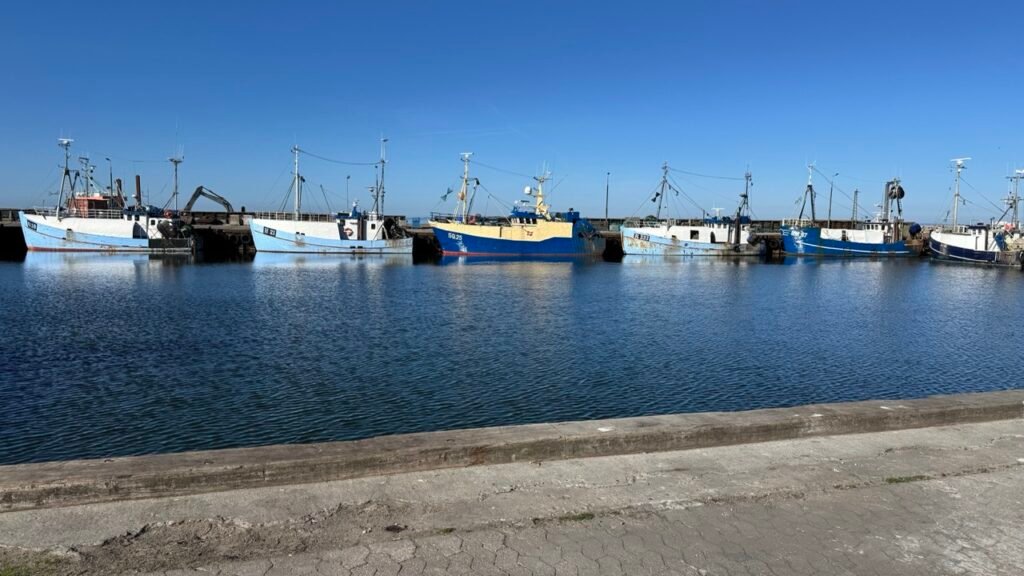
The harbor is probably the real highlight of Gilleleje. If you’re here, don’t skip it. This is a fishing town, and that comes through here not only literally, but also in an atmosphere that makes you feel like you don’t really need to go to Italy or Croatia anymore. Small fishing boats heading out to sea, an auction house for the catch, lively movement all around—and most importantly, a manageable number of people, not the kind of overcrowding that has sadly become almost normal elsewhere.
Eating in Gilleleje: Two Excellent Fish Experiences
I can recommend two great places if you’re hungry. Both serve fish—what else would you eat by the sea?!—and I can only say good things about both.
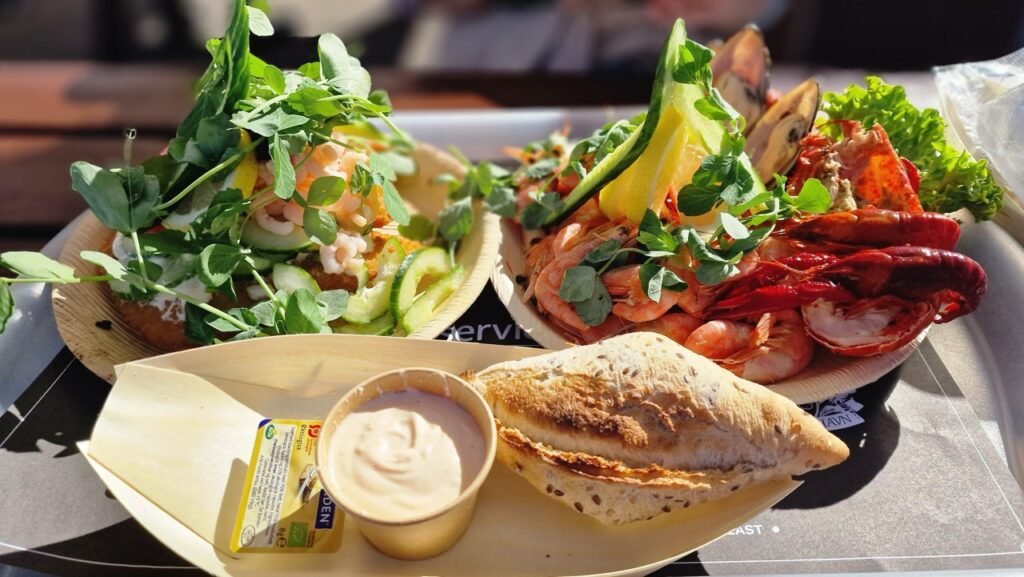
One of them is basically a harbor food stand, but the experience definitely rivals a restaurant. Adamsen’s Deli is right on the waterfront, next to the fishing boats. They offer dozens of fish dishes that you can order at the counter and eat at the benches and tables set up outside. We had a seafood platter and a classic Danish shooting star (stjerneskud in Danish) smørrebrød. Beautifully fresh seafood flavors, traditional Danish combinations, and very friendly prices considering the content and the portion size.
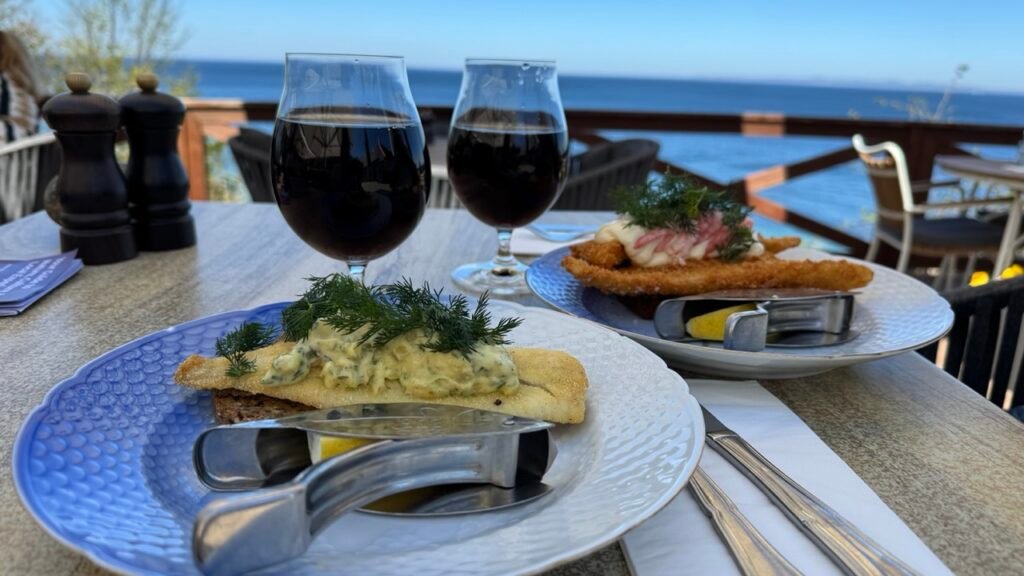
The other one, Fyrkroen (Lighthouse Inn), is a slightly fancier restaurant with an absolutely incredible view, about 3 km from the center of Gilleleje along the coast. This restaurant is right next to the famous Nakkehoved Fyr lighthouse, which is where the name comes from. See below. The menu isn’t huge, and the selection is mostly seafood. We had crispy plaice with shrimp and Danish remoulade, in both a traditional and a gluten-free version. Both dishes were served, according to local custom, on a slice of bread, basically in a kind of smørrebrød style, and they were heavenly.
Extra points to Fyrkroen for not only having gluten-free bread as the base for one of the smørrebrød dishes, but also being able to prepare the fish with gluten-free breading. If you’ve ever tried eating out with special dietary needs in Denmark, you know this is still a pretty big deal around here.
And what really steals the show at this place is the panorama. The terrace sits directly above the sea, and the view is stunning even if you don’t get a table right by the railing.
A Special Ice Cream Shop
There’s one more special foodie experience waiting for you in the harbor. Kanalkiosken has been welcoming guests since 1982, and in a good way, it has preserved something of that 1980s feeling.
The eclectic selection includes more flavors and types of ice cream than you can count, but there are also waffles, churros, all kinds of iced coffee and iced tea—basically, it’s hard to choose. I especially liked the concept of their iced coffee: you choose any two ice cream flavors you like, and they blend them with ice into espresso. Not only refreshing, but genuinely tasty too.
The Lighthouse—Or Rather, the Lighthouses
Walking east along the coast, you can reach the Nakkehoved Fyr lighthouse in about half an hour. This lighthouse has stood here since the 1700s, and it’s definitely worth a visit. Outside the main season it’s not open every day, so make sure to check the current opening hours on the museum website.
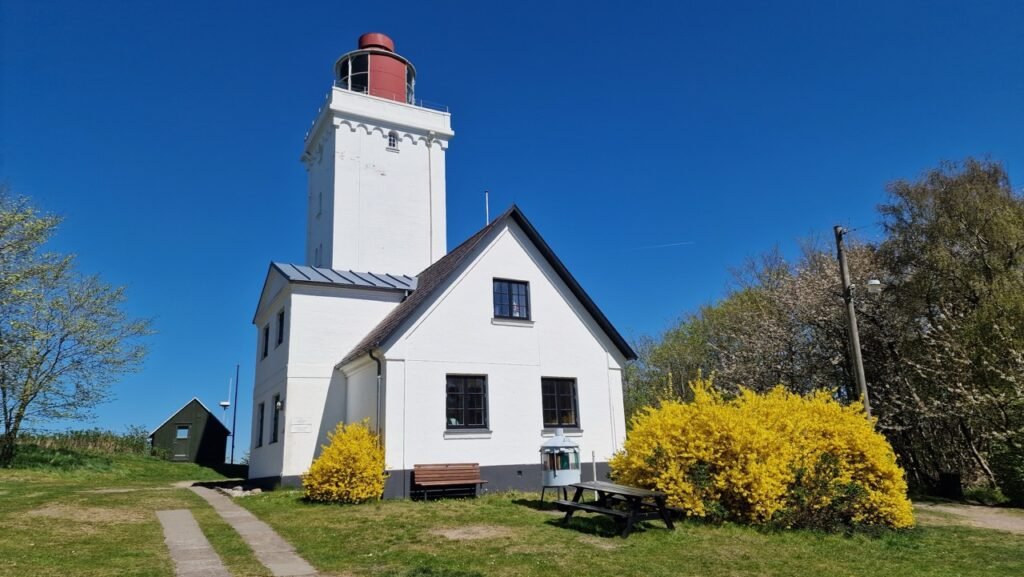
On the ground floor and lower levels of the lighthouse, you’ll find a small museum about Danish lighthouses. That’s already interesting, but the real reason to come here is the view. You can climb up to the highest level, then step outside through a narrow ladder onto the exterior platform around the light. The spectacular 360-degree panorama makes this opportunity too good to miss. But be warned: if you’re afraid of heights, avoid this place, because above the waist-high wall, only two thin wires separate you from the drop.
Just a few hundred meters farther east is Det gamle fyr, meaning the old lighthouse. As the name suggests, this is the old lighthouse here in Gilleleje. It has been beautifully restored, and it’s also worth seeing, partly because it’s free, and partly because its design is very different from its larger and newer sibling. You can also go up into this tower, although the panorama is much more modest. It’s not only lower, but you can’t walk all the way around it either. Important to mention: this one is only open when the larger lighthouse is open too.
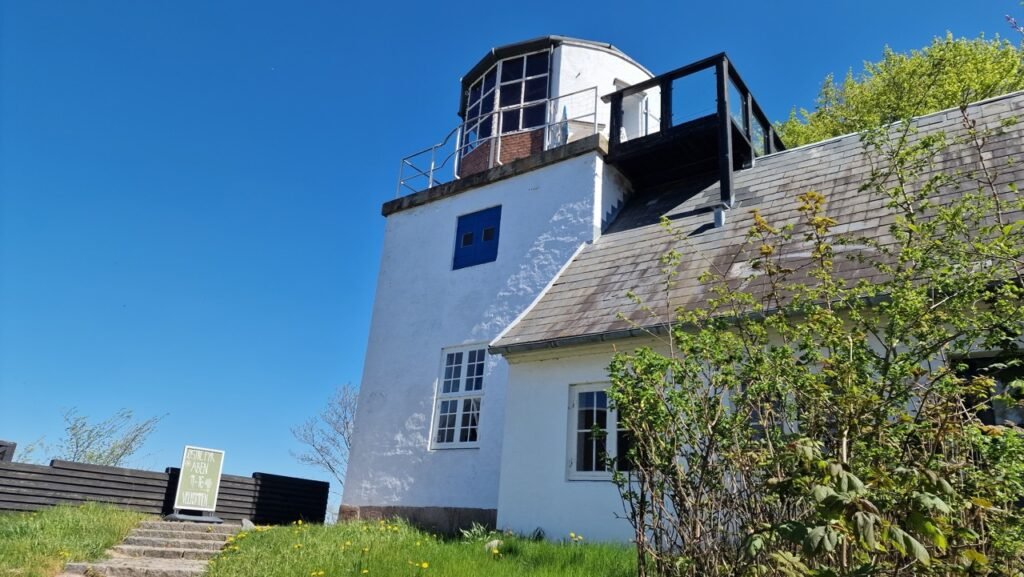
And by the way, right next to the old lighthouse is the Fyrkroen restaurant I mentioned earlier. One more reason to come this far.
A Beautiful Walking Path Above the Sea in Both Directions
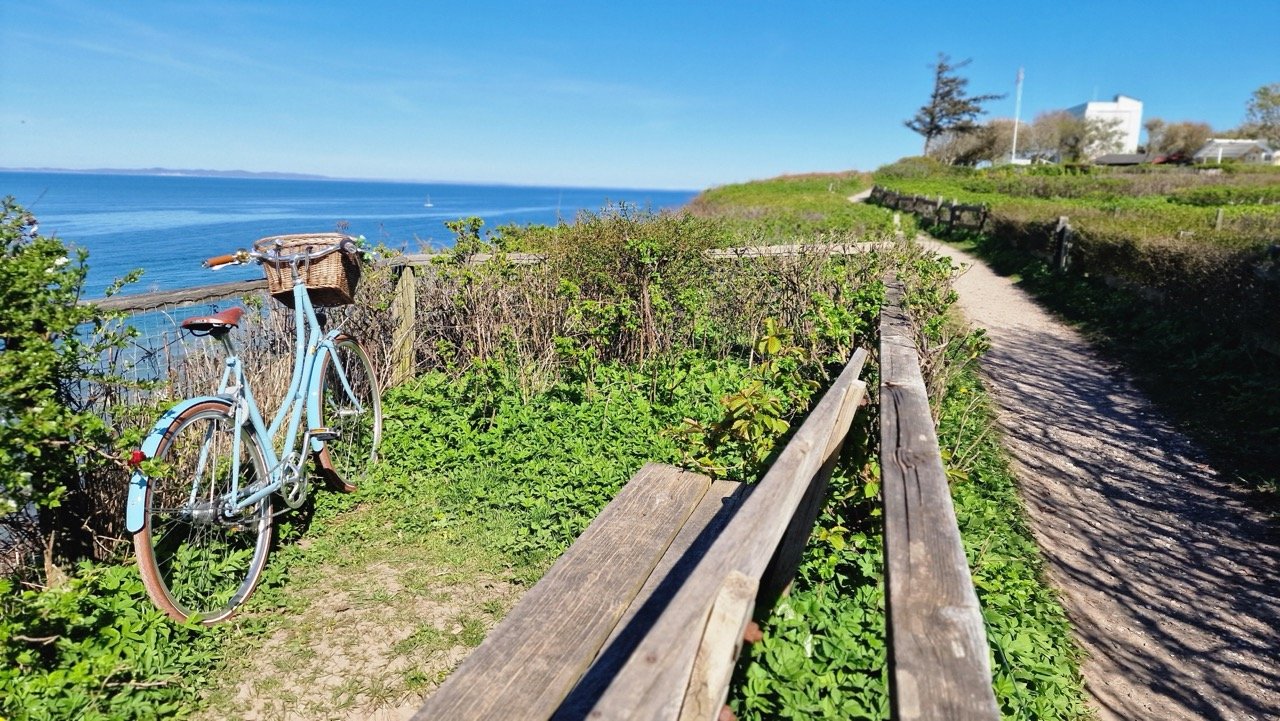
There’s one more thing right around Gilleleje that’s worth seeing if you’re already here. Whichever direction you start from the harbor, after a good 1–2 kilometers you’ll find yourself on a narrow walking and cycling path above the coast.
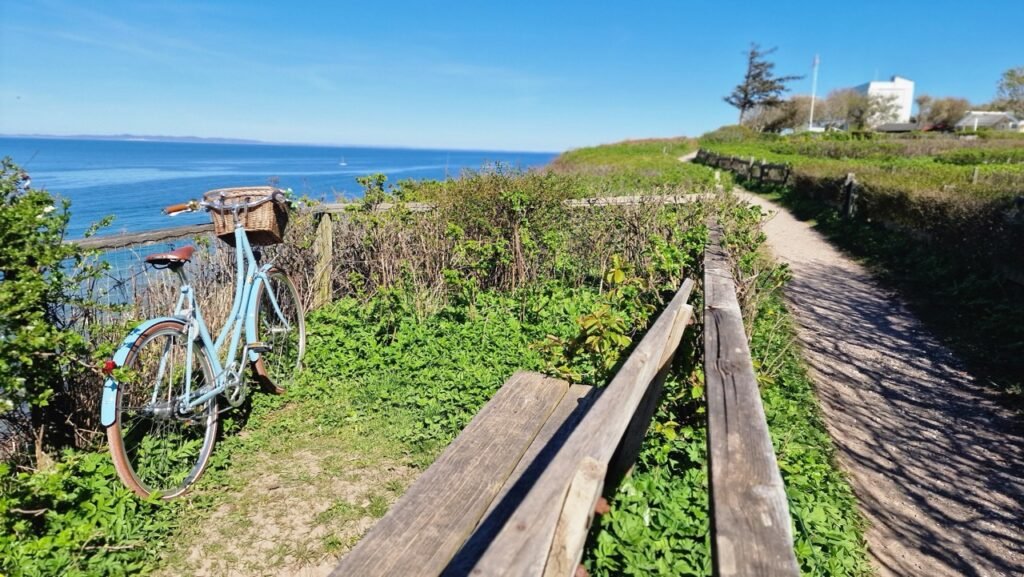
This is a truly special experience, because most of the path is lined with perfectly trimmed hedges, with the sea on one side and one stunning seaside villa after another on the other. In many places, the public path actually cuts through private properties. This is especially true to the east, toward the lighthouses. So you have gardens and houses on both sides, with the sea behind them.
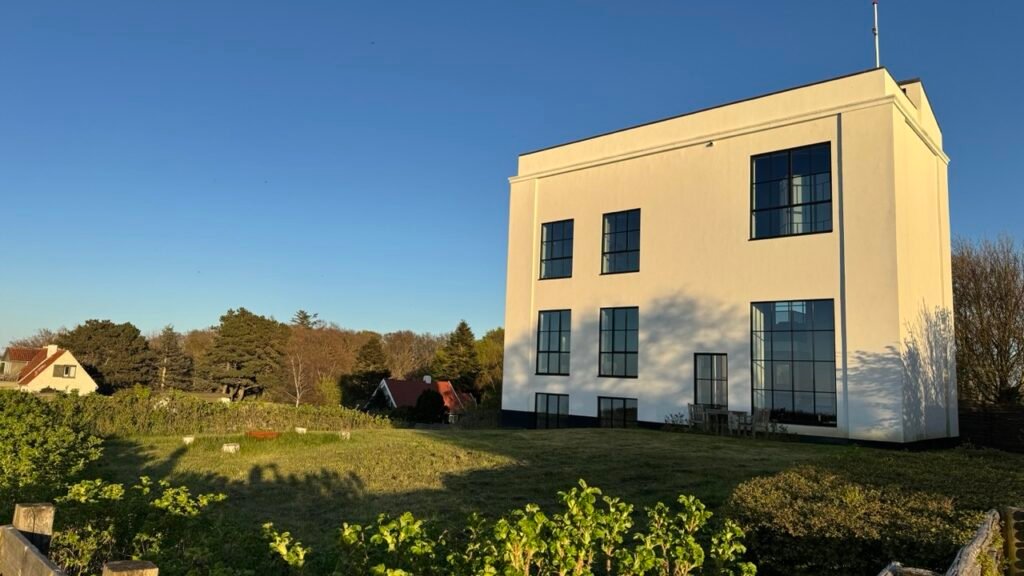
A few kilometers to the west, you can also walk to the Søren Kierkegaard stone, which commemorates the famous Danish philosopher’s reflections in this area.
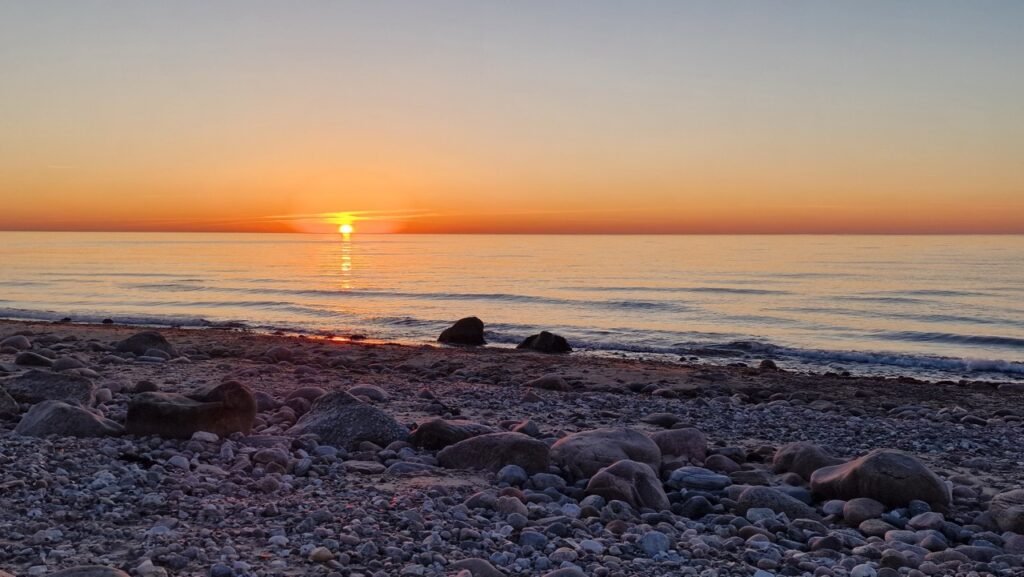
And in both directions, you also have the option to walk for many, many kilometers directly along the beach. Or just dangle your feet, and for the bravest, even dip into the water. And if for nothing else, the beautiful sunset alone can make Gilleleje worth visiting.
Flea Market Capital
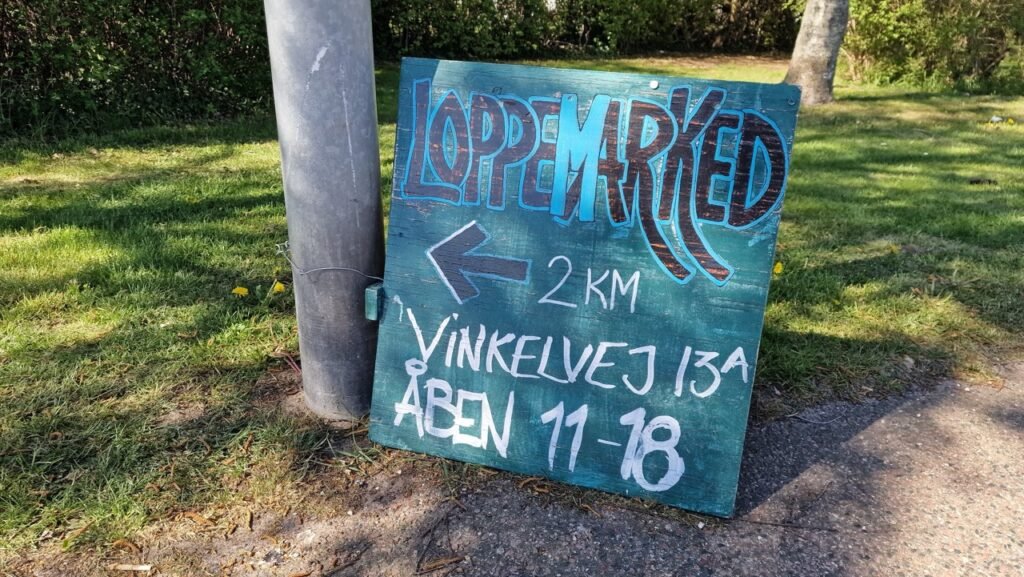
Although I’m the one giving it this title, Gilleleje could almost be considered Denmark’s flea market capital. At least that’s how it felt to us. Almost every street seems to have some kind of yard sale, antique stand, or something similar. There are more A-board signs on the streets advertising flea markets (loppemarked in Danish) than signs inviting you into restaurants.
If you enjoy browsing through these old bits and pieces—and of course plenty of valuable porcelain, household items, and decorative objects—then this alone can make Gilleleje worth a visit. And if you don’t speak Danish, no problem: everyone around here understands English too, and of course you can always point and gesture if needed.
Gilleleje Interactive Map
On the map below, you’ll find Gilleleje and the places I wrote about in this article.
Fyrvejen 25A, 3250 Gilleleje, Denmark
Fyrvejen 27, 3250 Gilleleje, Denmark
Ved Skrænten 16, 3250 Gilleleje, Denmark