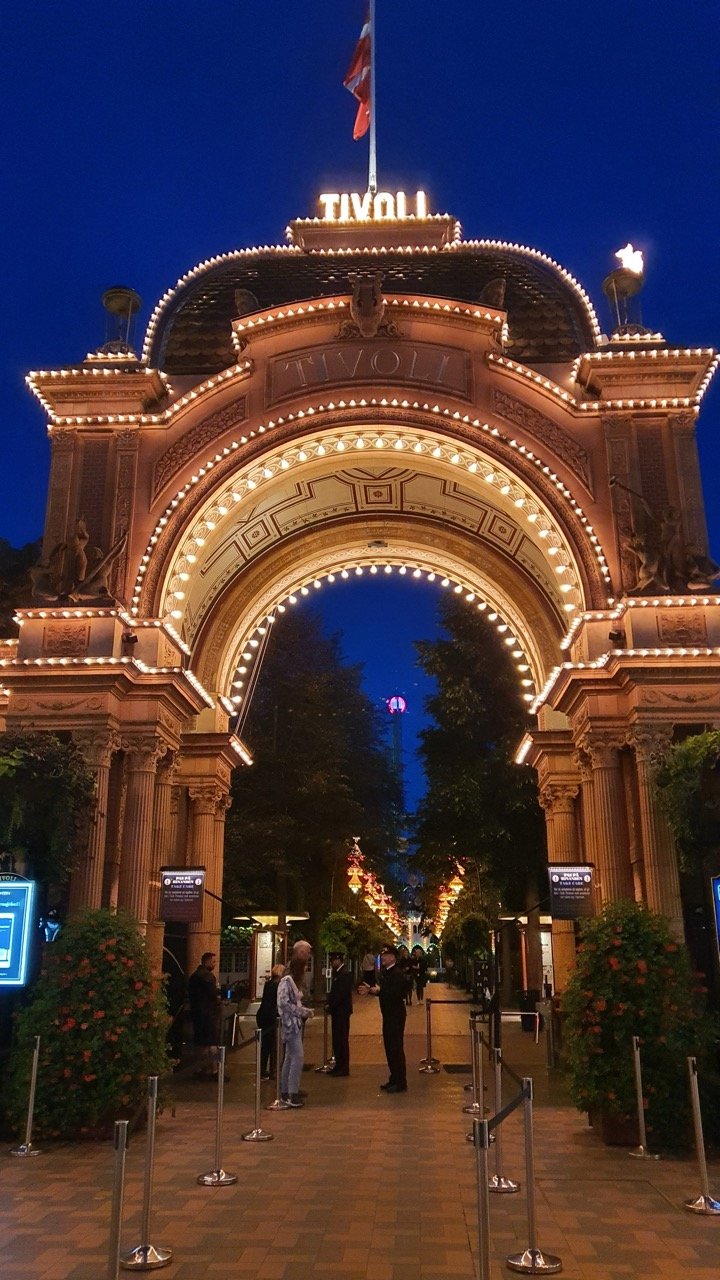
For a long time, I’ve been thinking about what to write about Tivoli, which is obviously the crown jewel of the sights anyone should visit in Copenhagen. But instead of just standing in the line and repeating how magical and charming it is, I wanted to share with you something that you could really use when planning your trip to Copenhagen.
So instead I figured it might be helpful to put together a practical list of what you can expect, what you should do and how you should prepare when visiting this wonderful city garden. When it’s best to visit it, how the rides work, prices, and how the park actually operates. That is, everything you need to know about Copenhagen’s most fabulous and exciting attraction, Tivoli Gardens.
What Is Tivoli – in a Few Words
Tivoli is a beautiful garden and a theme park in the heart of Copenhagen. It is both at the same time, and in my opinion this is what makes it unique.

You can come here only to walk around, admire the flowers, take pictures, eat something nice, and enjoy the atmosphere. Or you can come here for the rides, spend hours screaming on roller coasters, and leave with your kids completely exhausted but happy.
And the best thing is that both experiences are perfectly valid. Tivoli is not only for families with children, and it’s not only for people who want amusement park rides. It’s also for couples, solo travelers, food lovers, architecture lovers, and anyone who wants to see one of the most iconic places in Copenhagen.

The park is old, charming, sometimes a bit chaotic, sometimes surprisingly elegant, and somehow very Danish. You’ll find classic wooden roller coasters, modern thrill rides, tiny boats, beautiful lamps, restaurants, cafés, music, seasonal decorations, and people just sitting on benches enjoying the whole thing.
So in a few words: Tivoli is not a place you “check off” quickly. It’s a place where you enter, slow down a little, and let yourself enjoy Copenhagen in its most playful form.
When it’s Best to Visit Tivoli
When I first sat down to write this article, I had a clear concept in my mind about what I would say is the best time to visit Tivoli Gardens.
Then life came and mixed up everything. In the meantime, I visited Tivoli a couple of times with my newly purchased year pass (see below), and I have to admit there is no clear rule as how the number of visitors (i.e. the crowd) relates to the day in the calendar. At least I haven’t found one.
Tivoli is not open al year round, so make sure that you first check their official website for the opening days. They usually have an Easter season, a longer Summer season, then a Halloween and a Christmas-themed period. Between those, the Garden is often closed for weeks, sometimes even for more than 2 months during winter.
You can find a big crowd here on any day, even on weekdays. Then you come here one public holiday weekend, like we did this Easter, and the park is almost empty. So don’t plan your Tivoli visit only around the number of visitors. Come here and enjoy this beautiful park whenever you’re in Copenhagen.
The Different Themed Seasons
One of the most charming things about Tivoli is that it’s not exactly the same place every time you visit. The rides and the basic layout are more or less the same, of course, but the whole atmosphere changes with the seasons.
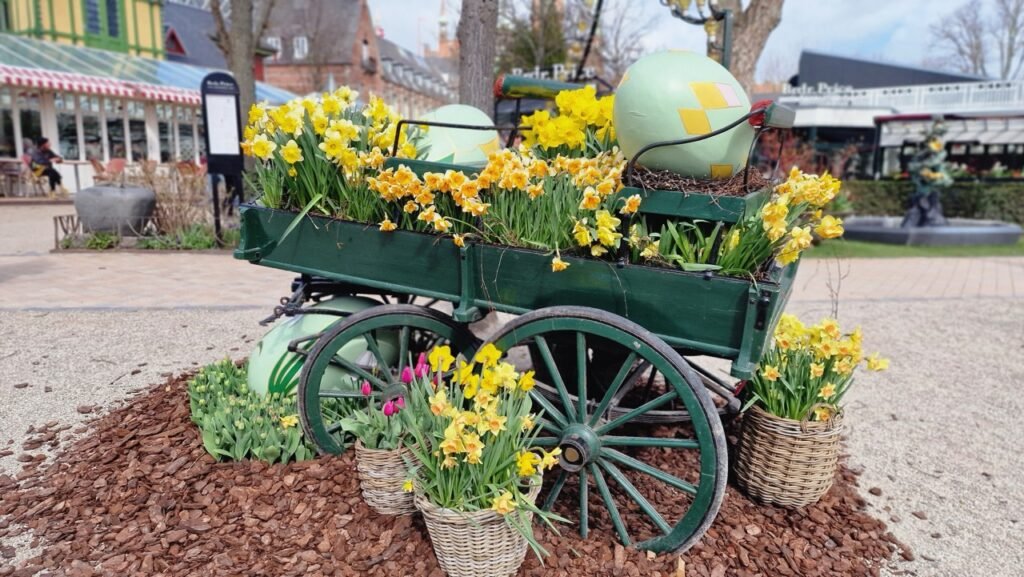
In spring and around Easter, Tivoli feels fresh, colorful, and light. Flowers everywhere, cute decorations, and that lovely feeling that Copenhagen is finally waking up after the long winter.
Summer is probably the most classic Tivoli experience. Long Danish evenings, people sitting outside, lights turning on slowly as it gets darker, and that warm amusement park feeling without being too much. If you only visit Copenhagen once and Tivoli is open, this is the version most people imagine.

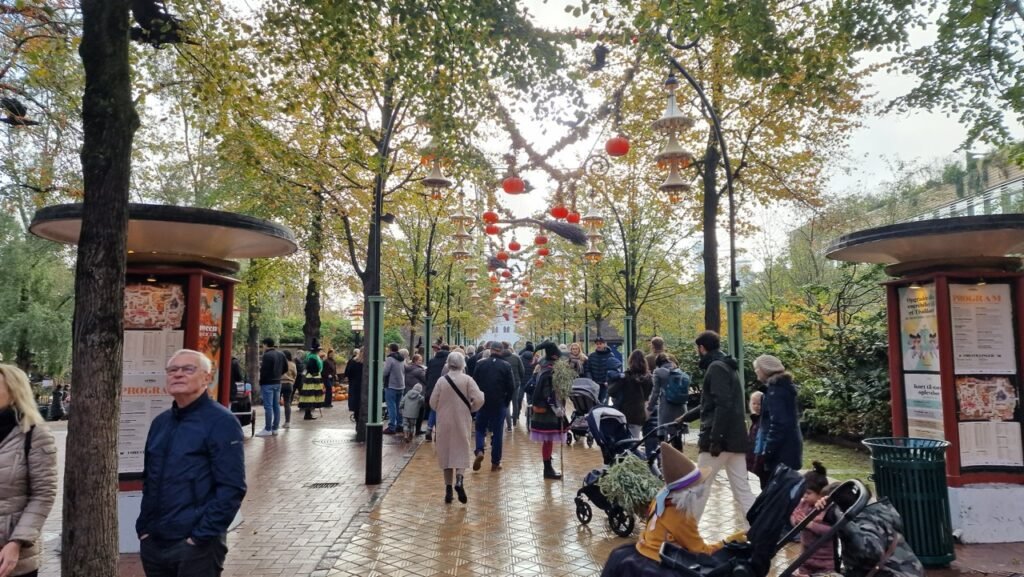
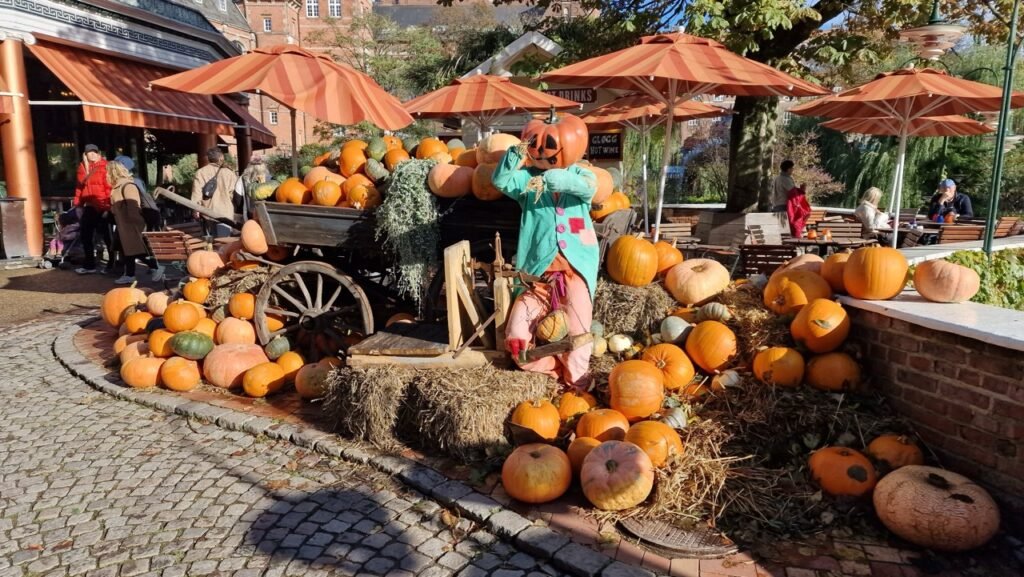
Halloween is a completely different story. Pumpkins, witches, spooky decorations, and a slightly crazy autumn atmosphere take over the whole garden. It’s still Tivoli, but with a playful dark twist, and kids usually love it.
And then there is Christmas, which might be the most magical version of all. Lights, small stalls, decorations, hot drinks, and that cozy Danish winter feeling everywhere. It can be cold, yes, but if you want to see Tivoli at its most fairy-tale-like, Christmas is hard to beat.

So the best season? Honestly, I don’t think there is one. Tivoli is worth visiting in any or all of its themed periods. Just check when it’s open, pick the version that sounds most exciting to you and fits your Copenhagen schedule, and enjoy the Gardens as it is at that moment.
Different Entrance Tickets
Entrance tickets mirror the concept that Tivoli Gardens is a beautiful garden and a theme park at the same time. I think once you understand how the ticket system works, you’ll also have a better idea of how to imagine Tivoli itself.
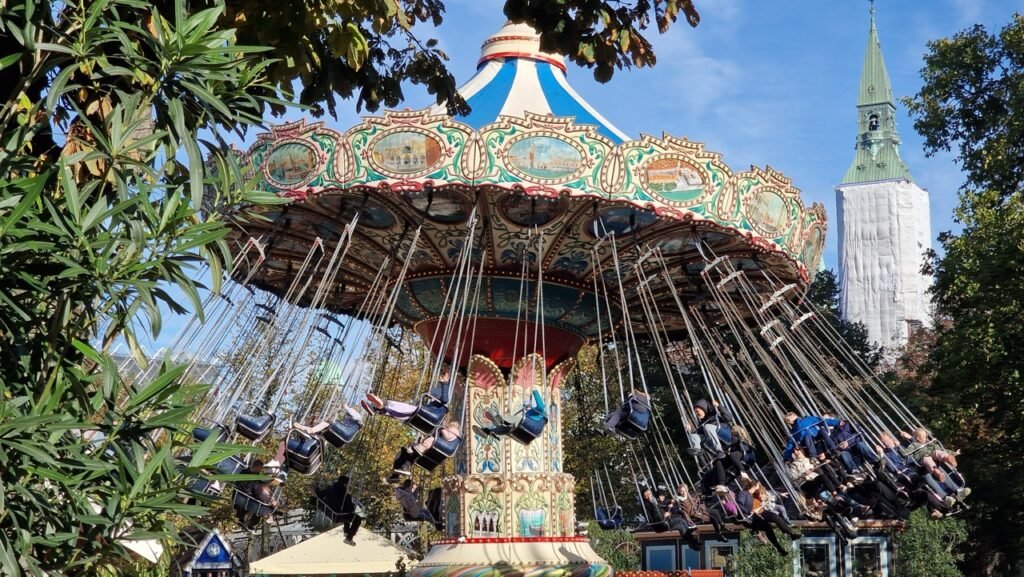
First, you can buy entrance tickets and ride passes separately. I find this interesting, and it tells the story that you don’t necessarily come here only for the rides. You can simply buy an entrance ticket and enjoy the charm of the park without hopping on any of the rides.
It’s worth mentioning that, luckily, you don’t need to decide on the full ticket type before entering the park. Of course, you need to buy the entrance ticket, but you can decide on the ride pass later. If you change your mind and think that the rides would be worth trying, there are booths around the park where you can buy your wristband, which gives you unlimited access for the rides for the day. And it costs the same as if you had bought the entrance tickets and the ride pass together at the entrance.
Then there is the option to buy ticket for individual rides. This is usually worth it only if you plan to try no more than three rides. But even then, it’s a great opportunity if you don’t plan a full thrilling day, but still don’t want to miss out on the fun.
And there’s the almost unbelievable option of a year-round Tivoli pass for anyone who plans to visit the Garden more than twice in any 12-month period. Do your math and check the actual prices, but Tivoli has this year pass offer that most museums and attractions have in Denmark. You come here three times, and the pass is cheaper than buying tickets every time. And after that, each visit is virtually free.
How the Rides Work
The rides in Tivoli work in a very simple way. If you have a wristband, you just go to the entrance of the ride, show or scan it, and enjoy. The wristband gives you unlimited rides for the day, so once you have it, you don’t really need to think about tickets anymore.

If you don’t have a wristband, you can still try individual rides. You simply stand in line for the ride like everyone else, and when you get to the actual entrance, you buy a ticket for that specific ride with your bank card. This makes the whole system quite flexible, because you don’t need to decide in advance whether you’ll ride anything or not.
So if you only want to walk around, eat something, and enjoy the atmosphere, buy only the entrance ticket. If your kids suddenly spot a ride they absolutely have to try, you can simply pay for that one ride. And if you realize after the second or third ride that this will be a full Tivoli adventure, just buy the wristband and stop counting.
In my opinion, this is one of the most practical things about Tivoli. You can enter the Garden with one plan, change your mind completely inside, and the ticket system still works for you.
Actual Prices
I first wanted to give you the exact Tivoli prices here, but then I realized it wouldn’t be very helpful. Tivoli prices can change not only from season to season, but even during the same week, depending on the day and probably also on how busy they expect the park to be.
So my best advice is this: always check the official Tivoli website before your visit. Don’t rely on a random blog post (not even mine) for the exact current price, because it might already be outdated by the time you arrive in Copenhagen.
What you should know, however, is how the price structure works. You usually have three main options: buy only the entrance ticket, buy entrance plus an unlimited ride pass, or pay for individual rides inside the park. And if you plan to visit Tivoli more than twice within a year, definitely check the annual pass options as well.
In general, the entrance-only ticket makes sense if you just want to walk around, eat something, enjoy the atmosphere, and maybe take a few pictures. The entrance plus ride pass is the better choice if you know you’ll spend a proper amusement park day here. And individual ride tickets are good if you only want to try one or two rides without committing to the whole ride pass.
So instead of memorizing the exact numbers, understand the logic: Tivoli is not a cheap attraction, but you can make it fit your plans much better if you choose the right ticket type.
Ask the Staff
You don’t need to figure all this out alone, though. One thing I really like about Tivoli is that the staff at the entrance are extremely helpful, and they speak excellent English. If you’re not sure which ticket type would be the best option for you, just ask them.
You can ask the cashier directly at the entrance booth, or go to the separate service building at the main entrance, opposite the Lego Store. They’re used to explaining the different options, and they’ll happily help you decide whether you only need an entrance ticket, a ride pass, individual ride tickets, or maybe even an annual pass.
Rides vs. Park
One thing that’s worth understanding before you visit Tivoli is that the park can give you two completely different experiences.
You can come here for the rides, of course. Roller coasters, drop towers, carousels, small boats, fun houses, and all those things that make kids scream and adults pretend they’re not scared. If this is your plan, Tivoli is a proper amusement park, and you can easily spend hours going from one ride to the next.
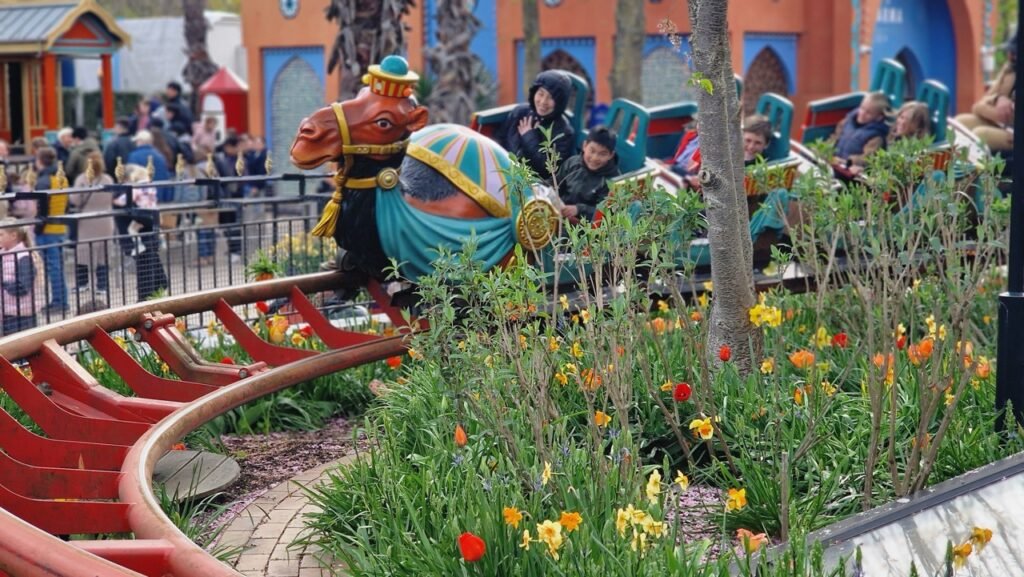
The thrill level—compared to other theme parks—is somewhere in the middle, I would say. Tivoli definitely has rides that make your stomach drop and your legs shake a little, but don’t expect the extreme roller coaster madness of the biggest modern theme parks. This is not the place with the tallest, fastest, craziest rides in Europe. It’s more classic, more charming, and more compact. But for most visitors—and especially if you’re visiting with kids or you just want some fun without turning your whole day into an adrenaline test—it’s more than enough.
But Tivoli is also a park. A beautiful, old, slightly magical garden in the middle of Copenhagen. You can stroll around without ever sitting on a ride, admire the flowers, look at the buildings, listen to the music, eat something nice, and just enjoy the atmosphere. There are also plenty of beautiful shops to browse, plus a great selection of restaurants, cafés, pastry shops, and small food spots. Everything is on the more elegant side, so even if you only come here for a walk and a bite, it still feels like a proper Tivoli experience.

And then there’s the whole cultural side of Tivoli. Depending on when you visit, you might find theater performances, concerts, open-air shows, music, or little seasonal events happening around the Garden. You don’t necessarily need to plan your visit around these, but they add a lot to the feeling that Tivoli is not just an amusement park. It’s a place where something is always going on, even if you never step onto a ride.
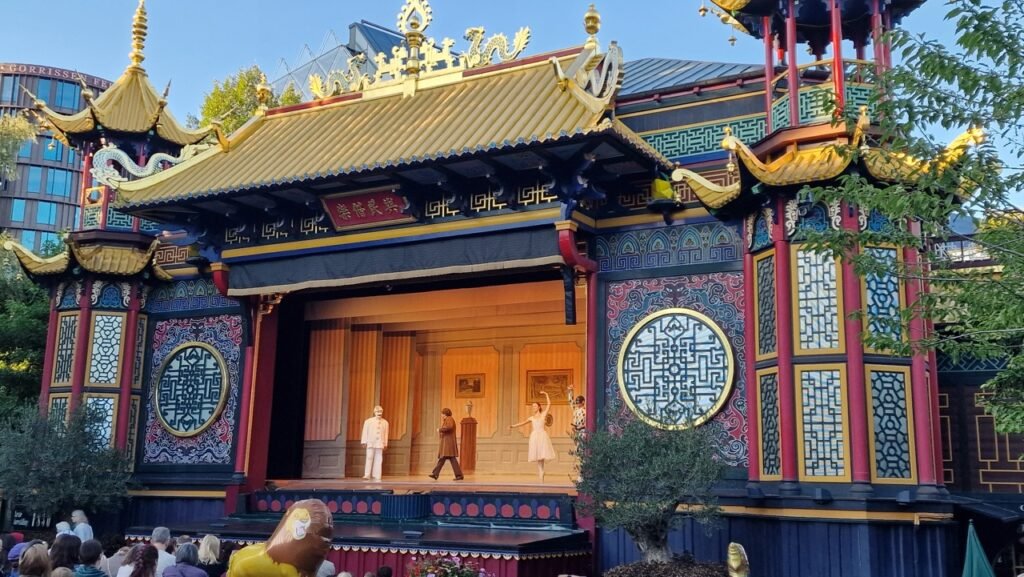
In fact, I think this is what makes Tivoli so special. Some people rush from ride to ride with their wristbands, while others sit on a bench with a coffee and watch the lights turn on. Families with kids, couples on a date, tourists with cameras, locals with year passes—they all use the same place in a different way.
So don’t feel that you have to “do” Tivoli in one specific way. If you want excitement, go for the rides. If you want charm, slow down and enjoy the Garden. And if you want the full experience, do both.
Danish Hygge at the Rides
There is one last thing that’s worth mentioning, especially for most people visiting from outside Denmark. At the rides, you can experience Danish hygge firsthand—and that’s not always in the sense you might expect.
Hygge means calm, comfort, and a way of looking at life as everything around us is nice as it happens. This is very much how Danish people often move through life and through the streets: not rushing, not stressing, not getting nervous about every little delay.
At the rides, this means the staff is not only calm and nice, but they can also seem a bit slow sometimes—especially if you’re used to the rushed efficiency of other theme parks.
What I mean is this: you wait half an hour in line for a ride, and instead of rushing you and everyone before you, instead of trying to make the line move as efficiently as possible, the staff acts as if they had all the time in the world. For example, they often don’t let the next group enter the immediate waiting area before the previous ride has fully ended. So they only start checking people in once the previous group has already left the premises. And if someone is paying for an individual ride at the entrance, that can slow the line down even more.
You stand there, you see that the line could already be moving, but the staff is still chatting, smiling, and enjoying life.
I wouldn’t necessarily label this as negative. It’s just another way of thinking, and something you have to accept when you’re in Denmark—and when you’re in Tivoli Gardens.