I’ll admit it: one of my very first experiences in Copenhagen was Nyhavn—the famous harbor and the row of colorful houses.
In fact, when I first came here sometime in 2005, my strongest memory from that trip is still this always-bustling harbor with its colorful houses, bars, and restaurants, the crowds of people, and the beer I had right here.
When I visited Copenhagen a second time, I came back to Nyhavn again. Even on my third visit—though by then it wasn’t my very first stop. As I kept coming back to this city and eventually moved here, we now mostly come because family or friends visit us—and we bring them to see it.
So What Exactly Is Nyhavn?
And that probably tells you everything about how Nyhavn fits into the city. The view (colorful houses and a narrow, canal-like harbor) is one of Copenhagen’s symbols, yet in reality it’s a place almost entirely for tourists.
It’s not even a whole neighborhood—really just a single street, and in truth only one side of it.
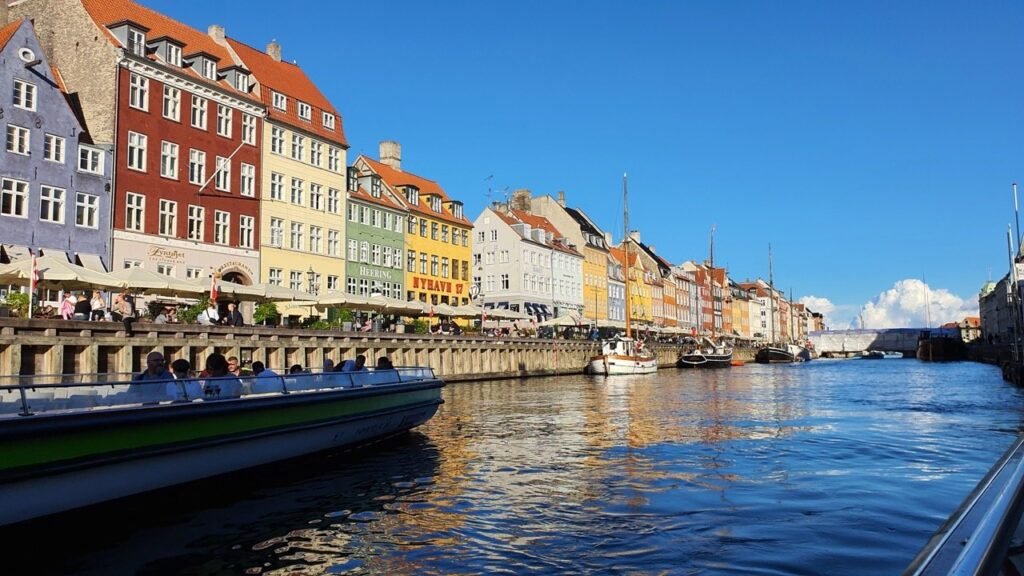
Nyhavn (pronounced roughly “NYE-hown,” literally “New Harbor”) was built between 1670 and 1673 on the orders of King Christian V. Essentially it’s a canal that connected the sea to Kongens Nytorv—a square built around the same time, modeled after Paris, and still one of Copenhagen’s most defining spaces. Back then, Nyhavn functioned as a busy harbor where ships from all over the world offloaded cargo and fishermen sold their catch.

The distinctive colorful houses lining the harbor—really just on one side—were mostly built in the 17th and 18th centuries as homes for merchants and sailors. The earliest, No. 9, dates from 1681; it and the others were beautifully restored in the 20th century.
Supposedly, over the centuries Nyhavn’s reputation declined drastically, and until renovations in the 1960s and ’70s the area was known for rough drinking holes and a nightlife best avoided.
Nyhavn’s most famous resident in better times was the Danish fairy-tale writer Hans Christian Andersen, who lived and worked in several houses here: Nos. 18, 20, and 67 are all known as HCA addresses.
Nyhavn From a Visitor’s Perspective
Today, Nyhavn has become one of Copenhagen’s best-known, most inviting, genuinely positive, and lively spots.

You can call it a neighborhood, but it truly is just a single little street between Kongens Nytorv and the sea canal. And as I said, the real buzz—and the colorful houses—are only on one side of that street, with the canal-like harbor still running down the middle.
Nyhavn is clearly a tourist attraction; locals don’t typically hang out here. But that doesn’t mean you shouldn’t come if you’re visiting Copenhagen.
First, as one of the city’s symbols, I think it’s worth checking off on your very first trip.
Second, you won’t be disappointed. Yes, the crowds and the energy come mostly from (foreign) tourists, but the vibe of this little street is still great. Even if you don’t meet many locals, it helps you feel Copenhagen’s and Denmark’s calm, happy, yet lively mood. Having a drink—or even lunch or dinner—at one of the restaurants spilling out onto the street is almost a must. And don’t worry: it isn’t a rip-off or a tourist trap. When we ate here, we were served good food at normal Danish price levels (which are, in themselves and everywhere, expensive).
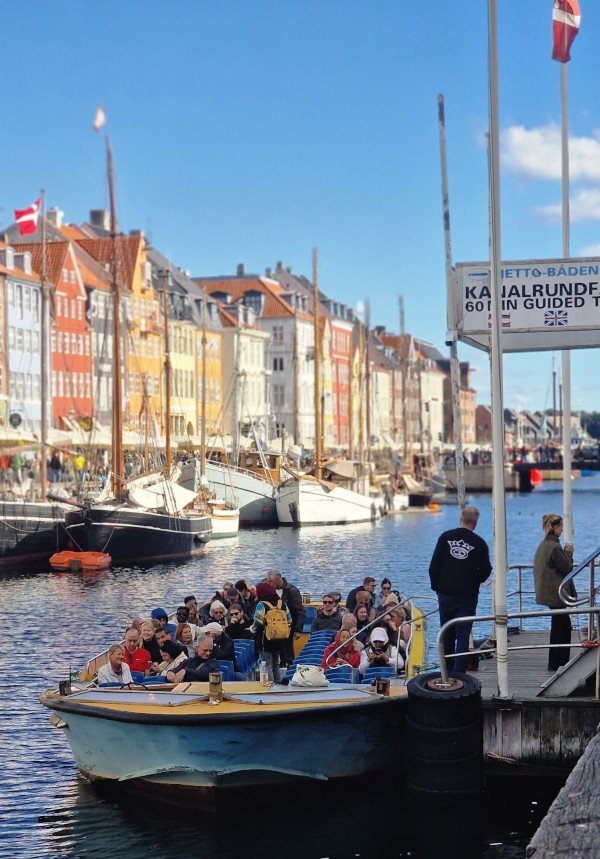
Third—and this matters too—Nyhavn is one of the starting and ending points for the deservedly popular Canal Tours. These low boats take you through Copenhagen’s canals and essentially its inner city; it’s worth doing at least once while you’re here. And if you do, you won’t be skipping Nyhavn anyway!
Around Nyhavn
If you’re already here, there are a few things within walking distance that you shouldn’t miss on a Copenhagen sightseeing day.
- Canal Tours, as mentioned.
- Kongens Nytorv, perhaps Copenhagen’s most impressive square, sits right next to Nyhavn. If you arrive by metro, you’ll probably get off there anyway.
- Strøget, Copenhagen’s internationally famous pedestrian street, runs into Kongens Nytorv opposite Nyhavn.
- Magasin du Nord department store on Kongens Nytorv: a distinctive, multi-level city icon. Drop in for the experience, for quality goods, or just a drink at one of its many cafés. And since this is a travel-and-food site, don’t miss the dazzling supermarket in the basement!
- Broens Gadekøkken. Exactly across the main canal from Nyhavn, reachable via a pedestrian bridge, this popular street-food hub is worth the short walk. Crossing the bridge is nice in itself, and among the pavilions you can soak up a little Copenhagen vibe over a good lunch or dinner. In winter there’s an ice rink here.
- The Royal Theatre and the Royal Opera are both neighbors of Nyhavn. Worth a peek inside—or at least a look at the buildings.
- Harbor bus 991 and 992 (part of local transit) depart from the end of Nyhavn. They’ll take you to many parts of the city for the normal public transport fare—and in my view, the boat ride within the city is worth it on its own, especially if you skip the Canal Tours.
- Amalienborg, the royal palace. It’s a bit farther—still only a few hundred yards from here—and easy to combine with Nyhavn on a walking route.
Nyhavn and the Colorful Houses
Read this too: in my article on Copenhagen’s colorful houses, I dig into whether these iconic, centuries-old façades around Nyhavn can really be considered typical Copenhagen buildings. Spoiler alert: not at all.