Dragør is a magical seaside small town very close to Copenhagen. It may not be the target of a strictly one-day or two-day visit to Denmark, but if you’re staying a bit longer—or you’re craving something special—it’s absolutely worth popping over for a few hours.
Dragør in a Nutshell
If you want to experience rural Denmark without traveling far from Copenhagen, Dragør is the place you really should visit.
Charming old-town houses, cozy cafés and restaurants, a lovely stroll among the boats in the harbor—with views of the Øresund Bridge.
What’s more, a Dragør excursion fits into 3–4 hours from downtown Copenhagen, travel time included. So you can get that rural Danish vibe even during a short city break.
How to Get to Dragør From Copenhagen
With about 12,000 residents, Dragør is essentially the only major settlement in Denmark that lies south-southeast of Copenhagen Airport—setting Bornholm aside, of course. From Copenhagen’s point of view, Dragør sits on the “other side” of CPH. See the map below.
Besides driving, the easiest way is by local bus.
- One option is the 250S bus. It runs from central Copenhagen (it also stops in front of the Central Station) and reaches Dragør in about 45 minutes. It typically runs every 15–20 minutes; it may be a bit crowded downtown, but you’ll definitely find a seat toward the end.
- The other option is the 33 bus—slightly longer, but more of an adventure. You can board at Ørestad station, which you can reach by the Øresundstog or the Metro. From there, the 33 takes about 35 minutes to Dragør. The overall journey is a bit longer, but it winds past enchanting local riding schools and country villas. If you can spare an extra half hour, don’t skip this—at least in one direction! Note that not every 33 bus goes all the way to Dragør, only one per hour does.
Dragør is in Zone 4. If your ticket or pass covers Zone 4, you can use these buses freely.
Our Own Dragør Experience
We visited Dragør on a chilly autumn afternoon and chose the more adventurous 33 bus for the outbound trip. Honestly, the ride alone would have been worth it. For a good half hour, the bus wound southeast of Copenhagen, around the airport. The suburban houses of Kastrup soon gave way to riding schools and open fields. And more riding schools. Along this route you pass riding schools for kilometer after kilometer, by the dozens—maybe literally by the hundred—which is an experience in itself.
The bus also turns under the northwest runway end of the airport. If you’re lucky, you can watch planes taking off or landing directly overhead from your seat. We weren’t lucky that day—we probably caught the only five-minute stretch with zero takeoffs. A little farther on, though, circling the runway, we saw more than a few departures.
The Old Town
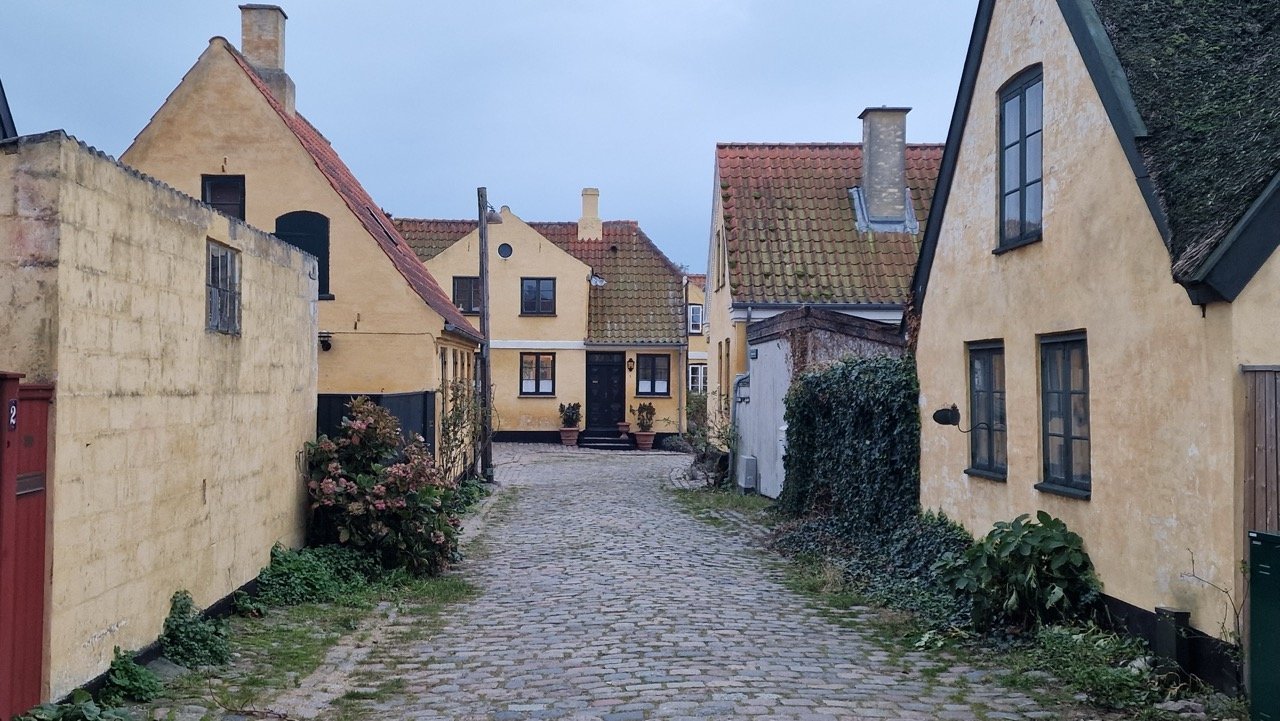
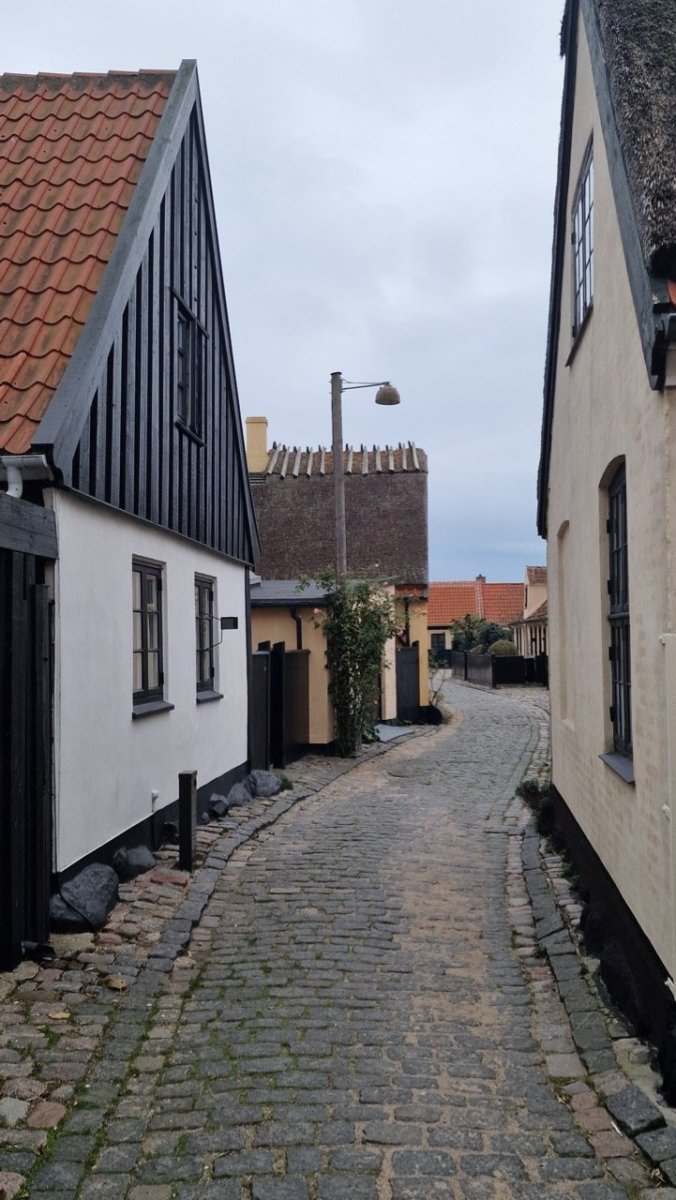
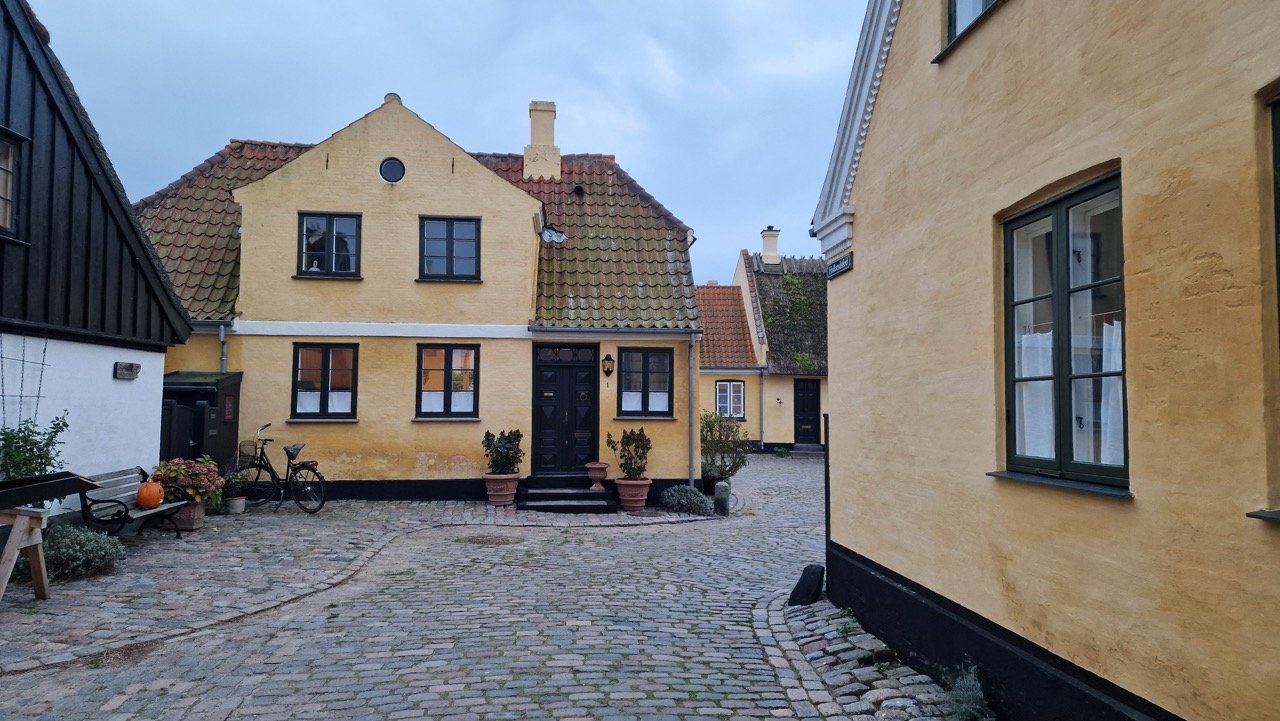
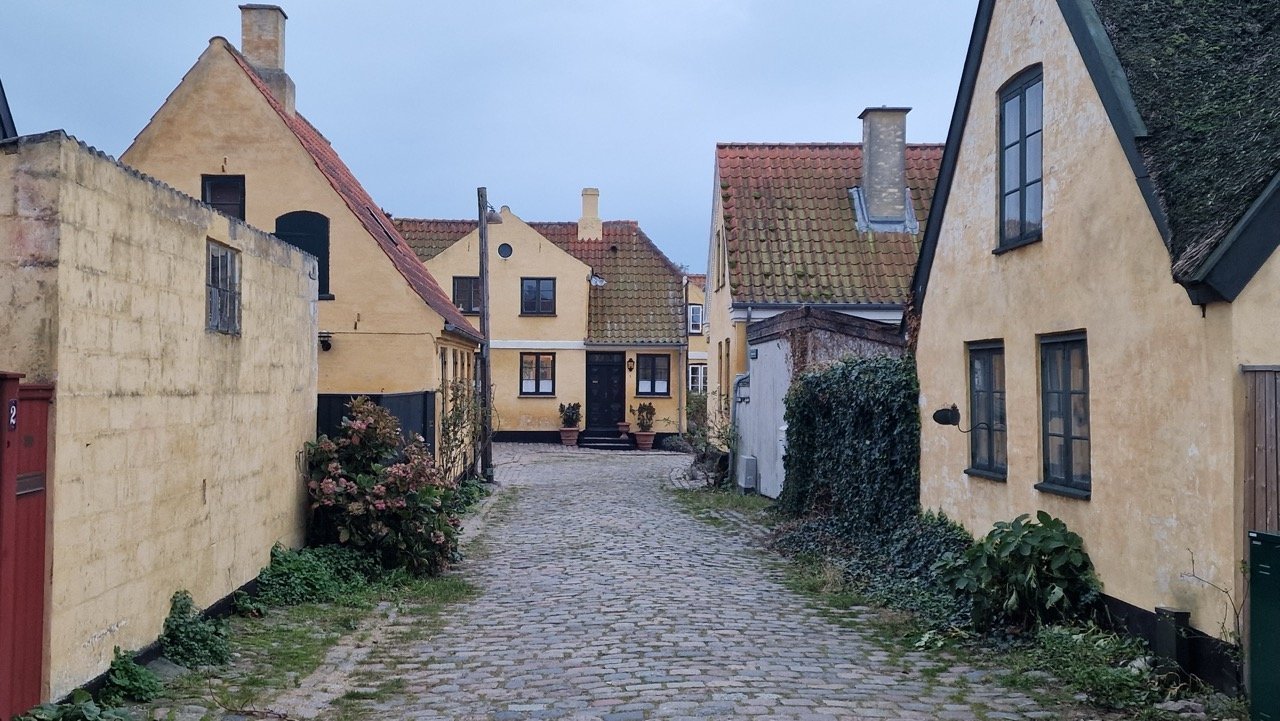
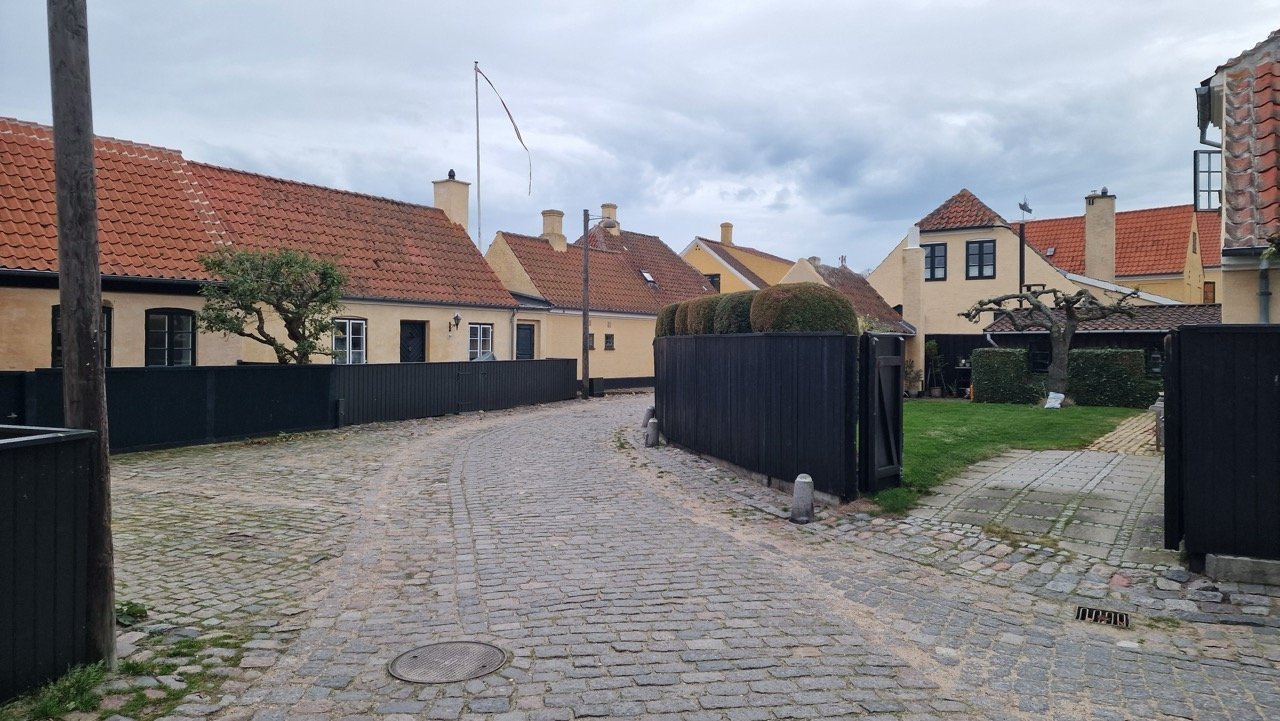
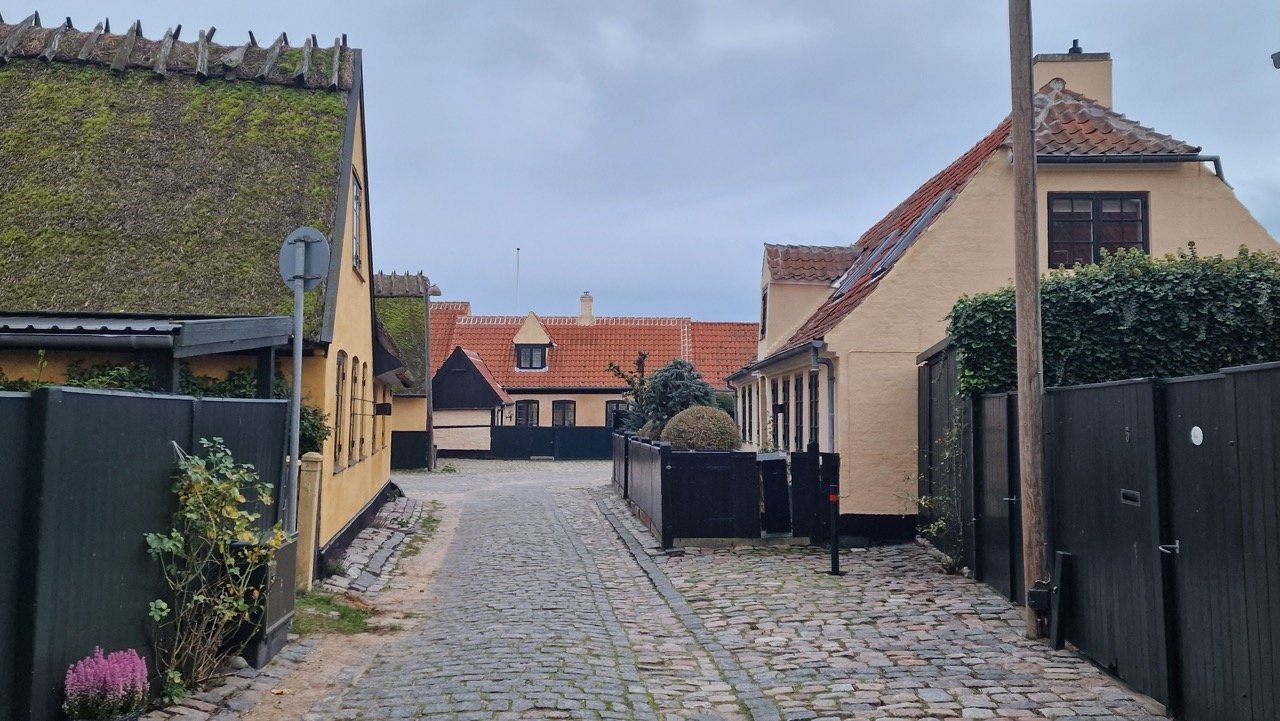
We reached Dragør right at dusk, which is probably why our photos aren’t the best. From the bus terminal it’s a 2–3 minute walk to the Old Town, one of the area’s most popular sights. The low, lovingly maintained historic houses—painted in every shade of yellow—really do offer a view and an atmosphere that make this place unmissable.
On the way, we’d already spotted a cozy café selling season-perfect gløgg, in line with local habits on a windy November evening, but we kept going while there was still a little of the daylight that, at this time of year, says goodnight earlier and earlier.

The Old Town basically has a main street lined with shops, cafés, and restaurants that leads straight to the sea. But if you’re in the mood to wander, ducking into the little streets and car-free alleys lets you peek even more into the life of a Danish country town.
And people let you look—no curtains here either, just like in most of Denmark. You try not to gawk through the windows, but curiosity does pull the eye. The brand-new, modern kitchens and living rooms that look out from under thatched roofs only sound like a contrast at first glance. Strolling these quiet streets, it all comes together into the full Danish feeling—the kind that makes you a little happier just by being in this country.
The Harbor of Dragør

The Old Town is compact; even with some meandering and jaw-dropping, it took at most 10 minutes to reach the harbor. The never-ending wind, the boats already hauled ashore for winter, the folks working on them even late Saturday afternoon, and the handful of inviting restaurants tucked here all amplified the special experience we’d already been having in this little town.
At the far end of the harbor there’s a popular spot where you can admire both the world-famous Øresund Bridge connecting Denmark and Sweden and Copenhagen Airport. Depending on the wind, you can plane-spot landings or takeoffs; for the bridge, it’s perhaps the best land-based vantage point to take in that stunning feat of engineering.

Among the wooden harbor buildings on the way back, we ducked into a stationery shop so good it would have held its own in the capital—yet its warm atmosphere reminded us we were still wandering this little jewel box.
There’s also a fort on the shoreline in Dragør. On a normal daytime outing it’s worth the short walk, but on our November evening we didn’t fancy stumbling around in the dark, so we skipped it this time.
A Gløgg, an Ice Cream, and a Hot Chocolate
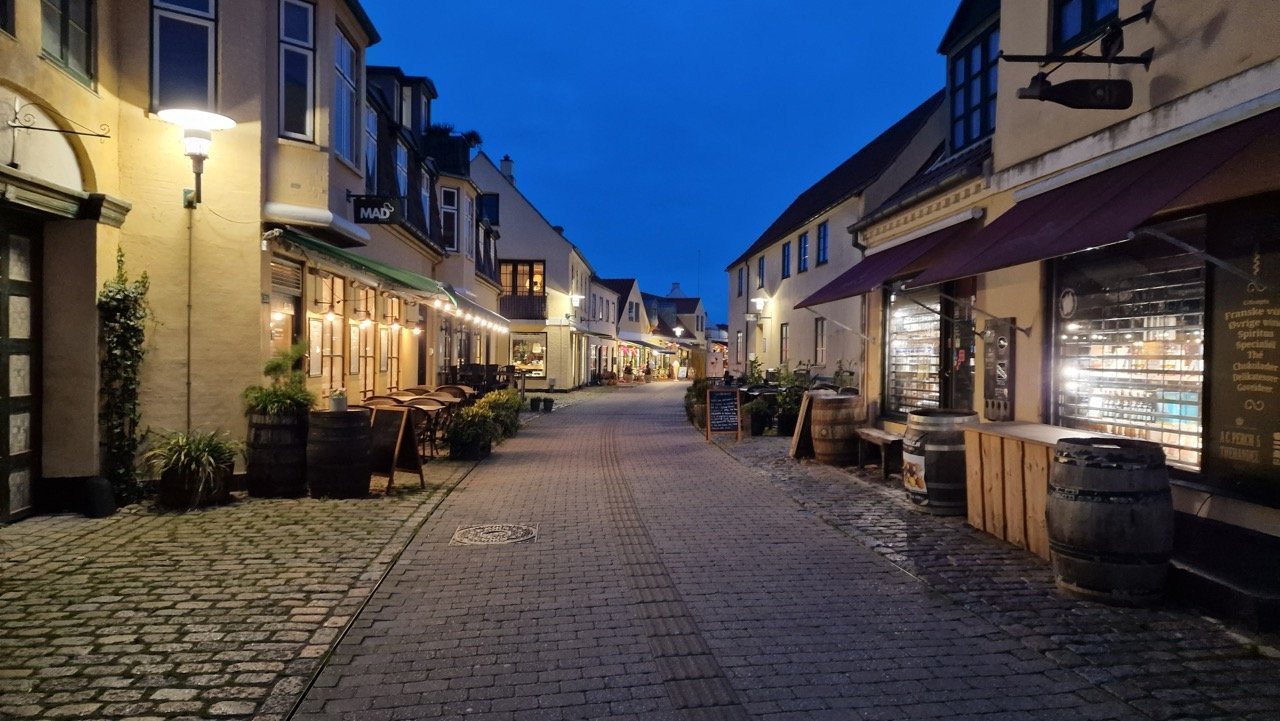
Back in the Old Town, early evening darkness had settled in—that fall Danish kind. We no longer saw the full “yellow smile” of the houses, but the lights and the people still strolling added a whole other dimension to the experience.
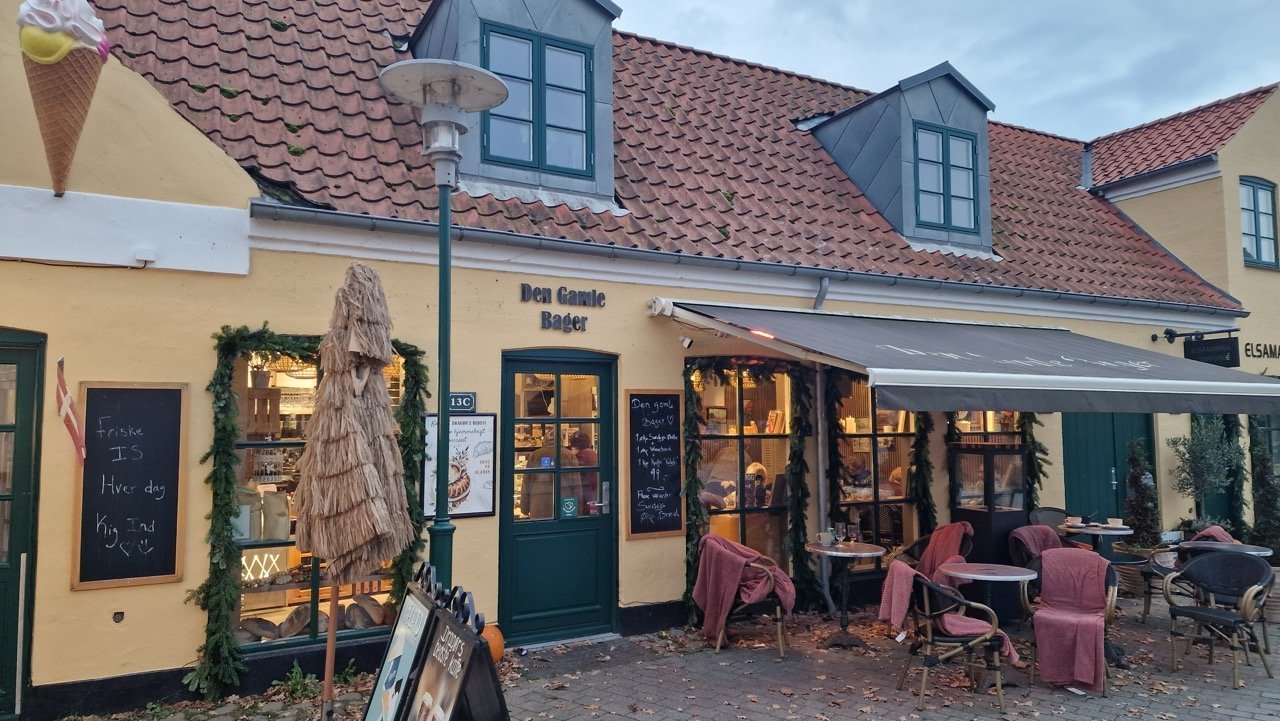
We ended up at Den Gamle Bager, i.e., “The Old Baker.” Given Denmark’s and Dragør’s positive vibes, we would probably have felt good anywhere, but this place was perfect for ending the evening.
Even ice cream hit the spot on a chilly November night—but it was the house gløgg and whipped-cream hot chocolate that made the finale truly cozy. The warm interior, with woven lamps hanging all over the ceiling, was the perfect crown on a wonderful Dragør outing.