The Copenhagen colorful houses — for most visitors, this is the very first must-see, the signature neighborhood to track down in Denmark’s capital.
And honestly, that makes sense. The colorful houses (specifically, Nyhavn — more on that below) are a place you have to see, feel, and soak up if you want to experience Copenhagen in full.
What Are the Copenhagen Colorful Houses?
If you’ve seen even a handful of photos of Copenhagen, you’ve seen the colorful houses. While this look isn’t typical of the Danish capital as a whole, the houses — and the harbor itself — are often used as the city’s symbol.

The colorful houses in Copenhagen are a bit like the Eiffel Tower in Paris. Everyone knows Paris doesn’t have a tower on every corner, yet it’s the symbol that shows up in most photos. And if you catch a glimpse of the Eiffel Tower out of the corner of your eye, you instantly know it’s Paris.
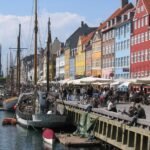
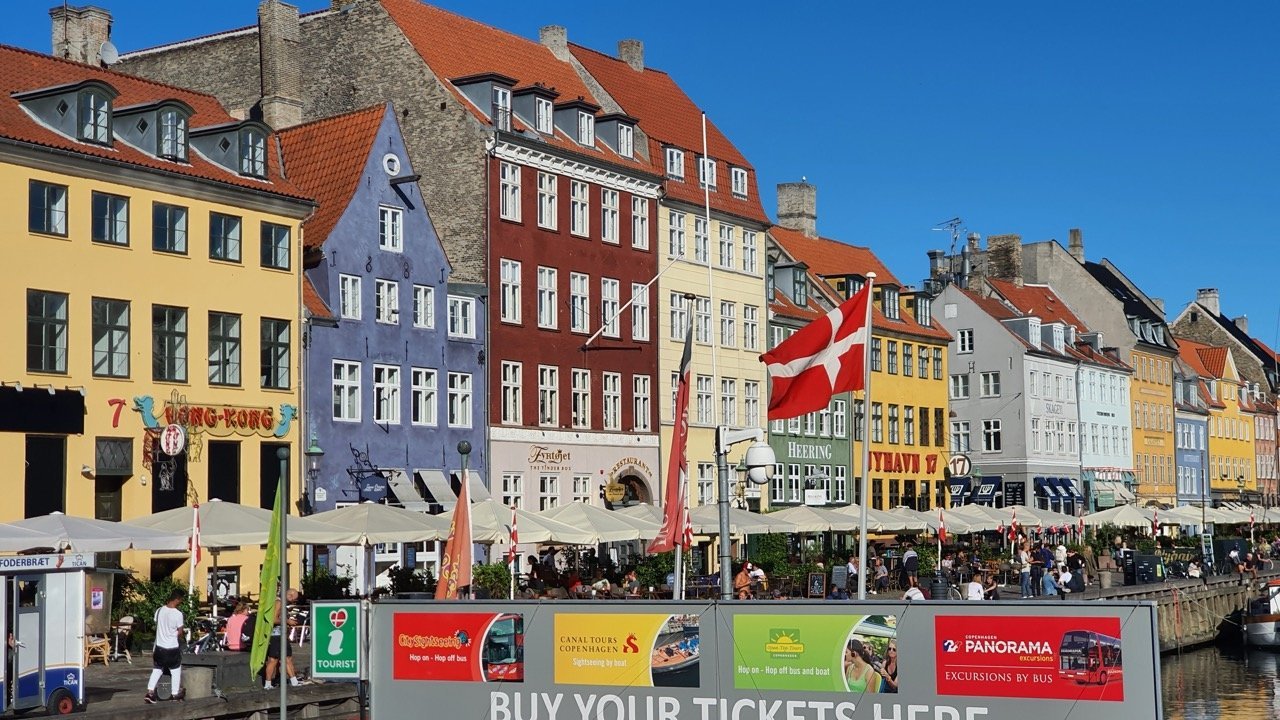
Same idea here. If you just glimpse those red-yellow-blue façades with cafés and bars at street level and sailboats moored out front, you instantly know it’s Copenhagen.
What can be tricky is that because these are houses, you might assume, “Oh, so the whole city looks like this.” People must live in buildings like these. Because of course, nobody thinks Parisians live inside Eiffel Towers — but what about Copenhageners? In the world’s “happiest city,” do they live in pretty, colorful houses — or not?!
Tip: Make sure to read all the way to the end—I’ll share two more spots where you can also find beautiful colorful houses in Copenhagen.
Nyhavn Is Really Just a Showcase
Nyhavn (pronounced roughly “NYE-hown,” literally “New Harbor”) may be one of tourists’ best-loved areas in Copenhagen, but in terms of architecture and the city fabric it’s basically a showcase — and just a single short street segment at that, with only one side of the canal lined like this.

No, houses like these aren’t typical across Copenhagen. Nor are 17th–18th-century buildings in general. In fact, outside Nyhavn you won’t find many spots in the Danish capital with houses this old.
Tourists and Locals
One more thing worth knowing about the colorful houses: as lively as the area is — and as much as it will fuel that “I love Copenhagen” feeling — the Copenhagen colorful houses and the experiences around them are aimed squarely at visitors.
You won’t really see locals lingering at the bars and restaurants here, or strolling both sides of the canal to snap photos and people-watch. Honestly, you won’t see many Danes at all — and definitely not Copenhageners. The people here are tourists, mostly from abroad.
If you do want to spot Danes around the colorful houses, there’s basically one sure bet: on the far side of the canal, opposite the houses, there’s a fairly busy bike lane. It’s not the city’s main cycling artery, but if you see someone cruising by who clearly didn’t rent their bike, chances are they’re local.
So yes, that’s about how “Danish” the colorful houses are. Still, the experience is fantastic — don’t skip it, especially on your first visit!
Where Are the Colorful Houses in Copenhagen?
The colorful houses in Copenhagen are essentially in the very center, just a one-minute walk from one of the city’s most famous central squares, Kongens Nytorv, which also happens to be a metro station served by all four lines.
Nyhavn, Indre By, Denmark
Two Other Locations for Colorful Houses in Copenhagen
If you’re really into tracking down colorful houses in Copenhagen, there are two other spots that are much less visited yet just as beautiful.
- Next to Christianshavn Metro station, on Overgaden Oven Vandet between Sofiegade and Store Søndervoldstræde, you’ll find another row of colorful houses. They stand along one of the canals in the city that’s often called the Venice of the North and are just as handsome as their cousins at Nyhavn.
- The other spot is Gråbrødretorv, just a couple of blocks from Strøget. These houses sit right in the middle of the old town, just two blocks from the popular pedestrian street. There’s no canal here, but you get a charming old-town square with cafés, restaurants, and plenty of outdoor seating.